
The Weimar Republic (1918-1933)
Germany's first parliamentary democracy, born from defeat in World War I, which pioneered universal suffrage and modern culture while struggling under the Versailles settlement, economic crises, and political violence before collapsing into Nazi dictatorship.
Events
The Republic Proclaimed
With Germany's armies in retreat and naval mutinies spreading, Kaiser Wilhelm II abdicated and the Social Democrat Philipp Scheidemann proclaimed a republic from the Reichstag balcony. The armistice ending World War I was signed the same day. The new government accepted defeat that German nationalists would later reframe as betrayal, giving rise to the "stab-in-the-back" myth.
Location: Berlin, Germany
The Spartacist Uprising
A revolt by the communist Spartacus League was crushed by government forces and Freikorps paramilitaries, and its leaders Rosa Luxemburg and Karl Liebknecht were killed in custody. The episode set the pattern of political violence between left and right that shadowed the republic, and the elections that month produced a National Assembly that met in Weimar, away from the unrest in Berlin.
Location: Berlin, Germany
The Treaty of Versailles

The new republic signed the Treaty of Versailles, accepting territorial losses, disarmament, reparations, and a war-guilt clause that Germany's representatives said no vanquished nation had ever been asked to sign. The Allied powers, having suffered enormous losses in the war, viewed the settlement as necessary security; Germans across the political spectrum denounced it as a dictated peace, and the republic was permanently associated with the national humiliation.
Location: Versailles, France
The Weimar Constitution
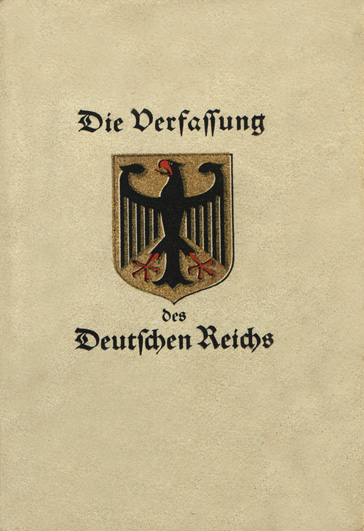
The National Assembly adopted a constitution that established universal suffrage including women's voting rights, proportional representation, and extensive social rights. Its Article 48, allowing the president to rule by emergency decree, was intended as a safety valve but later became the instrument by which democracy was bypassed.
Location: Weimar, Germany
Hyperinflation and the Ruhr Crisis

After Germany defaulted on reparation payments, French and Belgian troops occupied the Ruhr industrial region in January 1923, and the government financed passive resistance by printing money. Inflation spiraled until the dollar reached 4.2 trillion marks, wiping out savings and wages. The crisis peaked as the Rentenmark currency reform stabilized the economy in November 1923, the same month Hitler's attempted Beer Hall Putsch failed in Munich.
Location: Germany
The Golden Twenties and the Stresemann Era

Under Foreign Minister Gustav Stresemann, Germany signed the Locarno Treaties guaranteeing its western borders, joined the League of Nations in 1926, and negotiated reparation restructuring through the Dawes and Young plans. The period brought economic recovery, American investment, and a cultural flowering in cinema, architecture, and the arts, alongside persistent political polarization.
Location: Locarno, Switzerland
The Great Depression Hits Germany

After the 1929 Wall Street crash, American loans were recalled and German unemployment rose past six million. The Reichstag fragmented into deadlock, and Chancellor Heinrich Bruening began governing through Article 48 emergency decrees, normalizing rule without parliament while voters moved to the extremes in successive elections.
Location: Germany
The Nazi Surge
The Nazi Party became the largest party in the Reichstag with 37.3 percent of the vote, while the communists also gained. President Paul von Hindenburg, advised by conservative politicians who believed Hitler could be controlled, cycled through unelected chancellors ruling by decree. The November 1932 election showed a slight Nazi decline, but backroom negotiations continued.
Location: Germany
Hitler Appointed Chancellor and the Enabling Act
Hindenburg appointed Adolf Hitler chancellor on January 30, 1933. The Reichstag fire of February 27 was followed by a decree suspending civil liberties, and on March 23 the Enabling Act, passed under intimidation and with communist deputies excluded, gave Hitler's cabinet power to legislate without the Reichstag. The Weimar Republic's democratic institutions were dismantled within months.
Location: Berlin, Germany