
Voltaire — Writer and Philosopher of the Enlightenment
François-Marie Arouet, known as Voltaire, was a French writer, playwright and philosopher whose satires, histories and campaigns against religious intolerance made him a central figure of the Enlightenment. His long career set the power of the printed word against censorship and arbitrary punishment.
Events
François-Marie Arouet Is Born in Paris
François-Marie Arouet was born in Paris on 21 November 1694, one of five children of a royal notary. Educated at the Jesuit Collège Louis-le-Grand, he chose a literary career over the law. He later adopted the name Voltaire, though the origin of the pen name is disputed. His father's position as a royal notary placed the family among the officials whose sons sought literary careers rather than trade. Educated by the Jesuits at the Collège Louis-le-Grand, he left with a classical education, influential connections and a taste for satire. His early verses against the Regent's circle established the pattern of provocation that would shape his whole life.
Location: Paris, France
Imprisoned in the Bastille for Satire
In May 1717 the government of the Regent imprisoned the young writer in the Bastille for verses deemed insulting to the regent. He spent about eleven months in the fortress, using the time to write the tragedy Oedipe and to adopt the name Voltaire. The arrest began a lifelong pattern of conflict between his pen and the censorship of the French state. The exact verses that provoked the arrest are disputed, though scholars attribute it to satire of the Regent's family and government. In the Bastille he worked on the epic poem later published as La Henriade and gathered the material that made his reputation. The eleven months of imprisonment fixed his standing as a writer the French state considered dangerous, a status he never lost.
Location: Paris, France
Oedipe Makes His Name
Voltaire's tragedy Oedipe premiered at the Comédie-Française on 18 November 1718 and played to acclaim, establishing the 24-year-old as a leading playwright. The play's attack on religious hypocrisy drew audiences and controversy in equal measure. Its success gave him the independence of a professional man of letters. Its preface already hinted at the anticlericalism that would mark his career, drawing praise from free-thinkers and denunciations from the devout. The play established the model he followed for decades: verse tragedy as a vehicle for Enlightenment argument. He wrote more than fifty plays in his life, though it is the prose tales and the campaigns of his later years that survive in the canon.
Location: Paris, France
The Rohan Affair and Exile in England

In April 1726 the nobleman the Chevalier de Rohan had Voltaire beaten by servants after a public quarrel; when Voltaire challenged him, he was imprisoned in the Bastille and then exiled to England. He spent about two years in England, studying its constitutional government, religious toleration and the work of Newton and Locke. The experience shaped his later political writing. He met Bolingbroke, Swift and Gay, studied Newtonian science at first hand, and admired a constitutional balance and religious toleration absent in France. England gave him the comparative perspective that made his later criticism of French institutions so pointed and so dangerous. He returned to France in 1729 carrying the manuscript that became the Lettres philosophiques.
Location: Paris, France; England
The Lettres Philosophiques Are Burned

In 1734 the Parlement of Paris ordered Voltaire's Lettres philosophiques to be burned by the public executioner as an attack on religion and the state, and issued a warrant for his arrest. The book compared English and French institutions to the disadvantage of the latter. Voltaire escaped Paris and began years of semi-clandestine residence. The book, published in London as Letters Concerning the English Nation, praised English commerce, toleration and Newtonian science while implicitly indicting French institutions and censorship. The burning by the public executioner only increased its notoriety and its sales. It forced Voltaire into years of semi-clandestine residence and taught him the strategy of anonymous, cross-border publication he used for the rest of his life.
Location: Paris, France
The Cirey Years with Émilie du Châtelet

From 1734 Voltaire lived much of the time at the Château de Cirey in Lorraine with the mathematician and physicist Émilie du Châtelet, his partner for fifteen years. The two studied natural philosophy together, and Voltaire wrote histories, plays and the Elements of the Philosophy of Newton. The retreat kept him out of reach of the censors while producing some of his most durable work. Their partnership produced work on fire, light and the chronology of the Bible, as well as du Châtelet's translation of Newton's Principia, which Voltaire helped bring to publication. Their correspondence is one of the great documents of Enlightenment intellectual life, and the château became a stop for visiting scientists and writers. Her death in childbirth in 1749 ended the fifteen-year collaboration and loosened his tie to France.
Location: Cirey-sur-Blaise, France
At the Court of Frederick the Great

In 1750 Voltaire accepted the invitation of Frederick II of Prussia and moved to Berlin to serve as court philosopher and historian. The collaboration with the enlightened monarch soured over money, court intrigue and a quarrel with the mathematician Maupertuis, and Voltaire left Prussia in 1753 after a humiliating detention at Frankfurt. The episode cooled his faith in reform through royal patronage. The correspondence between the philosopher and the king had begun in 1736, and at Potsdam Voltaire completed the Siècle de Louis XIV as court historian. The collaboration soured over money, court intrigue and his quarrel with the mathematician Maupertuis. His humiliating detention at Frankfurt in 1753, where officials seized his papers, turned him permanently against service at any court.
Location: Berlin, Prussia
The Lisbon Earthquake Shakes the Optimists
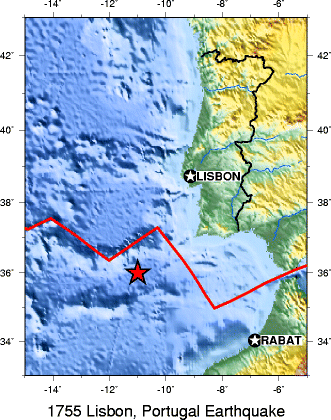
The earthquake and tsunami that destroyed Lisbon on 1 November 1755 killed tens of thousands and prompted Voltaire's Poem on the Disaster of Lisbon, which attacked the optimistic philosophy that suffering serves a divine plan. Jean-Jacques Rousseau answered with a public defense of optimism and criticized Voltaire's reading of the disaster. The exchange sharpened the Enlightenment debate over providence and evil. The poem's questioning of providence transformed the theodicy debate that Leibniz had framed, arguing that the scale of the disaster defied any claim that this is the best of all possible worlds. Rousseau's public letter of 1756 blamed urban density and defended optimism, opening the long antagonism between the two philosophes. The earthquake's imagery runs directly through the Lisbon chapter of Candide.
Location: Lisbon, Portugal
Candide Is Published

Published in January 1759, Candide followed a naive hero through war, earthquake and persecution, lampooning the doctrine that all is for the best. It was banned in several jurisdictions and became the most widely read of Voltaire's works. The tale distilled decades of argument about suffering, work and tolerance into popular satire. Written in a few weeks at his estate at Ferney and published anonymously, Candide was condemned by the Parlement of Geneva in the year of its appearance. Its closing line, we must cultivate our garden, became one of the most quoted in French literature. Banned in several jurisdictions, it became the most widely read of all his works and remains the best-selling.
Location: Geneva / Paris
The Calas Affair
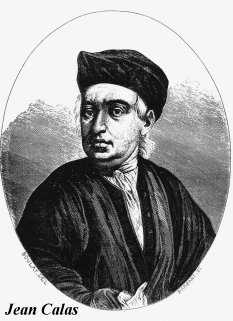
In March 1762 Jean Calas, a Protestant merchant of Toulouse, was broken on the wheel and executed for the alleged murder of his son in a case marked by religious prejudice. Voltaire took up the case, funding an inquiry and publishing the Treatise on Tolerance in 1763 to argue for freedom of conscience. In 1765 the conviction was overturned and Calas declared innocent, a landmark in the history of civil liberties. Voltaire's Treatise on Tolerance, published the following year, argued from the case for religious toleration and against judicial murder. The rehabilitation of Calas in 1765 was celebrated across Europe as a triumph of public reason over legal error. The affair set the precedent for his later campaigns, including the cases of the Sirven family and the Chevalier de la Barre.
Location: Toulouse, France
The Dictionnaire Philosophique
In 1764 the anonymously published Dictionnaire philosophique collected Voltaire's attacks on religious persecution, superstition and arbitrary punishment in short, sharp entries. It was condemned by the Church and widely read across Europe. The book's case for tolerance and against fanaticism influenced later arguments for the separation of church and state. Arranged as short alphabetical articles and later expanded in his Questions sur l'Encyclopédie, the dictionary distilled his critique of fanaticism, superstition and arbitrary punishment. It was condemned by the Church and placed on the Index of Forbidden Books. Circulating across Europe in dozens of editions, its arguments fed later cases for the separation of church and state.
Location: Geneva
Voltaire Dies in Paris
Voltaire returned to Paris in February 1778 to public acclaim and died there on 30 May 1778, aged 83. His reputation has been contested ever since: admirers credit his campaigns against intolerance and arbitrary punishment, while critics note his service to absolutist monarchs and the antisemitic passages in some of his writings. The Catholic Church denied him the last rites. His last months in Paris were a public apotheosis: he was crowned with laurel at the Comédie-Française and mobbed by admirers as the returning patriarch of French letters. His anticlerical writings cost him Christian burial, and he was quietly interred at the abbey of Scellières. The Church's refusal of the last rites became part of his legend as the champion of free inquiry.
Location: Paris, France
The Revolution Buries Him in the Panthéon
On 11 July 1791 the National Constituent Assembly transferred Voltaire's remains to the Panthéon in Paris, honoring him as a precursor of the Revolution. Churchmen and counter-revolutionaries condemned the ceremony, while radicals used his name to justify dechristianization. The translation fixed his status as a national symbol of free inquiry and of the contested legacy of the Enlightenment. The ceremony, with a procession past the Bastille site, deliberately linked Voltaire to the Revolution's founding ideals; Mirabeau received the same honour days later. Churchmen and counter-revolutionaries condemned it, while radicals invoked his name for dechristianization. The transfers to the Panthéon made the Enlightenment part of France's official civic memory and fixed his contested legacy in the national story.
Location: Paris, France