
Vladimir Putin — President of Russia
Vladimir Putin (born 1952) is a Russian politician and former KGB intelligence officer who has dominated Russian politics as President (2000-2008, 2012-present) for over two decades. His rule has been defined by the consolidation of authoritarian power, the rollback of democratic institutions, the rise of a state-controlled economy, and increasingly aggressive military interventions -- most notably the 2022 full-scale invasion of Ukraine, the largest European conflict since World War II.
Events
Born in Leningrad

Vladimir Putin is born in Leningrad (now St. Petersburg) to a working-class family. His parents lost two children before him -- one died during the Siege of Leningrad. He grows up in a communal apartment and becomes a martial arts practitioner.
Graduates from University and Joins the KGB
Putin graduates with a law degree from Leningrad State University, where he studied under Anatoly Sobchak, and immediately joins the KGB, the Soviet security agency. He undergoes training and serves initially in Leningrad.
Location: Leningrad, Soviet Union
KGB Service in Dresden, East Germany
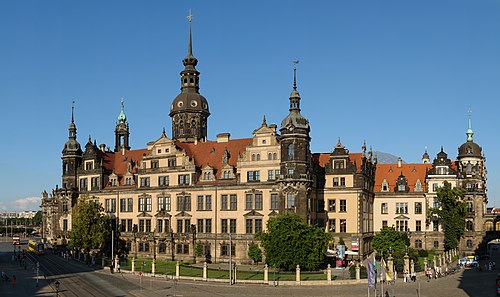
Putin is posted to Dresden, East Germany, as a KGB officer gathering political intelligence. During the fall of the Berlin Wall in 1989, he reportedly bluffs a crowd of protesters into dispersing from the local KGB headquarters by claiming the building is armed.
Location: Dresden, East Germany
Returns to Leningrad and Enters Politics

Putin returns to Leningrad in 1990 and leaves the KGB in 1991. He becomes an aide to reformist mayor Anatoly Sobchak, handling foreign relations and economic affairs. The collapse of the Soviet Union in 1991 deeply affects him -- he later calls it the greatest geopolitical catastrophe of the 20th century.
Location: St. Petersburg, Russia
Appointed Director of the FSB

President Yeltsin appoints Putin as director of the FSB, the KGB's main successor organization. He is the first civilian to head the agency, rapidly rising through the ranks from obscurity to heir apparent.
Location: Moscow, Russia
Appointed Prime Minister of Russia
Yeltsin appoints Putin as Prime Minister. Putin launches the Second Chechen War after apartment bombings in Moscow blamed on Chechen separatists. The war dramatically boosts his popularity and public image as a strong leader.
Location: Moscow, Russia
Becomes Acting President
Yeltsin resigns unexpectedly on New Year's Eve, naming Putin as Acting President. Putin's first act is to grant Yeltsin immunity from prosecution. The televised New Year's address marks the beginning of the Putin era.
Location: Moscow, Russia
Consolidation of Power
Putin moves against independent media, bringing television networks under state control. He appoints former KGB colleagues to key posts, curtails judicial independence, abolishes gubernatorial elections, restricts opposition parties, and prosecutes oligarch Mikhail Khodorkovsky.
Location: Russia
Elected President

Putin wins the presidential election with 53% of the vote in the first round. Rising oil prices in the early 2000s fuel economic recovery and rising living standards, and many Russians credit him for restoring order after the chaotic Yeltsin years.
Location: Russia
Term-Limited Transition to Prime Minister
Barred from a third consecutive term by the constitution, Putin becomes Prime Minister under President Dmitry Medvedev, his longtime confidante. The tandem arrangement leaves no doubt about who holds ultimate authority.
Location: Moscow, Russia
Five-Day War with Georgia
After Georgian forces attack the breakaway region of South Ossetia, Russia launches a large-scale invasion of Georgia, occupying parts of the country. Russia recognizes Abkhazia and South Ossetia as independent states, signaling its willingness to use military force against neighbors.
Location: Georgia
Returns to the Presidency
Putin is re-elected president amid the largest protests since the 1990s, triggered by allegations of fraud in the 2011 parliamentary elections. He responds with a crackdown on opposition, including the imprisonment of Pussy Riot and other dissidents.
Location: Moscow, Russia
Annexation of Crimea

Following the Euromaidan revolution that ousts Ukraine's pro-Russian president, Russia seizes Crimea using unmarked special forces (little green men) and annexes it after a disputed referendum. The West imposes sanctions and expels Russia from the G8.
Location: Crimea, Ukraine
Military Intervention in Syria
Putin authorizes a military intervention in the Syrian Civil War to support the Assad regime. Russian air power turns the tide of the war, demonstrating Russia's ability to project military force beyond its borders and challenging US dominance in the Middle East.
Location: Syria
Consolidated Wartime Rule
Putin signs laws allowing him to stay in power until 2036, formally annexes four Ukrainian regions, and mobilizes hundreds of thousands of troops. He faces a short-lived mutiny by Wagner Group leader Yevgeny Prigozhin in June 2023. He remains firmly in control as of 2026, commanding the longest war in modern Russian history.
Location: Russia/Ukraine
Full-Scale Invasion of Ukraine
Putin announces a special military operation and launches a full-scale invasion of Ukraine -- the largest conventional military operation in Europe since 1945. Russian forces fail to capture Kyiv due to fierce Ukrainian resistance. The war triggers unprecedented Western sanctions and the largest refugee crisis in Europe since WWII.
Location: Ukraine
First Visit to Disputed Kuril Islands
Putin made his first presidential visit to the Kuril Islands, landing on Iturup, the largest of the chain claimed by Japan as its Northern Territories. Aboard the Pacific Fleet missile cruiser Varyag, he asserted that the islands' status was 'enshrined in international documents as a reality that arose following the outcome of World War II,' while expressing readiness to seek a peace treaty with Japan. Japanese Prime Minister Sanae Takaichi called the visit 'absolutely unacceptable' and summoned the Russian ambassador to lodge a formal protest, stating it had 'further hardened Japanese public sentiment toward Russia.' The visit marked a significant assertion of sovereignty over territory seized by the Soviet Union at the end of World War II and deepened the diplomatic rift between Moscow and Tokyo.
Location: Iturup Island, Kuril Islands, Russia
Missile Drills Near Disputed Kuril Islands
Days after Putin's first visit to the disputed Kuril Islands, Russia conducted rare missile drills near the southern Kurils involving a nuclear-powered submarine, a missile cruiser, and a Bastion coastal defense system. Russian forces fired missiles at targets over 300 kilometers away. Japan formally protested, with Foreign Minister Toshimitsu Motegi calling the military buildup unacceptable. The drills marked a significant escalation in the long-running territorial dispute, which has prevented Russia and Japan from signing a formal peace treaty since World War II.
Decree Allows State Takeover of Infrastructure Hit by Ukrainian Strikes
After a wave of Ukrainian drone strikes deep into Russian territory that analysts called 'Black August', Putin signed a decree authorizing the state to temporarily seize control of critical infrastructure facilities whose private owners failed to protect or rebuild them. The measure marked an unprecedented wartime expansion of state authority over private property inside Russia, and was widely read as evidence of the economic strain the war had placed on the country.
US Envoy Talks Resume and Putin Joins BRICS Summit in New Delhi

Direct Russia-United States diplomacy resumed when Putin met Trump envoys Steve Witkoff and Jared Kushner at the Kremlin on September 5 for more than three hours on ending the war in Ukraine — the first such talks after a six-month freeze in negotiations. A week later, Putin attended the 18th BRICS Summit in New Delhi, where Indian Prime Minister Narendra Modi publicly pressed him on ending the war through dialogue and diplomacy and raised the deaths of Indian seafarers in Black Sea attacks. The summit's 140-paragraph New Delhi Declaration, adopted on September 12, covered the Iran war and tariff impacts without ever naming the United States — the bloc keeping its options open with Washington. The sequence marked Putin's first visible de-isolation after a phase of wartime escalation.
Russia Holds First Wartime Parliamentary Elections

Russians voted September 17-19, 2026 in the first State Duma elections since the full-scale invasion of Ukraine, with Putin casting his ballot online and framing the vote as a barometer of public support for the war. No party opposing the war or the Kremlin was permitted on the ballot, and independent election observers noted that the outcome was predetermined under wartime censorship and pressure on dissent. The vote tested Putin's hold on domestic politics amid a struggling economy, war fatigue, and reports that many Russians feared a new mobilization wave once the election concluded.