
The US-China Trade War and Tech Decoupling
The US-China trade war began in 2018 with tariff escalations and broadened into a comprehensive technology decoupling, with semiconductor export controls, the TikTok battle, and the CHIPS Act reshaping global supply chains and the strategic competition between the world's two largest economies. The rivalry has since expanded into AI, quantum computing, and advanced manufacturing.
Events
China Announces "Made in China 2025" Industrial Strategy

The Chinese State Council published the "Made in China 2025" plan, a state-led industrial policy aimed at moving China up the manufacturing value chain and achieving self-sufficiency in advanced technologies including semiconductors, AI, robotics, aerospace, and quantum computing. The plan designated state funding and subsidies to priority sectors and set domestic market share targets for Chinese companies. Western governments and industry groups expressed concern that the strategy relied on forced technology transfers, intellectual property acquisition, and state subsidies that disadvantaged foreign competitors. Chinese officials framed the plan as a legitimate modernization effort comparable to industrial policies in other nations.
US Imposes First Round of China Tariffs

The Trump administration imposed 25% tariffs on $34 billion worth of Chinese imports under Section 301 of the Trade Act of 1974, following a USTR investigation that found Chinese practices related to intellectual property theft and forced technology transfer caused harm to US commerce. The administration cited the trade deficit and the loss of manufacturing jobs as additional concerns. China responded with equivalent tariffs on US goods including soybeans and automobiles, and filed a complaint with the World Trade Organization arguing the tariffs violated WTO rules. The exchange began a tit-for-tat escalation that eventually covered over $550 billion in Chinese goods and $185 billion in US goods.
Huawei CFO Meng Wanzhou Arrested
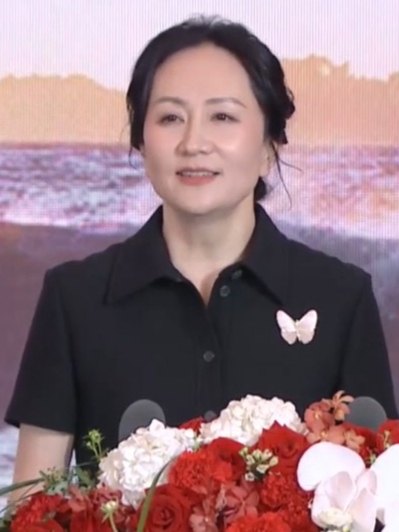
Canadian authorities arrested Huawei Chief Financial Officer Meng Wanzhou at the request of the United States on charges of bank fraud and violating US sanctions on Iran. Meng's legal team argued the charges were politically motivated and that she was being used as leverage in trade negotiations. China responded by detaining two Canadian citizens, Michael Kovrig and Michael Spavor, on espionage charges — a move widely characterized by Western governments as "hostage diplomacy." China denied any connection between the detentions and the Meng case. The incident became a major diplomatic flashpoint and deepened US-China tensions.
Huawei Added to the Entity List

The Trump administration added Huawei and 70 affiliates to the Commerce Department's Entity List, citing national security concerns related to Huawei's alleged ties to the Chinese military and intelligence apparatus through civil-military fusion policies. The move effectively banned US companies from selling technology to the Chinese telecom giant, cutting Huawei off from Google's Android services, US semiconductors, and other critical technologies. Huawei denied the security allegations, and the Chinese government argued the restrictions were an abuse of national security exceptions to suppress a commercial competitor. The move triggered a fundamental restructuring of the global tech supply chain.
Phase One Trade Deal Signed
The US and China signed the "Phase One" trade agreement, under which China committed to increase purchases of US goods and services by $200 billion over two years in exchange for tariff reductions. The deal included provisions on intellectual property protection, financial services, and currency practices. China cited the COVID-19 pandemic, agricultural sector constraints, and what it characterized as unrealistic baseline assumptions as factors in falling short of its purchase commitments. US officials and some trade analysts characterized the shortfall as a failure to honor the agreement. The deal left structural issues such as industrial subsidies and state-owned enterprises unresolved, deferring them to a never-realized "Phase Two" negotiation.
TikTok and WeChat Executive Orders
President Trump signed executive orders banning transactions with ByteDance (TikTok's parent) and Tencent (WeChat's parent) within 45 days, citing national security concerns about Chinese data collection and the potential for the apps to be used for surveillance or influence operations. ByteDance denied the allegations and argued the orders exceeded presidential authority. Civil liberties groups including the ACLU and EFF raised concerns about First Amendment implications of banning communication platforms. The orders triggered a protracted legal battle over TikTok's ownership, culminating in a forced divestiture requirement that persisted through the following administration.
China Passes Anti-Foreign Sanctions Law
China's National People's Congress passed the Anti-Foreign Sanctions Law, providing a legal framework for Chinese individuals and entities to counter foreign sanctions. The law authorized Chinese courts to impose visa restrictions, asset freezes, and other punitive measures on individuals and organizations involved in formulating or implementing sanctions against Chinese interests. The legislation followed earlier measures including an "unreliable entity list" and export control law. China framed the law as a defensive measure to protect its sovereignty and national interests against what it characterized as illegal extraterritorial sanctions. Western governments and businesses expressed concern about the legal risks it created for companies operating in both jurisdictions.
The CHIPS and Science Act is Signed
President Biden signed the CHIPS and Science Act, authorizing $280 billion in funding to boost domestic semiconductor manufacturing and research, including $52 billion in subsidies for chip fabrication plants. The act was a response to supply chain vulnerabilities exposed by the pandemic and the strategic concentration of advanced chip manufacturing in Taiwan, where TSMC produces the majority of the world's most advanced semiconductors. The legislation included "guardrail" provisions prohibiting companies receiving CHIPS funding from expanding or upgrading advanced facilities in China for ten years, directly tying the Act to the decoupling strategy. EU and other governments announced comparable subsidy programs in response, concerned about the global fragmentation of semiconductor supply chains.
Sweeping Chip Export Controls Announced

The Biden administration announced the most expansive export controls in decades, targeting China's semiconductor industry. The rules restricted the sale of advanced chips and chip-making equipment to China, required US persons to obtain licenses to support Chinese semiconductor development, and cited military applications and civil-military fusion as the rationale — the concern that advanced semiconductors could enable military modernization in AI, hypersonics, and nuclear weapons. The controls effectively cut China off from the most advanced AI and supercomputing chips. China accused the United States of using national security pretexts to suppress China's technological development and maintain monopoly over advanced manufacturing. Major semiconductor companies including Nvidia and ASML publicly warned of significant revenue impacts from the restrictions.
China Bans Micron Chips on Security Grounds

China's Cyberspace Administration announced that US chipmaker Micron Technology had failed a cybersecurity review and banned its products from critical national infrastructure systems, citing risks to national information security. The action was widely interpreted as China's first major retaliatory measure against a US semiconductor company following the export controls, though China characterized it as a routine regulatory decision. The United States and Micron raised concerns about the transparency and proportionality of the review. The ban highlighted the growing use of domestic regulation as a tool in the technology confrontation, with both sides employing national security justifications.
Expanded AI Chip Export Controls

The Commerce Department expanded chip export controls to address areas not covered by the 2022 rules, targeting China, Russia, and other countries. The updated rules restricted the export of advanced AI chips, including Nvidia's H800 and A800 (designed specifically to comply with earlier rules), and extended controls to additional countries to prevent transshipment. Semiconductor industry associations and companies warned that the expanded restrictions would reduce revenue available for R&D investment, potentially harming long-term competitiveness. China criticized the expansion as an escalation of technology containment and an attempt to maintain US dominance in AI.
China Imposes Rare Earth Export Controls

China announced export controls on gallium, germanium, and graphite — critical minerals used in semiconductors, electric vehicles, and defense systems. The controls required export licenses on national security grounds, and China cited the need to safeguard national interests and fulfill international non-proliferation obligations. As the dominant global supplier of these materials, China leveraged its position in the supply chain where the United States and its allies held advantages in advanced chip design and manufacturing. The move prompted the United States, EU, and other partners to accelerate efforts to diversify supply chains and develop alternative sources. Analysts noted the symmetry with US export controls, as both countries weaponized their respective chokepoints in the technology supply chain.
TikTok Divestiture Law Signed
President Biden signed the Protecting Americans from Foreign Adversary Controlled Applications Act, requiring ByteDance to divest TikTok within 270 days or face a US ban. The law passed with strong bipartisan support and was justified on national security grounds, citing concerns about data access by the Chinese government and potential for influence operations. TikTok challenged the law as a violation of First Amendment free speech rights, arguing it would silence expression for 170 million American users. Civil liberties groups including the ACLU and EFF filed or supported legal challenges on similar grounds. The Supreme Court upheld the law in early 2025.
Trump Second Term Trade Escalation
President Trump, returning to office for a second term, immediately escalated trade tensions with China. He imposed additional tariffs of 60% on Chinese goods, revoked most export license exceptions, and expanded the Entity List to cover more Chinese tech companies. The administration cited the persistent trade deficit, fentanyl precursor flows, and the need to reshore manufacturing as rationale for the measures. China retaliated with tariffs on US agricultural products and energy exports and announced new restrictions on critical mineral exports. The escalation marked the broadest phase of US-China economic decoupling, with global supply chains and consumer prices affected as businesses adjusted to the new tariff regime.