
Thomas Sankara — Revolutionary President of Burkina Faso
A military officer and Marxist revolutionary who led Burkina Faso from 1983 to 1987, pursuing public health campaigns, women's rights, and anti-imperialist politics before his assassination in a coup led by his former deputy.
Events
Early Life and Military Career

Thomas Isidore Noël Sankara was born in Yako in what was then the French colony of Upper Volta. Trained at the national military academy in Ouagadougou and later in Morocco and France, he became a popular young army captain known for his discipline and patriotism.
Location: Yako, French Upper Volta
Combat in the Border War with Mali

Sankara distinguished himself in the 1974 Upper Volta–Mali border conflict over the Agacher Strip, earning a reputation for courage. The war deepened his nationalist convictions and his skepticism of foreign influence in West African affairs.
Location: Agacher Strip, Upper Volta
The August Revolution
A popular uprising joined by army units led by Captain Blaise Compaoré installed Sankara as president at age 33. He declared a democratic and popular revolution, positioning the country against what he described as neo-colonial domination.
Location: Ouagadougou, Upper Volta
Upper Volta Becomes Burkina Faso
On the revolution's first anniversary, Sankara renamed the country Burkina Faso, "Land of Upright Men," with a new flag and anthem. The renaming rejected the colonial name and framed national identity around dignity and self-reliance.
Location: Ouagadougou, Burkina Faso
UN Speech Rejecting Colonial-Era Debt
Addressing the United Nations General Assembly, Sankara argued that debt-ridden poor nations should refuse to repay debts contracted under colonial rule, asking who owed whom after centuries of exploitation. The speech became one of the most cited statements of 1980s anti-imperialist politics.
Location: New York City, USA
Public Health and Social Reforms
His government ran mass vaccination campaigns reaching millions of children against measles, meningitis, and yellow fever, planted millions of trees to fight desertification, and built roads and housing with community labor. Infant mortality and school enrollment improved measurably during his tenure.
Location: Burkina Faso
Women's Rights Measures
The government banned female genital mutilation, forced marriage, and polygamy, and appointed women to senior posts, steps Sankara framed as conditions for genuine revolution. He also recruited women into the military, an unusual step in the region at the time.
Location: Ouagadougou, Burkina Faso
Authoritarian Practices and Critics
Revolutionary Defence Committees (CDRs) created to mobilize citizens were criticized by unions, teachers, and journalists for intimidation and surveillance, and press outlets were restricted. Sankara's defenders credited the committees with mobilization for development programs; his critics, including some leftists, saw them as instruments of control.
Location: Burkina Faso
The Christmas War with Mali
A five-day border war with Mali over the resource-rich Agacher Strip killed dozens. Sankara withdrew forces and accepted regional mediation, ending the conflict that had begun a decade earlier.
Location: Agacher Strip, Burkina Faso–Mali border
Assassination
Sankara was killed with twelve aides in a coup organized by Blaise Compaoré, who became president and ruled for the next 27 years. Sankara was buried in an unmarked grave, and his death became an enduring subject of dispute and investigation.
Location: Ouagadougou, Burkina Faso
Exhumation and Investigation

After Blaise Compaoré was forced from power by a 2014 uprising, Sankara's presumed remains were exhumed as part of a formal investigation into the assassination. Forensic work supported the conclusion that Sankara had been shot by a squad.
Location: Ouagadougou, Burkina Faso
Compaoré Convicted in Absentia
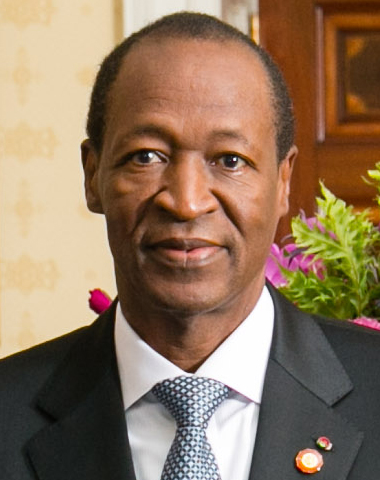
A military court convicted Blaise Compaoré, in absentia, of the assassination and sentenced him to life imprisonment; two of his former aides received the same sentence. The verdict, upheld on appeal in 2023, closed a 35-year chapter even though Compaoré remained in exile in Ivory Coast.
Location: Ouagadougou, Burkina Faso