
The Thirty Years' War (1618-1648)
The Thirty Years' War was one of the most destructive conflicts in European history, fought primarily in Central Europe between 1618 and 1648. Beginning as a religious and political dispute within the Holy Roman Empire between Catholic and Protestant states, it evolved into a broader struggle for European dominance involving the Habsburgs, France, Sweden, Denmark, Spain, and the Dutch Republic. The war resulted in millions of deaths from battle, famine, and disease, and ended with the Peace of Westphalia, which established the modern system of state sovereignty.
Events
Defenestration of Prague
Protestant Bohemian nobles, led by Count Jindrich Thurn, threw two Catholic imperial governors and their secretary from a window of Prague Castle, an act known as the Third Defenestration of Prague. All three survived the fall, but the event marked the beginning of the Bohemian Revolt against Habsburg rule and is widely viewed as the starting point of the Thirty Years' War.
Frederick V Accepts the Crown of Bohemia
The Bohemian Estates formally deposed Ferdinand II and offered the crown to Frederick V, Elector Palatine. Frederick accepted despite warnings from his advisors and father-in-law King James I of England. Days earlier, Ferdinand had been elected Holy Roman Emperor, making war inevitable. Frederick's decision internationalized the conflict.
Battle of White Mountain

The combined Imperial and Catholic League army under Count Tilly decisively defeated the Bohemian forces led by Christian of Anhalt. Frederick fled Bohemia, and the revolt collapsed. The battle ended the Bohemian phase of the war and led to harsh re-Catholicization of Bohemian lands.
Danish Intervention Begins
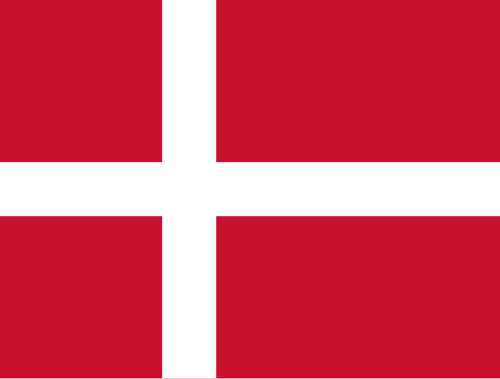
Christian IV of Denmark entered the war in support of the Protestant cause, also seeking to expand Danish influence in northern Germany. His forces were defeated by the imperial general Albrecht von Wallenstein at the Battle of Dessau Bridge (April 1626) and by Tilly at the Battle of Lutter (August 1626), leading to Denmark's withdrawal by 1629.
Swedish Intervention Under Gustavus Adolphus

Gustavus Adolphus of Sweden landed on the Baltic coast with a modern, well-disciplined army, entering the war to defend Protestantism and secure Swedish control over Baltic trade. His innovative military tactics, including combined arms and mobile artillery, transformed warfare. At the Battle of Breitenfeld on September 17, 1631, he defeated the Imperial army in one of the war's most decisive engagements.
Battle of Lutzen and Death of Gustavus Adolphus

Swedish forces won a tactical victory against Wallenstein's imperial army at Lutzen, but Gustavus Adolphus was killed while leading a cavalry charge. His death removed the war's most brilliant commander and marked a turning point. Without his leadership, Sweden's war aims shifted from religious defense to territorial gain.
French Entry Into the War

France, under Cardinal Richelieu, declared war on Spain, entering the conflict openly on the side of the Protestant powers despite being a Catholic nation. French intervention transformed the war from a German civil conflict into a Franco-Habsburg struggle for European dominance. Fighting spread to the Rhineland, the Low Countries, Italy, and Catalonia.
Peace of Prague
The Peace of Prague ended the civil war within the Holy Roman Empire, with most German states making peace with Emperor Ferdinand II. The treaty dissolved the Catholic League and Protestant alliances, but excluded France, Sweden, and Spain. It failed to end the broader European conflict, soon escalated by French entry into the war.
Peace of Westphalia
A series of treaties collectively known as the Peace of Westphalia ended the Thirty Years' War and the Eighty Years' War between Spain and the Dutch Republic. The treaties recognized the full sovereignty of the Dutch Republic and the Swiss Confederacy, granted territorial gains to France and Sweden, and established the principle of cuius regio, eius religio for all Christian denominations. The settlement created the modern framework of state sovereignty and non-interference in domestic affairs.