
The Troubles — The Northern Ireland Conflict (1968-1998)
The Troubles were a 30-year ethno-nationalist conflict in Northern Ireland between predominantly Protestant unionists who wanted Northern Ireland to remain part of the United Kingdom and predominantly Catholic republicans who sought unification with the Republic of Ireland. The conflict involved paramilitary organizations on both sides, the British armed forces, and later a political peace process that culminated in the 1998 Good Friday Agreement.
Events
The Civil Rights Movement Emerges

The Northern Ireland Civil Rights Association (NICRA) was formed to protest discrimination against Catholics in housing, employment, and voting rights. Inspired by the US civil rights movement, NICRA organized marches demanding "one man, one vote." The Unionist-dominated government of Northern Ireland viewed the movement with suspicion, and a march in Derry on October 5, 1968, was violently broken up by the Royal Ulster Constabulary, sparking widespread protests and international attention.
Location: Northern Ireland
The Battle of the Bogside and British Troops Deployed
Three days of intense rioting between Catholic residents and police erupted in the Bogside area of Derry, known as the Battle of the Bogside. Simultaneously, sectarian violence broke out in Belfast. Unable to contain the unrest, the Northern Ireland government requested that the British Army be deployed. On August 14, British troops were sent to restore order (Operation Banner), initially welcomed by many Catholics as protectors. The deployment would last 38 years.
Location: Derry, Northern Ireland
Internment Without Trial Introduced
The British government introduced internment without trial (Operation Demetrius), arresting 342 suspected republicans without charge. The operation was widely criticized as poorly executed - most arrests targeted the wrong people, relied on outdated intelligence, and primarily swept up suspected IRA members rather than the newly emerged Provisional IRA. Internees were held in the Maze prison and other facilities. The policy dramatically escalated the conflict, with more than 100 people killed in the following six months as violence surged.
Location: Northern Ireland
Bloody Sunday
British paratroopers opened fire on a crowd of unarmed civil rights marchers in the Bogside area of Derry, killing 14 people and wounding 15 others. None of the victims were armed. The event, which became known as Bloody Sunday, caused international outrage. The British embassy in Dublin was burned down by protesters. The Widgery Tribunal immediately exonerated the soldiers, but the Saville Inquiry (completed in 2010) found that the killings were unjustified and that soldiers had fired on fleeing civilians.
Location: Derry, Northern Ireland
Direct Rule Imposed from London
In response to the escalating violence and the collapse of the Northern Ireland government's authority, British Prime Minister Edward Heath suspended the Stormont parliament and imposed Direct Rule from London. Northern Ireland was governed by a Secretary of State. Republican paramilitaries, particularly the Provisional IRA, escalated their armed campaign, while loyalist paramilitaries also intensified attacks against Catholics.
Location: London, United Kingdom
Bloody Friday and Operation Motorman
The Provisional IRA detonated 22 bombs in Belfast city center on July 21, killing 9 people and injuring 130. The attack, known as Bloody Friday, destroyed the IRA's claim to be protecting Catholic communities from violence. Ten days later, on July 31, the British Army launched Operation Motorman, the largest British military operation since the Suez Crisis, deploying 13,000 troops to dismantle IRA "no-go" areas in Derry and Belfast.
Location: Belfast, Northern Ireland
The Sunningdale Agreement Fails
The Sunningdale Agreement established a power-sharing executive for Northern Ireland and created a Council of Ireland with cross-border functions. The power-sharing government took office in January 1974 but collapsed in May 1974 after the Ulster Workers' Council strike, a general strike organized by loyalists opposed to power-sharing with nationalists. The strike, enforced by loyalist paramilitaries, paralyzed Northern Ireland and forced the resignation of the executive, demonstrating the limits of British authority when faced with determined loyalist opposition.
Location: Sunningdale, Berkshire, England
The Hunger Strikes and Bobby Sands

Republican prisoners, led by Bobby Sands, began a hunger strike demanding restoration of political status (Special Category Status) that had been revoked in 1976. Sands was elected as an MP to the British Parliament on April 9 while on hunger strike. He died on May 5 after 66 days without food, triggering widespread rioting in Northern Ireland and international media attention. Nine more hunger strikers died before the strike ended on October 3. The protest greatly boosted Sinn Fein's political support, leading to its electoral strategy in subsequent years.
Location: Maze Prison, Northern Ireland
The Anglo-Irish Agreement
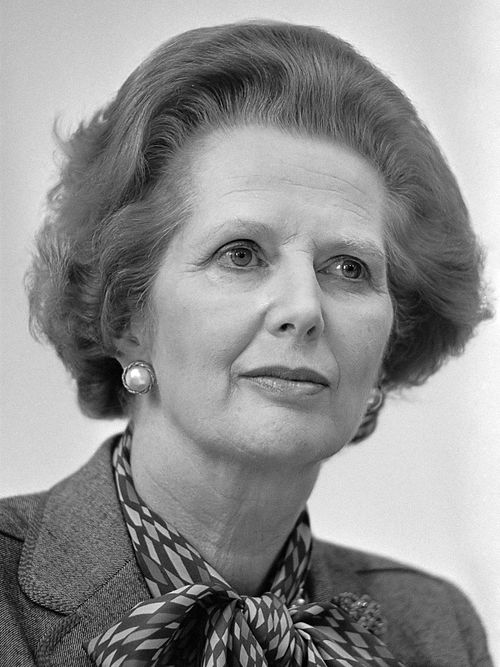
British Prime Minister Margaret Thatcher and Irish Taoiseach Garret FitzGerald signed the Anglo-Irish Agreement at Hillsborough Castle. The agreement gave the Republic of Ireland a formal consultative role in Northern Ireland's affairs for the first time. Unionists were outraged, organizing mass protests and a general strike. The agreement deepened the political isolation of unionism while strengthening the moderate nationalist Social Democratic and Labour Party (SDLP).
Location: Hillsborough, Northern Ireland
Peace Process and Ceasefires

British Prime Minister John Major and Irish Taoiseach Albert Reynolds issued the Downing Street Declaration, affirming the principle of self-determination for the people of Northern Ireland and stating that Britain had "no selfish strategic or economic interest" in remaining in Northern Ireland. The declaration paved the way for talks. The Provisional IRA declared a ceasefire on August 31, 1994, followed by loyalist paramilitary ceasefires on October 13. The peace process faced setbacks, including the breakdown of the IRA ceasefire in 1996, but resumed after the 1997 general election.
Location: London, United Kingdom
The Good Friday Agreement

The Good Friday Agreement (also called the Belfast Agreement) was signed on April 10, 1998. It established a power-sharing Northern Ireland Assembly and Executive with a First Minister and deputy First Minister from both communities, created cross-border institutions between Northern Ireland and the Republic of Ireland, established a British-Irish Council linking the UK and Irish governments, and set up mechanisms for prisoner release and decommissioning of paramilitary weapons. In referendums on May 22, 1998, 71 percent of voters in Northern Ireland and 94 percent in the Republic endorsed the agreement. The Omagh bombing by a dissident republican group in August 1998 killed 29 people in a final act of violence during the transition.
Location: Belfast, Northern Ireland