
The Spanish-American War (1898)
The Spanish-American War lasted less than four months and ended Spain's empire in the Americas. It grew out of Cuba's war of independence, which had drawn American sympathy and press attention, and out of the explosion of the USS *Maine* in Havana harbor in February 1898. The United States defeated Spanish forces in Cuba, Puerto Rico and the Philippines, and the Treaty of Paris transferred Puerto Rico, Guam and the Philippines to American rule while Spain gave up Cuba. The war made the United States a Pacific power and provoked a sustained anti-imperialist opposition at home. Its aftermath included the Philippine-American War, which lasted far longer than the war with Spain.
Events
Cuba's War of Independence
Cuba's war of independence began on 24 February 1895 with uprisings organized by the Cuban Revolutionary Party, and José Martí, Máximo Gómez and Antonio Maceo quickly built a broad insurgency across the island. Spain sent General Valeriano Weyler in 1896, and his reconcentration policy forced rural populations into fortified towns, where hunger and disease killed an estimated hundred thousand or more Cubans. The Spanish army held the cities but could not defeat the guerrilla forces in the countryside, and the war became a stalemate of attrition. American newspapers covered the camps and the fighting, and Cuban exiles in New York and Florida lobbied for US intervention. The conflict created both the humanitarian case for intervention and the Cuban expectation of independence.
Location: Cuba
The USS Maine Explodes in Havana Harbor
On 15 February 1898 the US armored cruiser *Maine* exploded and sank in Havana harbor, killing about 260 of its crew. The ship had been sent to protect American citizens and property during the Cuban insurgency, and its destruction produced an immediate crisis. A US naval court of inquiry concluded in March that a mine had caused the explosion, while a Spanish investigation blamed an internal explosion in the ship's magazines. The cause has never been established: later investigations in 1911 and 1976 supported the internal-explosion theory, and no definitive explanation commands consensus. American newspapers, particularly those of William Randolph Hearst and Joseph Pulitzer, treated the sinking as proof of Spanish treachery, and "Remember the Maine" became the war's rallying cry.
Location: Havana, Cuba
The United States Declares War
On 25 April 1898 the US Congress declared war on Spain, effective from 21 April, after President William McKinley asked for authority to intervene in Cuba. Spain had declared war on 23 April, and the two declarations followed weeks of failed diplomacy over Cuban autonomy and the Maine. Congress attached the Teller Amendment, which disclaimed any intention to annex Cuba and committed the United States to leave the island to its people. McKinley's stated grounds were humanitarian and commercial: ending the fighting, protecting American citizens and restoring order in the Caribbean. The decision was contested at home, and opponents argued that intervention would become permanent occupation.
Location: Washington, D.C.
Dewey Destroys the Spanish Squadron at Manila Bay
On 1 May 1898 Commodore George Dewey's Asiatic Squadron entered Manila Bay and destroyed the Spanish Pacific squadron under Rear Admiral Patricio Montojo in a morning engagement. The American ships, better armed and armored, stood off and fired until the Spanish vessels were sunk or abandoned; American casualties were minimal. The victory gave the United States control of Manila Bay and cut Spanish communications with the Philippines. Dewey's squadron had been ordered to the Philippines before the war began, and the battle turned a Caribbean conflict into a Pacific one. Filipino insurgents under Emilio Aguinaldo returned from exile in May and resumed their war against Spain, while American forces occupied the bay.
Location: Manila Bay, Philippines
El Caney and San Juan Heights
On 1 July 1898 US forces attacked the Spanish defenses at El Caney and San Juan Heights, the ring of hills protecting Santiago de Cuba. The V Corps under General William Shafter included regular regiments and volunteer units, among them Theodore Roosevelt's Rough Riders and several African American regiments whose members were among the first to reach the crest. Spanish defenders held strong positions and inflicted roughly 1,000 American casualties before withdrawing. The fighting was hampered by poor planning, inadequate medical support and the effects of tropical disease, which would eventually incapacitate far more soldiers than combat. The victory allowed the Americans to place Santiago under siege and to threaten the harbor.
Location: Santiago de Cuba
The Spanish Fleet Is Destroyed at Santiago

On 3 July 1898 the Spanish Caribbean squadron under Rear Admiral Pascual Cervera attempted to run the American blockade of Santiago harbor and was destroyed in a running battle along the coast. The American ships, including the battleship *Oregon* which had steamed from the Pacific, were faster and better armed, and the Spanish vessels were sunk, beached or captured. Cervera's force had been ordered to sea by authorities in Havana against his own judgment, and its loss ended Spanish naval power in the Caribbean. The victory made an American landing in Puerto Rico possible and sealed the fate of the Santiago garrison. Casualties on the Spanish side were heavy, and more than a thousand sailors were taken prisoner.
Location: Santiago de Cuba
Santiago Surrenders and Puerto Rico Is Invaded

The Spanish garrison of Santiago de Cuba surrendered on 17 July 1898, with roughly 24,000 troops laying down their arms after the naval defeat and the land battles. Terms were negotiated between General Shafter and the Spanish commander, and the American occupation of eastern Cuba began. On 25 July US forces landed at Guánica on the southern coast of Puerto Rico and moved inland against light resistance. Spanish forces on the island were cut off from reinforcement and organized resistance collapsed within weeks. The two operations completed the American campaign in the Caribbean, leaving only the diplomatic settlement to be negotiated.
Location: Santiago de Cuba and Guánica, Puerto Rico
The Protocol of Peace

On 12 August 1898 Spain and the United States signed a protocol of peace in Washington, ending hostilities the following day. The protocol required Spain to relinquish Cuba and to cede Puerto Rico and Guam to the United States, and provided that the Philippines would be occupied by American forces pending a final settlement. A peace conference was set for Paris by October. The terms went beyond the Teller Amendment's disavowal of annexation and set up the debate over the Philippines. The fighting had lasted just over three months and had cost the United States about 3,000 dead, most from disease rather than combat.
Location: Washington, D.C.
The Treaty of Paris
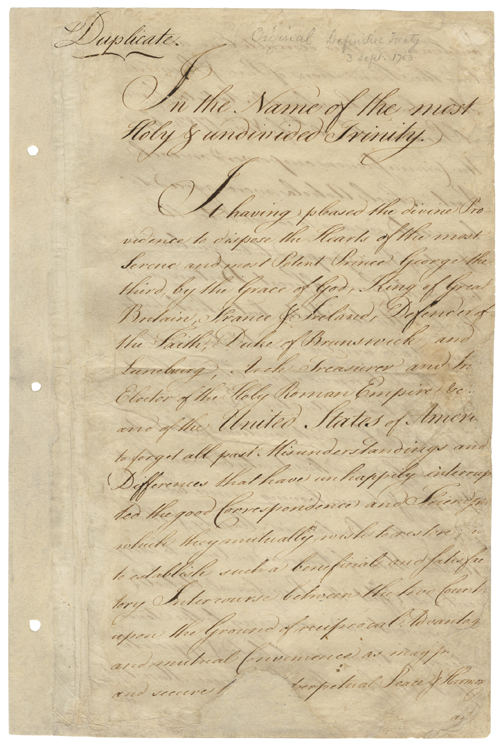
The Treaty of Paris was signed on 10 December 1898, formally ending the Spanish-American War. Spain ceded Puerto Rico and Guam to the United States, transferred the Philippines for a payment of $20 million, and relinquished sovereignty over Cuba, which came under American military occupation. The American delegation, appointed by McKinley, decided to take the whole Philippine archipelago rather than only a naval base, after commercial and strategic argument and without consulting Filipino leaders. The treaty marked the end of Spain's empire in the Americas and the beginning of American colonial rule in the Caribbean and the Pacific. Its ratification in the Senate required a fight against a newly organized anti-imperialist movement.
Location: Paris, France
The Philippine-American War Begins

On 4 February 1899 fighting broke out between US forces and Filipino troops at the edge of Manila, opening the Philippine-American War. Emilio Aguinaldo had proclaimed the First Philippine Republic in January 1899, and neither side accepted the other's authority over the islands. The war lasted more than three years against conventional and guerrilla forces, involved the US Army in large-scale counterinsurgency, and produced tens of thousands of Filipino combat deaths, along with a much larger toll from disease and displacement. American commanders used reconcentration and village-burning tactics in some provinces, and the war became a central exhibit in the anti-imperialist case at home. It was the longest and costliest consequence of the war with Spain.
Location: Manila, Philippines
The Senate Ratifies the Treaty
On 6 February 1899 the US Senate ratified the Treaty of Paris by 57 votes to 27, two votes more than the two-thirds required. The debate was the most consequential foreign policy argument of the period, and the Anti-Imperialist League, founded in 1898 with members including Andrew Carnegie, Mark Twain and former president Grover Cleveland, opposed annexation on constitutional and moral grounds. Supporters argued that the United States had a duty to govern the islands and a strategic interest in the Pacific, while opponents argued that holding colonies violated the republic's founding principles and would entangle the country in permanent war. The narrow margin decided that the United States would become a colonial power. Ratification also confirmed the annexation of Puerto Rico and Guam.
Location: Washington, D.C.
The Platt Amendment
On 2 March 1901 Congress passed the Platt Amendment as part of an army appropriations bill, defining the terms on which the United States would end its occupation of Cuba. The amendment limited Cuba's treaty-making and borrowing powers, gave the United States the right to intervene to preserve independence and order, and required Cuba to lease coaling stations, which became the Guantánamo Bay naval base. Cuban delegates incorporated its terms into the 1901 constitution under pressure, and the United States withdrew its occupation in 1902. The amendment replaced the Teller Amendment's promise of non-intervention with a formal protectorate, and it shaped Cuban politics until its abrogation in 1934. Cuban nationalists regarded it as a limitation of the independence won in 1898.
Location: Washington, D.C.