
The LGBTQ+ Rights Movement
The struggle for LGBTQ+ rights has unfolded over more than a century, from isolated early advocacy groups through the Stonewall uprising, the devastation of the AIDS crisis, landmark legal victories for marriage equality, and ongoing debates over transgender rights, religious liberty exemptions, and the place of LGBTQ+ people in society.
Events
The Scientific-Humanitarian Committee is Founded
Magnus Hirschfeld founded the Scientific-Humanitarian Committee (Wissenschaftlich-humanitaeres Komitee), the world's first LGBTQ+ rights organization. The Committee campaigned for the repeal of Paragraph 175, the German law criminalizing homosexual acts, and advanced the scientific study of human sexuality. It operated until the Nazi rise to power in 1933.
The Mattachine Society is Founded
Harry Hay and a small group of gay men founded the Mattachine Society, the first enduring gay rights organization in the United States. Named after medieval masque performers who spoke truth to power, the Society worked through education, legal challenges, and public advocacy to improve the status of homosexuals during the repressive McCarthy era.
The Stonewall Riots
Police raided the Stonewall Inn, a gay bar in Greenwich Village, sparking six days of protests and clashes with law enforcement. Led by transgender women of color including Marsha P. Johnson and Sylvia Rivera, the uprising marked a turning point: the gay liberation movement shifted from a cautious respectability approach to militant, public demands for equality. The riots became a symbol of resistance globally, inspiring the formation of LGBTQ+ rights groups in numerous countries.
First Pride Marches
On the first anniversary of the Stonewall Riots, the first Pride marches were held in New York, Los Angeles, Chicago, and San Francisco. Participants marched in a "Christopher Street Liberation Day" to commemorate the uprising and demand visibility and rights. This established the annual Pride tradition that spread globally in subsequent decades.
Homosexuality Removed from the DSM

The American Psychiatric Association voted unanimously to remove homosexuality from the Diagnostic and Statistical Manual of Mental Disorders (DSM), effectively declassifying it as a mental illness. The decision followed years of activism by gay rights groups and research demonstrating that homosexuality was not pathological. A minority of psychiatrists dissented, arguing the vote had been influenced by political pressure rather than purely medical evidence.
The AIDS Crisis Begins

The U.S. Centers for Disease Control reported the first cluster of Pneumocystis pneumonia cases in five gay men in Los Angeles, marking the beginning of the AIDS epidemic. The disease devastated the gay community, killing hundreds of thousands before effective treatments emerged. The crisis galvanized LGBTQ+ activism through groups like ACT UP, which demanded faster drug approval and government action. The epidemic also prompted moral debates, with some religious leaders characterizing the disease as divine judgment, a view contested by other religious figures who advocated compassion and care.
Section 28 Enacted in the United Kingdom

The UK Parliament enacted Section 28 of the Local Government Act 1988, which prohibited local authorities from "intentionally promoting homosexuality" or promoting "the acceptability of homosexuality as a pretended family relationship." Supporters of the law, including the Thatcher government, argued it protected children from inappropriate sexual content in schools and preserved traditional family values. Opponents condemned it as state-sanctioned discrimination that stigmatized LGBTQ+ people and had a chilling effect on school sex education, LGBTQ+ student support groups, and cultural funding. The law remained in effect until its repeal in Scotland in 2000 and in England and Wales in 2003.
"Don't Ask, Don't Tell" Enacted

President Bill Clinton signed Directive 1304.26 implementing the "Don't Ask, Don't Tell" policy, a compromise that allowed gay, lesbian, and bisexual people to serve in the U.S. military only if they concealed their sexual orientation. Supporters of the existing ban and the DADT compromise argued that openly gay service members could undermine unit cohesion, disrupt military discipline, and compromise readiness. Opponents of the policy argued it institutionalized discrimination and forced service members to choose between honesty and their careers. Over 14,000 service members were discharged for homosexuality during the policy's 17-year tenure.
Germany Repeals Paragraph 175

Germany repealed Paragraph 175 of its penal code, which had criminalized homosexual acts since 1871. The Nazi regime had expanded the law in 1935, leading to the prosecution and imprisonment of tens of thousands of gay men. Although West Germany decriminalized adult homosexuality in 1969, Paragraph 175 remained on the books in a modified form until after German reunification, when the Bundestag voted for full repeal in 1994. The law's long legacy left approximately 140,000 men convicted under its provisions, many of whom were never compensated.
The Defense of Marriage Act is Signed
President Bill Clinton signed the Defense of Marriage Act (DOMA), which defined marriage as between one man and one woman for federal purposes and permitted states to refuse to recognize same-sex marriages performed in other states. Supporters of the law argued that marriage was traditionally understood as a union between a man and a woman, that the federal government should not subvert state marriage laws, and that preserving the traditional definition protected religious institutions that performed marriages from legal pressure to officiate same-sex unions. Opponents argued the law was discriminatory on the basis of sexual orientation and denied same-sex couples access to over 1,000 federal benefits and protections.
The Netherlands Legalizes Same-Sex Marriage
The Netherlands became the first country in the world to legalize same-sex marriage, with the law taking effect on April 1, 2001. Amsterdam's mayor officiated the first four same-sex weddings at midnight. The precedent triggered a wave of marriage equality legislation across Europe and later North America. Some religious denominations in the Netherlands, including the Protestant Church in the Netherlands, supported the move, while Catholic and Muslim communities largely opposed it on doctrinal grounds.
Lawrence v. Texas Strikes Down Sodomy Laws
The U.S. Supreme Court ruled 6-3 in Lawrence v. Texas that laws criminalizing consensual same-sex sexual activity were unconstitutional, overturning Bowers v. Hardwick (1986). The decision invalidated sodomy laws in 13 states and affirmed a constitutional right to private, intimate conduct. Justice Kennedy wrote that the case involved "the liberty of the person both in its spatial and transcendent dimensions." Justice Scalia's dissent argued the ruling undermined states' authority to legislate morality and predicted it would lead to same-sex marriage being recognized as a constitutional right.
Don't Ask, Don't Tell is Repealed
The "Don't Ask, Don't Tell" (DADT) policy was officially repealed, allowing gay, lesbian, and bisexual Americans to serve openly in the military for the first time. President Barack Obama signed the repeal legislation in December 2010, and it took effect nine months later after certification that the military was ready for the change. Opponents of the repeal reiterated concerns about unit cohesion and morale, while supporters argued that open service strengthened the military by enabling all qualified personnel to serve honestly.
Windsor v. United States Strikes Down DOMA
The U.S. Supreme Court ruled 5-4 in United States v. Windsor that Section 3 of the Defense of Marriage Act, which denied federal recognition of same-sex marriages, was unconstitutional. The decision restored federal benefits to same-sex couples legally married in their states. The dissenting justices argued that the definition of marriage had historically been a matter for the states and that the court had overstepped its authority. Chief Justice Roberts and Justice Scalia each wrote dissents warning that the decision would accelerate challenges to state-level marriage bans.
Russia Enacts Law Restricting LGBTQ+ Expression

President Vladimir Putin signed a law prohibiting "propaganda of non-traditional sexual relations" among minors, imposing fines on individuals and organizations promoting LGBTQ+ content to those under 18. Supporters of the law, including the Russian Orthodox Church and conservative legislators, argued it protected children from exposure to what they characterized as age-inappropriate material and preserved traditional Russian values in the face of Western cultural influence. Critics argued the law was broadly worded, enabling censorship of factual information about LGBTQ+ identities and contributing to a climate of discrimination and violence. International human rights organizations condemned the law as a violation of freedom of expression.
Post-Obergefell Resistance and Religious Liberty Conflicts

The Obergefell decision sparked a backlash focused on religious liberty and states' rights. In 2015, Indiana passed a Religious Freedom Restoration Act (RFRA) that critics argued could be used to justify anti-LGBTQ+ discrimination; the law prompted a national debate and was subsequently amended. Kentucky county clerk Kim Davis was jailed for contempt of court after refusing to issue marriage licenses to same-sex couples, citing her Apostolic Christian faith. In 2018, the U.S. Supreme Court ruled in Masterpiece Cakeshop v. Colorado Civil Rights Commission that the Colorado Civil Rights Commission had shown unconstitutional hostility toward a baker's religious beliefs when it sanctioned him for refusing to design a wedding cake for a same-sex couple, though the ruling was narrowly drawn and left unresolved the broader question of when religious objections may override public accommodation laws. Several states also enacted laws allowing adoption and foster care agencies to refuse placements that conflict with their religious beliefs. These cases highlighted ongoing tensions between LGBTQ+ anti-discrimination protections and religious liberty exemptions.
Obergefell v. Hodges Legalizes Same-Sex Marriage Nationwide
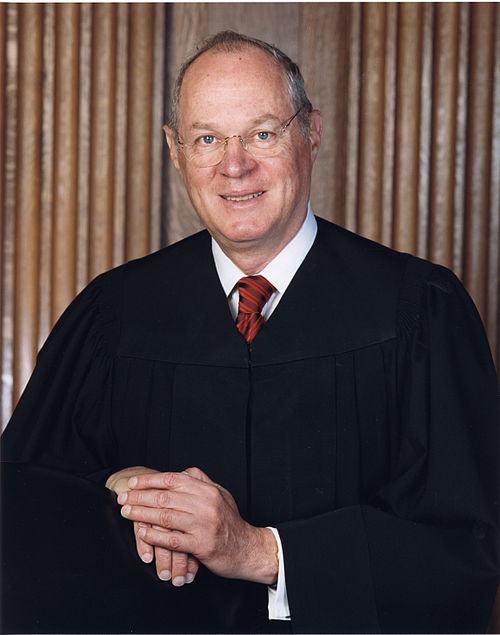
The U.S. Supreme Court ruled 5-4 in Obergefell v. Hodges that same-sex marriage is a constitutional right under the 14th Amendment, requiring all 50 states to perform and recognize same-sex marriages. Justice Kennedy's majority opinion declared: "They ask for equal dignity in the eyes of the law. The Constitution grants them that right." The four dissenting justices argued that the court had usurped the democratic process and that the definition of marriage should be decided by voters and legislatures, not by judicial decree. Chief Justice Roberts wrote in dissent that the majority's "principles and logic" would threaten religious liberty protections. Some religious organizations, including the Episcopal Church, the United Church of Christ, and Reform Judaism, welcomed the decision and already performed same-sex marriages; others, including the Catholic Church, the Southern Baptist Convention, and the Church of Jesus Christ of Latter-day Saints, opposed it on doctrinal grounds, arguing that marriage was divinely instituted as between a man and a woman.
India's Supreme Court Strikes Down Section 377

The Supreme Court of India unanimously struck down Section 377 of the Indian Penal Code, a colonial-era law that criminalized "carnal intercourse against the order of nature." The decision decriminalized same-sex relationships between consenting adults, following years of activism by Indian LGBTQ+ organizations. The court ruled that the law violated fundamental constitutional rights to equality, privacy, and dignity. Religious and cultural opposition to the decision remained strong in parts of Indian society, with leaders from Hindu, Muslim, and Christian communities expressing concern that the ruling would erode traditional family structures. The court explicitly stated that the ruling did not affect the validity of other laws concerning marriage, adoption, or inheritance.
Bostock v. Clayton County Protects LGBTQ+ Workers

The U.S. Supreme Court ruled 6-3 in Bostock v. Clayton County that Title VII of the Civil Rights Act of 1964 prohibits employment discrimination on the basis of sexual orientation or transgender status. The decision extended federal workplace protections to an estimated 8.1 million LGBTQ+ workers nationwide. Justice Gorsuch wrote the majority opinion, applying a textualist interpretation of the statute. The dissenting justices, led by Justice Alito, argued that the court had rewritten the statute beyond what Congress intended and warned of conflicts with religious liberty protections for employers. The ruling did not address religious exemptions under the Religious Freedom Restoration Act, leaving those to be resolved in future cases.
Legislation Addressing Transgender Rights Becomes a Central Political Battleground
The 2020s saw a surge of legislation addressing transgender rights, particularly concerning access to gender-affirming healthcare for minors, participation in school sports, and bathroom access. By 2023, over 40 states had introduced bills restricting gender-affirming care for minors or transgender participation in school athletics. Supporters of such legislation argued that the laws protected minors from making irreversible medical decisions they might later regret, preserved fair competition in women's sports, and safeguarded religious liberty and parental rights. Opponents of the legislation argued that gender-affirming care is medically necessary and that restricting it harmed transgender youth, that inclusive sports policies do not compromise fairness, and that the laws targeted a vulnerable minority. Several states passed "sanctuary" laws protecting access to gender-affirming care for out-of-state patients, creating a legal patchwork across the country. The issue became a defining cultural and political flashpoint in American politics and drew attention from international human rights organizations.