
The History of Mathematics
The history of mathematics traces humanity's developing tools of number, proof, and abstraction, from Babylonian tablets and Greek deductive geometry through Indian and Islamic algebra to modern foundations, computing, and unsolved problems.
Events
The First Written Mathematics
The earliest surviving mathematical texts come from the ancient Near East. Babylonian clay tablets such as Plimpton 322 record sexagesimal arithmetic and Pythagorean triples, while the Egyptian Rhind Mathematical Papyrus works through fractions, areas, and simple equations. In the same era Chinese scribes developed place-value notation and used negative numbers. Written mathematics began as a practical instrument of taxation, trade, astronomy, and construction.
Location: Mesopotamia and Egypt
Mathematics as a Demonstrative Discipline

In the late sixth century BC the Pythagorean school in southern Italy treated mathematics as a demonstrative discipline and coined the word mathema, "subject of instruction". The theorem that bears Pythagoras's name was known to Babylonian calculators long before him, but the Greeks recast such knowledge as a body of proof rather than a collection of rules.
Location: Croton, Magna Graecia
Euclid's Elements

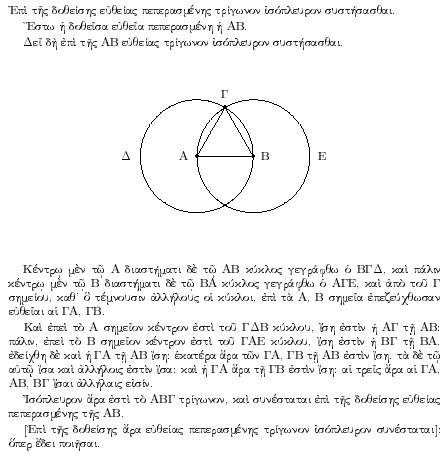
Euclid of Alexandria compiled the Elements around 300 BC, organizing geometry and number theory from a small set of definitions, postulates, and proved propositions. The book became the most widely studied textbook in history and made deductive reasoning the standard of mathematical truth.
Location: Alexandria, Egypt
Archimedes Measures the Curved World

Archimedes of Syracuse developed the method of exhaustion, a forerunner of integral calculus, to compute areas and volumes of curved forms, and bounded the value of pi between 3.1408 and 3.1429. His works showed that Greek mathematics could measure the shapes of nature with rigorous logic.
Location: Syracuse, Sicily
Zero and the Decimal Place-Value System

Indian mathematicians created the decimal place-value system that carries the world's numbers. Aryabhata's Aryabhatiya of 499 set out new computational methods, and Brahmagupta's Brahmasphutasiddhanta of 628 gave the first rules for reckoning with zero as a number in its own right, including addition and subtraction yielding negative quantities. In the same era the Maya of Central America gave zero a standard symbol of its own.
Location: India
Al-Khwarizmi Founds Algebra

Working at the House of Wisdom in Baghdad, Muhammad ibn Musa al-Khwarizmi wrote Al-Kitab al-mukhtasar fi hisab al-jabr wa'l-muqabala, founding algebra as a systematic discipline for reducing and solving equations. His name, latinized, gave mathematics the word "algorithm", and his book gave it the word "algebra".
Location: Baghdad, Abbasid Caliphate
Fibonacci Introduces the Hindu-Arabic Numerals to Europe
Leonardo of Pisa's Liber Abaci of 1202 demonstrated the Hindu-Arabic numeral system to European merchants through worked commercial problems, among them the sequence later named for him. The decimal place-value notation it promoted gradually replaced Roman numerals in European accounting and science.
Location: Pisa, Italy
Ars Magna and the Cubic Equation
Gerolamo Cardano's Ars Magna of 1545 published the general solutions for cubic and quartic equations developed by Scipione del Ferro, Niccolo Tartaglia, and Lodovico Ferrari, the first major advance beyond ancient mathematics in Europe. The bitter priority dispute over the cubic formula ran through the book's publication and its aftermath.
Location: Milan, Italy
Logarithms
John Napier's Mirifici Logarithmorum Canonis Descriptio of 1614 introduced logarithms, turning multiplication and division into addition and subtraction and greatly easing astronomical and navigational calculation. Logarithms remained a standard instrument of science for more than three centuries.
Location: Edinburgh, Scotland
Analytic Geometry
Rene Descartes' La Geometrie, published in 1637 as an appendix to his Discourse on Method, joined algebra to geometry through the coordinate system that bears his name. Analytic geometry gave mathematicians a way to describe curves as equations and set the stage for calculus.
Location: Leiden, Dutch Republic
The Invention of Calculus and the Priority Dispute
Isaac Newton and Gottfried Wilhelm Leibniz developed calculus independently in the 1660s and 1670s; Leibniz published first, in 1684, and Newton's Principia followed in 1687. A bitter priority dispute, formally examined by the Royal Society in 1712, split British and Continental mathematics for a century and became one of science's most consequential personal conflicts.
Location: Hanover and London
Non-Euclidean Geometry
Nikolai Lobachevsky published in 1829 the first account of a geometry in which Euclid's parallel postulate does not hold, independently followed by Janos Bolyai in 1832; Carl Friedrich Gauss had reached similar ideas earlier but never published them. The discovery showed that consistent geometries other than Euclid's were possible and reshaped the understanding of mathematical truth.
Location: Kazan, Russia
Galois and the Theory of Equations
Evariste Galois, killed in a duel on 31 May 1832 at the age of twenty, left manuscripts determining when polynomial equations can be solved by radicals. Published posthumously in 1846, his work founded group theory and transformed algebra from calculation into structure.
Location: Paris, France
Cantor's Set Theory and the Infinite

Georg Cantor's work from 1874 onward established set theory and proved that infinities come in different sizes: the real numbers cannot be counted as the rational numbers can. His results met resistance from contemporaries including Leopold Kronecker and Henri Poincare, and later became a foundation of modern analysis and logic.
Location: Halle, Germany
Hilbert's Twenty-Three Problems
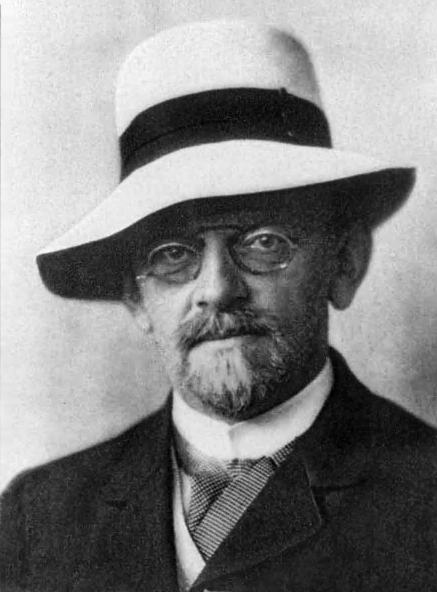
At the International Congress of Mathematicians in Paris in August 1900, David Hilbert set out twenty-three unsolved problems that framed the agenda of twentieth-century mathematics, from the foundations of arithmetic to the physics of the continuum. Several were solved within decades; the Riemann hypothesis was still unproved at the turn of the twenty-first century.
Location: Paris, France
Goedel's Incompleteness Theorems

Kurt Goedel's incompleteness theorems of 1931 proved that any consistent formal system containing arithmetic holds true statements it cannot prove, and cannot prove its own consistency. The result closed Hilbert's program to ground all of mathematics on a single finite axiomatic foundation and opened the modern era of mathematical logic.
Location: Vienna, Austria
The First Computer-Assisted Proof

Kenneth Appel and Wolfgang Haken proved the four-color theorem in 1976 with computer assistance, reducing the map-coloring problem to nearly two thousand cases checked by machine. It was the first major theorem proved by computer and provoked continuing debate over what counts as a proof.
Location: Urbana-Champaign, United States
Fermat's Last Theorem Proved

Andrew Wiles announced in 1993 and, after repairing a gap in the argument, published in 1995 a proof of Fermat's Last Theorem: that no three whole numbers satisfy a raised to the n plus b raised to the n equals c raised to the n for any n greater than two. The result closed a problem posed in 1637 and linked number theory to modern algebraic geometry.
Location: Princeton, United States