
The Green Revolution (1943–2009)
The international agricultural transformation that multiplied grain harvests across the developing world. High-yielding wheat and rice varieties, chemical fertilizers, and irrigation — championed by Norman Borlaug, IRRI, and Yuan Longping — averted predicted famines while drawing lasting criticism for environmental and social costs.
Events
The Mexican Agricultural Program Is Founded
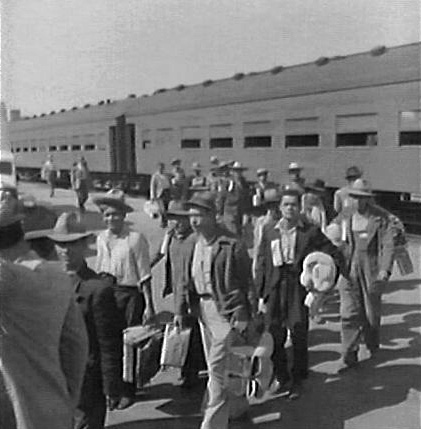
After a 1940 visit by U.S. Vice President-elect Henry A. Wallace exposed Mexico's low crop yields, the Rockefeller Foundation and the Mexican government under President Manuel Avila Camacho launched a joint agricultural research program. Its mandate was to develop higher-yielding corn and wheat varieties suited to Mexican conditions, with the Mexican government providing scientists and facilities as full partners.
Location: Mexico City, Mexico
Norman Borlaug Arrives to Breed Wheat

A young American plant pathologist, Norman Borlaug, joined the program to lead wheat research. He pioneered "shuttle breeding," growing test crops twice a year in different climatic zones of Mexico, which halved breeding time and produced varieties adaptable across latitudes. Over the following decade his team bred rust-resistant, semi-dwarf wheat that responded strongly to fertilizer without lodging.
Location: Mexico City, Mexico
Semi-Dwarf Wheat Varieties Released in Mexico

After years of crosses between Japanese dwarf wheat and rust-resistant strains, the varieties Sonora 64 and Penjamo 62 were released. Planted across northwest Mexico, they helped the country approach self-sufficiency in wheat by the mid-1960s, reversing two decades of import dependence and proving that the new seeds could transform a national food supply.
Location: Sonora, Mexico
Mexican Wheat Reaches Indian Test Fields

Facing stagnant harvests and rising imports, the Indian government under C. Subramaniam and scientist M.S. Swaminathan invited Borlaug to advise its wheat program. Trial plots of Mexican semi-dwarf varieties were planted at Indian research stations and out-yielded local strains several times over, setting the stage for a national program — amid public skepticism from some Indian agronomists who doubted foreign seeds suited local soils.
Location: New Delhi, India
India Imports 18,000 Tons of Seed During Drought and War

With India struck by back-to-back droughts in 1965 and 1966 and food reserves nearly exhausted, the government ordered 18,000 tons of Mexican wheat seed, shipped from Sonora in July 1966. The seed reached Gujarat by September and was planted that season, one of the largest seed transfers ever attempted. Pakistan, at war with India that same year, undertook a parallel import.
Location: Gujarat, India
IR8, the "Miracle Rice"
The International Rice Research Institute released IR8, a semi-dwarf rice bred from a Taiwanese and an Indonesian variety. IR8 roughly doubled rice yields across Asia, from about 1-2 tons per hectare to 4-5 tons under good management, and was adopted rapidly from the Philippines to India and Pakistan. Farmers nicknamed it "miracle rice."
Location: Los Banos, Philippines
The Term "Green Revolution" Is Coined
In a speech, USAID administrator William S. Gaud described the spread of the new agricultural technologies: "It is not a violent Red Revolution like that of the Soviets, nor is it a White Revolution like that of the Shah of Iran. I call it the Green Revolution." India's wheat harvest had by then risen from 12 million to nearly 20 million tons in two years, and the phrase became the movement's permanent name.
Location: Washington, DC, USA
Borlaug Wins the Nobel Peace Prize
The Norwegian Nobel Committee awarded Norman Borlaug the Nobel Peace Prize for his contribution to world food supply, crediting the new seeds with averting famine in the Indian subcontinent. Borlaug used the occasion to warn that the technology had bought time, not solved the problem, and that population growth could outpace harvests. India had become self-sufficient in wheat by 1974.
Location: Oslo, Norway
Yuan Longping's Hybrid Rice Succeeds in China

Chinese agronomist Yuan Longping and his team achieved the world's first successful three-line hybrid rice, using a wild male-sterile rice found in Hainan. Chinese hybrid rice yields rose 20-30 percent above conventional varieties and the technique later spread to Vietnam, India, the Philippines, and Africa. Yuan became celebrated in China as the "father of hybrid rice."
Location: Hunan, China
The Environmental and Social Critique Takes Shape

Vandana Shiva's book "The Violence of the Green Revolution" crystallized a critique that had been building among agronomists and activists: the new seeds depended on heavy fertilizer and irrigation, depleting groundwater in Punjab and elsewhere; monocultures displaced diverse traditional crops; and smallholders who could not afford the input package fell behind larger farmers, deepening rural inequality and debt. The subsequent rise of farmer suicides in Punjab and the pest collapse of the 1980s cotton belt became central evidence in this debate.
Location: Dehra Dun, India
Borlaug's Death and the Revolution's Ledger
Norman Borlaug died at 95, widely credited with saving hundreds of millions of people from starvation. Historians continued to debate the balance sheet: the Green Revolution had roughly doubled and in places tripled grain yields and held world food prices down for decades, while leaving legacies of aquifer depletion, soil degradation, biodiversity loss, and uneven benefits that shaped agricultural policy debates into the 21st century.
Location: Dallas, Texas, USA