
The Continuation War (1941–1944)
The Continuation War (1941-1944) was Finland's second war against the Soviet Union within two decades, fought alongside, though not formally allied with, Nazi Germany. After the Winter War of 1939-40 cost Finland a tenth of its territory, the Finnish leadership sought to recover lost Karelia as Hitler's armies invaded the USSR, becoming a co-belligerent while maintaining a distinct war aim. Finnish forces retook their ceded lands and advanced into Soviet East Karelia before halting, refusing German requests to attack Leningrad. The Soviet Vyborg-Petrozavodsk offensive of June 1944 broke Finnish defenses until the battle of Tali-Ihantala stopped it, and Finland exited the war with an armistice that preserved independence at the cost of heavy territorial losses, reparations, and the expulsion of German forces from Lapland. The war remains central to debates over neutrality and how a small democracy survived between totalitarian powers.
Events
The Winter War and the Moscow Peace Treaty

On November 30, 1939, the Soviet Union attacked Finland after Finland refused territorial demands intended, in Soviet stated aims, to protect Leningrad; the Winter War that followed saw Finland's outnumbered army inflict heavy losses and hold out for 105 days against international expectation of a quick collapse. The Moscow Peace Treaty of March 13, 1940 forced Finland to cede about a tenth of its territory, including the industrial city of Viipuri and the Karelian Isthmus, and to lease the Hanko naval base, moving roughly 420,000 Karelian evacuees into the rest of the country. The war left Finland internationally sympathetic but strategically isolated, with Britain and France distracted and Germany formally neutral but effectively pro-Soviet under the Molotov-Ribbentrop Pact. Finnish leadership concluded that the Western powers could not be relied on for support, and that only a revised relationship with Germany might offer protection against a further Soviet attack. This calculus set the stage for the Continuation War.
Location: Helsinki, Finland
Finnish-German Military Cooperation and Co-Belligerence

Through 1940 and early 1941 Finland and Germany developed transit agreements, arms sales, and military staff contacts, with German troops arriving in northern Finland under the arrangement to protect the nickel mines at Petsamo and prepare operations against the USSR. Finland never signed the Tripartite Pact or a formal alliance, insisting its soldiers were "co-belligerents" rather than Axis allies, and Marshal Carl Gustaf Emil Mannerheim, commander-in-chief and a former Tsarist officer, kept formal distance from Hitler's command structure. Finnish leadership, including President Risto Ryti and Mannerheim, assessed in spring 1941 that a German-Soviet war was coming and that joining it offered the only realistic chance to reverse the losses of the Winter War. Historians debate how much Finland knew of Barbarossa's full scope; the Finnish official view was that Finland was dragged into a parallel war of its own, while critics have described the arrangement as a de facto alliance with Nazi Germany. Both views capture part of a genuinely ambiguous position.
Location: Helsinki, Finland
Soviet Air Attacks and the Outbreak of War
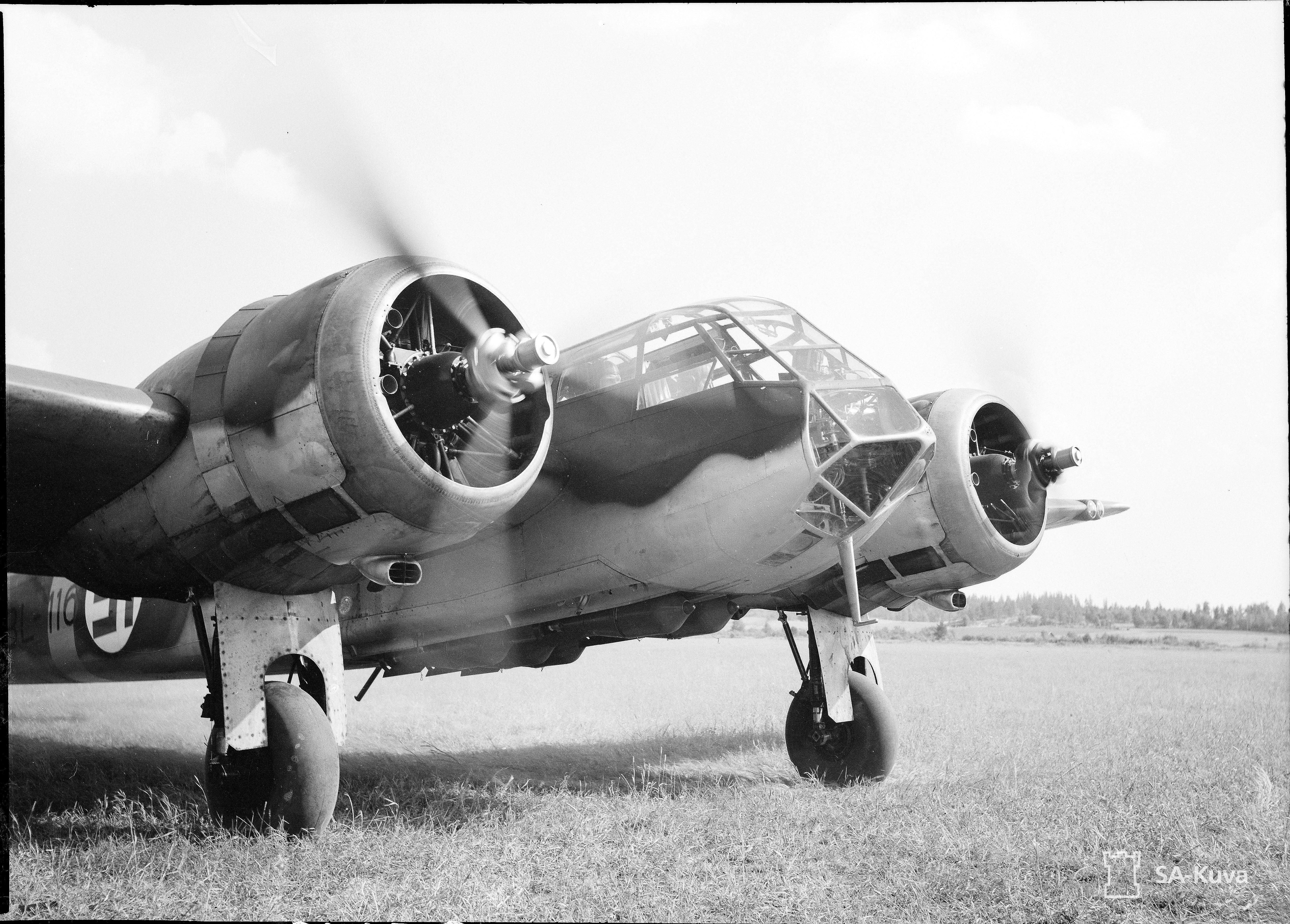
Germany invaded the Soviet Union on June 22, 1941; Finland declared neutrality for the first days while German units already on Finnish soil attacked southward toward Murmansk. On June 25, 1941, Soviet aircraft bombed Finnish cities including Helsinki, and the Finnish government declared that a state of war existed, framing the entry as a response to aggression rather than participation in Barbarossa. Finnish forces then began their offensive on the Karelian Isthmus and in Ladoga Karelia, advancing in July and August across the 1939 border to retake ceded territory. The claim of defensive motivation was genuinely felt in Finland and remains debated: Finland's aims grew as victories mounted, from restoration of the 1939 border to annexation of East Karelia, a region that had never been part of independent Finland. The war was named the "Continuation War" by Finns precisely to present it as an extension of the defensive Winter War.
Finland and the Siege of Leningrad

Finnish forces advanced to within roughly 30 kilometers of Leningrad in the autumn of 1941, taking the pre-1939 border on the Karelian Isthmus and halting there. The city was then subjected by Germany to a siege lasting 872 days in which well over a million people, mostly civilians, died of starvation and bombardment. German requests, including Hitler's direct appeals to Mannerheim, for Finland to attack Leningrad or at least cut the Murmansk railway were refused; Mannerheim cited the cost of assault against fortified positions and Finland's declared war aim of recovering its own territory. Finnish forces did hold positions on the Svir and contributed to the siege's encirclement, a contribution historians debate, and the Soviet Union and postwar commissions accused Finland of complicity in the siege's starvation. The refusal to assault the city, documented in Mannerheim's orders and diaries, is credited by Finnish historians with sparing Finland from full belligerency in one of history's worst atrocities, and remains a key point in assessing the war's morality.
Location: Leningrad, Soviet Union
The Occupation of East Karelia

Finnish forces advanced past the old border into Soviet East Karelia in the autumn of 1941, occupying Petrozavodsk and administering a region that Finland officially designated as territory to be incorporated after victory. The occupation was run with ethnically preferential policies that favored Finnish-speaking Karelians while confining Russian residents to camps, where food shortages and disease produced death rates documented by later Finnish investigations; several thousand civilians died. Some 24,000 ethnic Karelians were also transferred to Finland as labor, a policy that ended the practice under pressure in 1943. The occupation has become a moral and historiographical fault line: Finnish defenders argue it reflected the war aims of a small state, while Finnish historians since the 1990s have documented the camps' conditions as a serious violation. The episode complicates the purely defensive framing of the war that Finland's leadership maintained publicly.
Location: Petrozavodsk, Soviet Union
Britain Declares War; US Applies Pressure
On December 6, 1941, Britain, already at war with Germany and now allied with the USSR, formally declared war on Finland, making Finland officially an enemy of one Western democracy and a co-belligerent of another's mortal enemy. The declaration was largely symbolic, with no British land operations against Finland, but it carried political weight: Finnish democracy was distinct from the Axis dictatorships in British and American eyes. The United States, never at war with Finland, used economic pressure, including a licensing embargo on Finnish exports and personal appeals from President Roosevelt to President Ryti, to push Finland toward a separate peace and to deter further offensives. American diplomacy treated Finland as a special case, and Finnish exports of nickel and timber to the West continued under restriction through the war. The dual Western posture, formal enemy in London, informal mediator in Washington, reflected Finland's genuinely ambiguous position among the war's alliances.
Location: London, United Kingdom
Stalemate, Attrition, and the Positional War
From early 1942 to mid-1944 the Finnish front settled into static positional warfare along a front running from the Gulf of Finland through the Svir to the Arctic, with trench warfare, patrols, and artillery duels but no major offensives. Finland's leadership, observing German reversals at Moscow and Stalingrad, privately concluded that the war was lost and began discreet diplomatic contacts with the Soviets in 1943 through Stockholm, while publicly maintaining the alliance framework that kept German supplies flowing. Soviet partisans and occasional raids punctured the quiet, and Finnish civilian morale, though resilient, was strained by rationing, casualties, and the prolonged separation of mobilized men from farms and factories. Jewish Finns served in the army alongside their fellow citizens, with a field synagogue on the front, a fact often cited as a marker of Finland's distinctiveness within the Axis camp. The long pause was costly in men and resources, but it preserved Finnish sovereignty in fact if not in law.
Location: Karelian Isthmus, Soviet Union
The Soviet Vyborg-Petrozavodsk Offensive
On June 9, 1944, the Soviet Leningrad Front launched the Vyborg-Petrozavodsk offensive, a massive assault on the Karelian Isthmus with overwhelming artillery and air superiority, timed in coordination with the Normandy landings to knock Finland out of the war. Finnish defenses on the Isthmus were broken within days, Vyborg fell on June 20, and Soviet forces threatened to reach Helsinki. The emergency brought Germany's only direct military aid, including Panzerfaust anti-tank weapons and aircraft, delivered under political conditions including Ryti's written guarantee not to conclude a separate peace. The crisis demonstrated that Finland's military position, resilient in static warfare, could not withstand a concentrated modern offensive, and that only negotiation could end the war before total defeat. Civilian evacuation from the Isthmus was organized under fire, adding to the country's wartime displacement, which by 1944 had uprooted well over 400,000 people.
Location: Karelian Isthmus, Soviet Union
Tali-Ihantala — Finland's Largest Battle
From June 25 to July 9, 1944, Finnish forces concentrated nearly all available armor, artillery, and air support into the narrow Tali-Ihantala sector on the Karelian Isthmus and defeated the Soviet 21st Army's attempt to break through toward Viipuri and Helsinki, in the largest battle in the history of the Nordic countries. Finnish artillery, firing massed concentrations timed to the minute, and improvised anti-tank tactics destroyed hundreds of Soviet tanks, and the front stabilized along a defensible line. The victory gave Finland's negotiators leverage: the Soviet Union accepted that Finland could not be overrun quickly and shifted emphasis to ending the war on negotiated terms. Coupled with the parallel defeats at Vuosalmi and the northern front, Tali-Ihantala made clear that Finland could not win but could still make conquest expensive. The battle is commemorated in Finland as the moment that preserved the country's independence, though its cost, with tens of thousands of casualties on both sides, was severe.
Location: Tali-Ihantala, Finland
The Moscow Armistice
On September 19, 1944, Finland signed the Moscow Armistice with the Soviet Union and Britain, ending the Continuation War. The terms returned Finland to the 1940 borders with additional cessions including Petsamo, required a war reparations payment of $300 million in goods, leased the Porkkala peninsula near Helsinki as a naval base, obliged Finland to legalize the communist party, ban "fascist" organizations, and prosecute war leaders, and required the expulsion or internment of German forces on Finnish soil. President Ryti had resigned on August 1 to allow Mannerheim, now president, to sign without being bound by Ryti's June guarantee to Germany. The armistice preserved Finland's independence, political system, and, in contrast to the other Axis-aligned states in Europe, avoided Soviet occupation, a result Finns attribute to Tali-Ihantala, the terms' negotiability, and Stalin's preference for a compliant neutral over a hostile frontier. The settlements of 1944 shaped Finland's Cold War posture of careful accommodation with Moscow, later described as "Finlandization."
Location: Moscow, Soviet Union
The Lapland War — Finns Fight the Germans
The armistice required Finland to expel German forces stationed in northern Finland, and the resulting Lapland War (September 1944 to April 1945) saw former comrades-in-arms fight a harsh campaign of withdrawal and pursuit in Arctic conditions. The Germans executed a scorched-earth withdrawal, destroying Rovaniemi and most buildings in Lapland, mining roads, and booby-trapping infrastructure, leaving some 100,000 Lapps and Finnish residents homeless. Finnish and German units fought intermittently, with the heaviest engagements at Tornio, Kemi, and along the Norwegian border; Finland's forces, constrained by the armistice's timetable and the terrain, drove the last German units across into Norway by late April 1945. Finland was thus simultaneously at war with the Soviet Union's enemies and formally required to disarm them, an arrangement without parallel in Europe. The Lapland War completed Finland's transition out of the German camp and was the precondition for the peace treaty signed in Paris in 1947.
Location: Lapland, Finland