
The Columbian Exchange
The transfer of plants, animals, people, and diseases between the Old and New Worlds that began with Columbus's voyages of 1492. It transformed diets, economies, and populations on every continent — triggering the demographic collapse of Indigenous America while spreading American crops that reshaped Eurasia and Africa.
Events
Columbus's First Voyage Opens the Route
Columbus's landfall in the Bahamas initiated sustained contact between the Americas and Afro-Eurasia. Within a generation, regular transatlantic shipping carried people, crops, animals, and — unintentionally — pathogens in both directions, beginning the largest biological transfer between the world's hemispheres in human history.
Location: Bahamas
Old World Animals and Crops Arrive in the Americas
Columbus's second voyage brought horses, cattle, pigs, sheep, goats, and chickens to the Caribbean, along with wheat, sugar cane, grapes, and citrus. These species transformed American landscapes and economies — none more than the horse, which by the eighteenth century had reshaped the hunting, warfare, and trade of the Great Plains peoples.
Location: Hispaniola, Caribbean
The Syphilis Debate
A severe epidemic of what contemporaries called the "French disease" — syphilis — erupted among armies besieging Naples in 1494-95 and spread across Europe. Whether the disease was new from the Americas remains historically contested; the sixteenth-century debate itself illustrates how quickly the exchange transmitted medical consequences in both directions.
Location: Naples, Italy
The First American Epidemics
A smallpox outbreak struck Hispaniola in 1518 and spread through the Caribbean, where Indigenous peoples had no acquired immunity to Old World diseases. The Taíno population, estimated in the hundreds of thousands at contact, collapsed within a generation — the beginning of a pandemic wave that would ultimately reach every part of the Americas.
Location: Hispaniola, Caribbean
Smallpox and the Fall of the Aztec Empire
Smallpox reached central Mexico in 1520 during the confrontation between Hernán Cortés and the Aztec Empire. The disease killed a large share of the population of Tenochtitlan, including the emperor Cuitláhuac, weakening the city before its fall to Spanish and Indigenous allied forces in August 1521.
Location: Central Mexico
Smallpox Breaks the Inca Succession

An epidemic that swept the Inca Empire around 1527 killed Emperor Huayna Capac and his designated heir, igniting a civil war between his sons Huáscar and Atahualpa. When Francisco Pizarro arrived in 1532, he found an empire exhausted by epidemic and internal war — a decisive factor in the Spanish conquest of Peru.
Location: Andean South America
Silver and the First Global Trade Network

The discovery of massive silver deposits at Potosí in 1545 and in Mexico created transpacific and transatlantic silver flows that linked the economies of Europe, the Americas, and China for the first time. Spanish silver paid for Chinese goods through Manila, making Potosí a pillar of the first truly global trading system.
Location: Potosí, Bolivia
American Crops Transform the Old World

Maize, potatoes, sweet potatoes, cassava, tomatoes, peppers, cacao, and peanuts spread through Europe, Africa, and Asia. Maize became a staple in China and Africa; the calorie-dense potato transformed northern European agriculture and later population growth. Historians link American crops to substantial population increases across Afro-Eurasia between the sixteenth and nineteenth centuries.
Location: Europe and Asia
Sugar, Slavery, and the Atlantic System
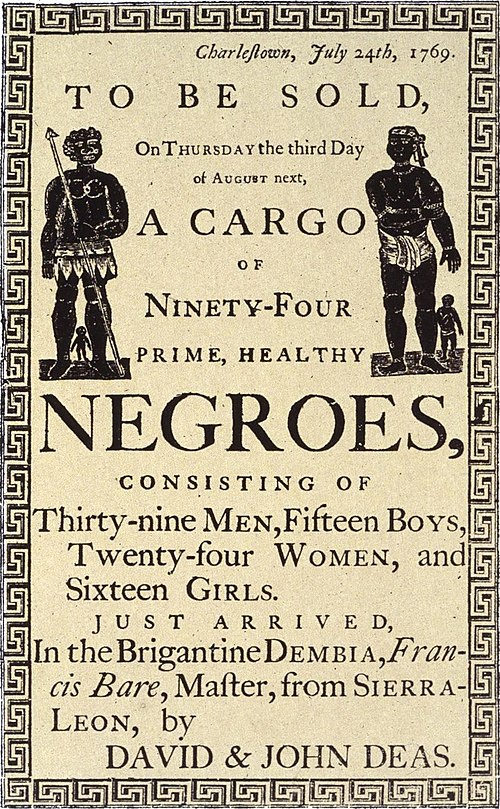
Sugar cane cultivation, transferred from the Old World to Brazil and the Caribbean, drove demand for plantation labor on a massive scale. The resulting expansion of the transatlantic slave trade forcibly transported more than twelve million Africans to the Americas over three centuries — one of the exchange's most consequential and devastating outcomes.
Location: Brazil and the Caribbean
Alfred Crosby Names the Exchange

Historian Alfred W. Crosby published "The Columbian Exchange," naming and framing the biological transfer between hemispheres as a defining process of modern world history. The concept reshaped the study of the Americas, agriculture, disease, and globalization, and remains a foundational framework in environmental history.
Location: United States