
The Byzantine Empire (330-1453)
The eastern Roman Empire, from Constantinople's founding to the fall of 1453.
Events
Constantinople Dedicated as New Capital

Emperor Constantine I formally dedicated the city of Constantinople (formerly Byzantium) as "New Rome," the new capital of the Roman Empire. Built on a strategic peninsula between Europe and Asia, the city was fortified with massive walls and adorned with palaces, churches, and public buildings. The move of the capital eastward would reshape world history for over a millennium.
Permanent Division of the Roman Empire
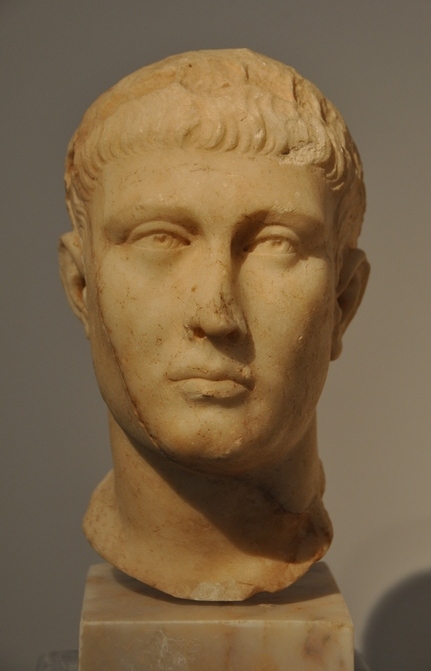
Upon the death of Emperor Theodosius I, the Roman Empire was permanently divided between his two sons: Arcadius ruling the Eastern Roman Empire from Constantinople and Honorius ruling the Western Roman Empire from Milan. This division became permanent; the Western Empire would collapse in 476 AD, while the Eastern Empire continued to thrive as what historians later called the Byzantine Empire.
Justinian's Reconquests and the Hagia Sophia

Justinian I ascended the throne and launched an ambitious campaign to reconquer the lost Western Roman territories. His general Belisarius recaptured North Africa, Italy, and parts of Spain. Justinian also codified Roman law in the Corpus Juris Civilis, which became the foundation of European legal systems. He built the Hagia Sophia, an architectural marvel that remained the world's largest cathedral for nearly a thousand years.
The Plague of Justinian

A devastating pandemic of bubonic plague swept through the Byzantine Empire, killing an estimated 25-50 million people across the Mediterranean world. In Constantinople alone, at its peak, up to 5,000 people died daily. The plague severely weakened the empire, reducing its tax base, military manpower, and ability to sustain Justinian's reconquests. It is considered the first recorded pandemic in history.
Heraclius and the Persian Wars

Heraclius became emperor after a coup and faced the empire's darkest hour: the Sassanid Persians had conquered Syria, Egypt, and Palestine, including the True Cross relic. Heraclius transformed the army, launched a daring counteroffensive deep into Persian territory, and decisively defeated the Persians in 627. He recovered the True Cross, restored order, and made Greek the official language of the empire.
Arab Conquests — Syria and Egypt Lost
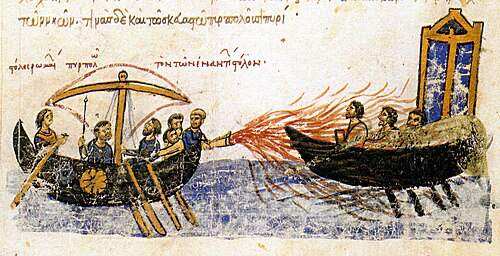
Following the rise of Islam and the Arab conquests, the Byzantine provinces of Syria, Palestine, and Egypt fell to the Rashidun Caliphate. The loss of Egypt, the empire's primary source of grain and tax revenue, was a catastrophic blow. The empire also lost control of the seas and was subjected to repeated Arab sieges of Constantinople in 674-678 and 717-718, though the city's Theodosian Walls held each time.
The Iconoclasm Controversy

Emperor Leo III initiated the first Iconoclast period, banning the veneration of religious icons as idolatrous. The policy divided the empire between iconoclasts (image-breakers) and iconodules (image-venerators), leading to violent conflicts, destruction of priceless religious art, and strained relations with the Papacy. The controversy lasted on and off until 843, when the "Triumph of Orthodoxy" permanently restored icon veneration.
The Macedonian Renaissance

Basil I founded the Macedonian dynasty, ushering in a two-century golden age of Byzantine power and culture. The empire expanded under emperors like Nikephoros II, John Tzimiskes, and most notably Basil II ("the Bulgar-Slayer," r. 976-1025), who conquered Bulgaria and restored the empire's borders to the Danube. Art, literature, learning, and missionary activity flourished, including the Christianization of the Rus (modern Russia and Ukraine).
The Great Schism of 1054

Delegates of Pope Leo IX placed a papal bull of excommunication on the altar of Hagia Sophia against Patriarch Michael Cerularius, who in turn excommunicated the papal legates. This dramatic break formalized the separation between the Roman Catholic Church in the West and the Eastern Orthodox Church, dividing Christendom along theological (the Filioque clause) and political lines that persist to the present day.
The Battle of Manzikert

Emperor Romanos IV Diogenes was decisively defeated by the Seljuk Turks under Sultan Alp Arslan at the Battle of Manzikert in eastern Anatolia. Romanos was captured, and the defeat sparked a civil war. The loss opened Anatolia, the empire's heartland and primary source of soldiers and food, to Turkish settlement. Within two decades, most of Asia Minor was lost, permanently changing the empire from a Mediterranean to a regional Greek state.
The Fourth Crusade Sacks Constantinople
Crusaders of the Fourth Crusade, diverted from their original target of Egypt, stormed and sacked Constantinople — the first time the city had fallen in its nearly 900-year history. They looted countless treasures, destroyed irreplaceable artworks, and brutalized the population. The crusaders established the Latin Empire, while Byzantine successor states formed in Nicaea, Epirus, and Trebizond. The Byzantine Empire would never fully recover.
Recapture of Constantinople
The Nicaean emperor Michael VIII Palaiologos recaptured Constantinople from the Latin Empire without a siege, as the Latin garrison was absent on campaign. He entered the city in triumph and was crowned emperor in Hagia Sophia. However, the restored Byzantine Empire was a shadow of its former self: underpopulated, impoverished, and surrounded by hostile powers. Michael desperately sought Church union with Rome to secure Western aid, but the move divided his own subjects.
The Fall of Constantinople
After a 53-day siege, the Ottoman army under Sultan Mehmed II breached the walls of Constantinople. The last Byzantine emperor, Constantine XI, died fighting in the final assault. The city's fall ended the Roman Empire — over 2,200 years after its legendary founding. Constantinople became the Ottoman capital, Hagia Sophia was converted into a mosque, and the Byzantine legacy lived on through its art, law, and Orthodox Christianity in Russia and the Balkans.