
The Taiping Rebellion (1850-1864)
A massive civil war in late imperial China between the Qing dynasty and the millenarian Taiping Heavenly Kingdom, led by Hong Xiuquan, who claimed to be the younger brother of Jesus Christ. The 14-year conflict is one of the deadliest in human history, with death toll estimates ranging from 20 to 30 million, and weakened Qing authority to the point of eventual collapse.
Events
Hong Xiuquan's Religious Visions and Founding of the God Worshipping Society
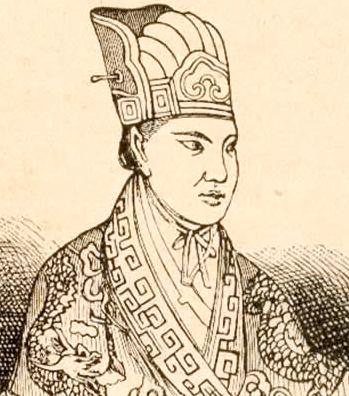
After failing the imperial civil service examinations for the fourth and final time, Hakka schoolteacher Hong Xiuquan read Christian pamphlets he had received years earlier. He reinterpreted visions he had experienced during a nervous breakdown in 1837 as evidence that he was the younger brother of Jesus Christ, commissioned by God to overthrow the Qing. In 1844, his cousin Feng Yunshan founded the God Worshipping Society, a syncretic movement combining elements of Christianity, Taoism, Confucianism, and Chinese millenarianism. The society grew rapidly among poor Hakka communities in southern China.
The Jintian Uprising and Founding of the Taiping Heavenly Kingdom

After Qing authorities launched a campaign of religious persecution against the God Worshippers in Guangxi, the movement's followers rose in armed revolt. On January 11, 1851, Hong Xiuquan declared himself the Heavenly King of the Taiping Heavenly Kingdom ("Great Peace"). A 10,000-strong rebel army under Feng Yunshan and Wei Changhui had already routed Qing forces at Jintian village in late December 1850. The Taiping banner featured characters representing fire, a reference to the religious character of the movement.
The Taiping March North and Capture of Nanjing

Beginning in September 1851, the Taipings marched north, besieging Changsha, capturing Wuchang on the Yangtze River in December 1852, then moving east. On March 19, 1853, the Taiping army captured the strategic city of Nanjing and renamed it Tianjing ("Heavenly Capital"). Taiping forces killed all Manchu men in the city and forced Manchu women outside the city walls, where they were killed. The Heavenly Kingdom would rule over a population of nearly 30 million at its peak, controlling much of the lower Yangtze valley.
The Northern and Western Expeditions
In an effort to relieve pressure on Nanjing and capture Beijing, the Taipings launched concurrent Northern and Western Expeditions in 1853. The Northern Expedition, intended to capture the Qing capital, was a complete failure, with most of its forces destroyed by Qing armies. The Western Expedition met with limited success, capturing parts of Hubei and Jiangxi provinces before being repulsed. The failure of the Northern Expedition marked the high-water mark of Taiping territorial ambitions and exposed the movement's strategic overreach.
The Tianjing Incident and Internal Coup
Internal tensions within the Taiping leadership culminated in the Tianjing Incident of September 1856. Hong Xiuquan, who had withdrawn from day-to-day administration, ordered the killing of the East King Yang Xiuqing, who had challenged his authority and was accused of usurping power. Wei Changhui and Qin Rigang carried out the massacre, killing Yang and thousands of his followers. Wei then turned against Hong but was executed. The incident weakened the Taiping command structure and demoralized the movement, with many talented leaders fleeing or going into hiding.
The Rise of the Xiang Army under Zeng Guofan
As the Taiping movement fragmented internally, Qing provincial authorities organized new regional armies. The most successful was the Xiang Army, raised and led by Confucian scholar-official Zeng Guofan in Hunan province. By May 1858, the Xiang Army had recaptured Jiujiang and by September had retaken most of Jiangxi province, reversing years of Taiping gains. Zeng's army introduced new military tactics and a stricter command structure, becoming the model for regional armies that would ultimately defeat the rebellion.
Taiping Eastern Offensive and Capture of Suzhou and Hangzhou
In May 1860, Taiping forces defeated the imperial army that had been besieging Nanjing since 1853, opening the way for a major offensive into southern Jiangsu and Zhejiang, the wealthiest region of the Qing Empire. Taiping armies captured Hangzhou on March 19, 1860, Changzhou on May 26, and Suzhou on June 2, 1860, bringing much of the lower Yangtze region under their control. The offensive represented a brief Taiping resurgence, but overextension of supply lines and the rise of the Xiang Army would soon reverse the gains.
The Ever Victorious Army and Western Intervention

As the Taiping threat to Shanghai's foreign trade grew, Western powers and Chinese officials organized the Ever Victorious Army, initially under American Frederick Townsend Ward and later the British officer Charles Gordon. The force, composed of Chinese soldiers with Western training and equipment, scored several victories against the Taipings. France and Britain, while officially neutral, increasingly backed the Qing with arms, advisors, and direct military action, including a French-led defense of Shanghai in 1862. Western support proved decisive in preventing Taiping expansion.
The Siege of Nanjing Begins

In May 1862, Zeng Guofan's Xiang Army began the final siege of Nanjing, the Taiping capital. Zeng coordinated a multi-pronged approach, first retaking the strategic city of Anqing and then closing in on Nanjing from multiple directions. The siege would last over two years and inflict severe deprivation on the city's defenders and civilian population. The protracted nature of the siege reflected the Taipings' fierce resistance, but also the steady erosion of their position as surrounding territories fell to Qing forces.
Death of Hong Xiuquan
On June 1, 1864, Hong Xiuquan died during the siege of Nanjing at the age of 50. According to accounts, he had refused to eat food from the city's stores, instead consuming weeds from the palace grounds, possibly as a religious fast. The cause of death remains debated, with some historians suspecting poison. Hong's death, which the Taiping leadership initially kept secret to preserve morale, marked the effective end of the movement's ideological and political coherence. His son Hong Tianguifu, just 15 years old, succeeded him as Heavenly King.
Fall of Nanjing and End of the Heavenly Kingdom

On July 19, 1864, after a 28-month siege, Zeng Guofan's Xiang Army breached the walls of Nanjing and stormed the city. Qing forces killed tens of thousands of Taiping defenders and civilians in a massacre that ended the Taiping Heavenly Kingdom. Hong Tianguifu and the remaining Taiping leaders either died in the battle or fled. The fall of the Heavenly Capital did not immediately end all Taiping resistance, but it shattered the movement's political and military structure. The rebellion's last major forces were defeated in August 1871.
Aftermath and Qing Decline
The Taiping Rebellion's final suppression in 1871 came at a Pyrrhic cost to the Qing dynasty. With an estimated 20 to 30 million dead, representing 5 to 10 percent of China's population, and the destruction of much of the lower Yangtze region, the rebellion fatally weakened central authority. It accelerated the rise of regional military leaders, prompting the Self-Strengthening Movement, and contributed to the conditions that led to the dynasty's fall in 1911. The scale of destruction and the demographic disaster reshaped Chinese society for generations.