
The Sri Lankan Civil War (1983-2009)
A twenty-six-year war between the Sri Lankan government and the Liberation Tigers of Tamil Eelam, who fought for an independent Tamil state in the island's north and east. The conflict grew from decades of ethnic discrimination and communal violence after independence in 1948, drew in India as mediator and combatant, survived Norwegian-brokered ceasefire years, and ended with a government military victory in 2009 amid disputed accounts of civilian deaths and continuing demands for accountability on both sides.
Events
Black July
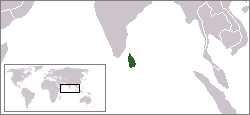
After Tamil Tiger guerrillas ambushed an army patrol in Jaffna, killing thirteen soldiers, anti-Tamil riots swept Colombo and other cities for days, killing several hundred people by official count and by some estimates up to several thousand, and displacing tens of thousands. The violence drove a wave of Tamil emigration and is conventionally taken as the start of the civil war. Its roots lay in decades of exclusion, including the Sinhala Only language law of 1956, anti-Tamil pogroms in 1958, and the 1975 Vaddukoddai Resolution demanding a separate Tamil state, a demand the Liberation Tigers of Tamil Eelam, founded in 1976, took up by armed force.
Location: Colombo and Jaffna, Sri Lanka
The Indo-Lanka Accord and the Indian Peace Keeping Force
President J. R. Jayewardene and Indian prime minister Rajiv Gandhi signed the Indo-Lanka Accord, providing for provincial councils and limited autonomy for Tamil-majority areas, and India deployed the Indian Peace Keeping Force to disarm the guerrillas. India acted in part under pressure from Tamil Nadu and in response to refugee flows and the course of the war; the LTTE refused to disarm and soon fought the Indian army. The accord satisfied neither Tamil parties seeking self-determination nor Sinhala nationalists who saw it as Indian imposition.
Location: Colombo, Sri Lanka
The JVP Insurrection
The Sinhala Marxist-nationalist JVP launched a second insurrection against the Indo-Lanka Accord and the Indian presence, assassinating political opponents and enforcing strikes across the south. The government's counterinsurgency campaign, with allied paramilitaries, killed tens of thousands of young Sinhalese in 1988-1989 before the rebellion was crushed and its leader Rohana Wijeweera killed. The episode, often overshadowed by the northern war, showed the conflict's reach across both of Sri Lanka's major communities.
Location: Southern and central Sri Lanka
Indian Withdrawal and the Resumption of War
The Indian Peace Keeping Force completed its withdrawal after three years of fighting the LTTE and mounting casualties, at the demand of President Ranasinghe Premadasa's government, which had also supplied the Tigers with arms during the Indian deployment. In June 1990 the LTTE attacked police stations across the east and the war resumed; the army recaptured the eastern province, and the LTTE expelled the Muslim population of Jaffna later that year. The second phase of the war left the two sides more entrenched than ever.
Location: Northern and Eastern Sri Lanka
The Assassination of Rajiv Gandhi
An LTTE suicide bomber killed former Indian prime minister Rajiv Gandhi at an election rally near Chennai, along with sixteen others. The attack, in retaliation for India's intervention in Sri Lanka, was condemned internationally; India banned the LTTE in 1992 and its leaders were convicted by Indian courts. The assassination transformed the Tigers' international standing and shaped Indian policy toward the Sri Lankan conflict for a generation.
Location: Sriperumbudur, India
The Assassination of President Premadasa
A suicide bomber killed President Ranasinghe Premadasa during a May Day procession in Colombo, the second head of state to be assassinated by the LTTE. His death was followed by the 1994 election of Chandrika Kumaratunga, who opened negotiations with the LTTE and secured a short ceasefire, and by a suicide attack that wounded her during the 1999 presidential campaign. The cycle of talks and attacks defined the mid-1990s.
Location: Colombo, Sri Lanka
The Third Eelam War
The LTTE sank naval craft and the Kumaratunga government resumed full-scale war, declaring a campaign for "war for peace" and recapturing the Jaffna peninsula by December 1995. The Tigers replied with attacks on the capital, including the Central Bank bombing of January 1996 that killed nearly a hundred people, and a long campaign of suicide bombings and massacres; government offensives displaced hundreds of thousands of northern civilians. The fighting continued until a Norwegian-facilitated ceasefire became possible in 2002.
Location: Northern and Eastern Sri Lanka
The Ceasefire Agreement
The Sri Lankan government and the LTTE signed a Norwegian-brokered ceasefire agreement, opening direct talks that began in Thailand and continued in later rounds, with international donors pledging reconstruction aid. The Tigers ran a de facto administration in the north and talks stalled over their demand for an interim self-governing authority, which the Supreme Court of Sri Lanka struck down in 2006; a split within the LTTE in 2004 added a new armed faction in the east. The agreement held uneasily for years while both sides rearmed.
Location: Colombo and Kilinochchi, Sri Lanka
The Tsunami and the Aid Dispute

The Indian Ocean tsunami killed about 35,000 people in Sri Lanka and displaced hundreds of thousands, devastating Tamil-majority coastal areas. The government and the LTTE agreed to a joint mechanism to distribute international aid, but the arrangement was challenged by Sinhala nationalist parties and struck down by the Supreme Court in 2005, and the president who had negotiated it lost the 2005 election. The dispute ended the last practical cooperation of the ceasefire years.
Location: Coastal Sri Lanka
The Fourth Eelam War

Fighting resumed in mid-2006 after the LTTE closed the sluice gates of the Mavil Aru irrigation channel and the government responded with a military offensive, recapturing the eastern province in 2007-2008 and advancing into the northern strongholds. Both sides were accused of abuses during the advance, and the government rejected international calls for a ceasefire as the LTTE held civilians in shrinking territory; foreign journalists and aid agencies were excluded from the war zone. The campaign's final phase began in early 2009.
Location: Northern and Eastern Sri Lanka
The End of the War

The Sri Lankan army overran the last LTTE positions in the northeast and killed its leader Velupillai Prabhakaran, and the government declared victory the next day. Tens of thousands of civilians were trapped in the final months' fighting; a 2011 United Nations panel estimated up to 40,000 civilian deaths and found credible allegations of war crimes by both sides, a figure the Sri Lankan government disputed, saying it maintained a policy of not targeting civilians. The war's end brought mass detention of Tamils and a continuing international dispute over accountability.
Location: Mullaitivu district, Sri Lanka