
The Spanish Conquest of the Inca Empire (1532-1572)
The Spanish Conquest of the Inca Empire was the military campaign that destroyed the largest pre-Columbian civilization in the Americas. Led by Francisco Pizarro with just 168 men, the conquest leveraged superior weaponry, civil war within the Inca state, and devastating European diseases to topple an empire of 12 million people. The conquest established Spanish rule over the Andes for three centuries and remains one of history's most dramatic military asymmetries.
Events
Francisco Pizarro Begins Exploring the South American Coast
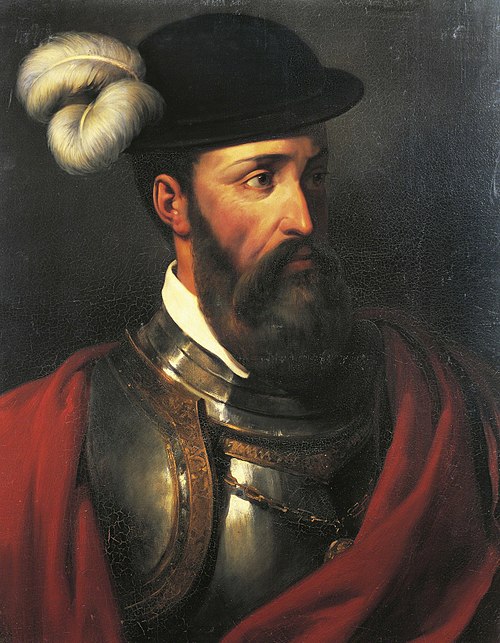
Francisco Pizarro, an illiterate Spanish conquistador who had served under Balboa, launches his first expedition down the Pacific coast of South America. The expedition ends in disaster at Punta Quemada after fierce indigenous resistance, with Pizarro wounded and several men killed. A second expedition in 1526 reaches as far as Tumbes, where they discover the Inca Empire.
Atahualpa Defeats Huascar in the Inca Succession War

Emperor Huayna Capac dies of smallpox (introduced by Europeans arriving via Central America), and his two sons, Atahualpa and Huascar, fight a brutal civil war for the throne. Atahualpa ultimately defeats Huascar's forces, but the war has devastated the empire and divided its loyalties -- timing that favors the Spanish arrival.
Spanish Crown Authorizes the Conquest of Peru

Pizarro returns to Spain and secures royal authorization through the Capitulation of Toledo. Queen Isabella grants Pizarro the right to conquer and govern Peru for the Spanish crown, appointing him governor and captain-general of New Castile. He recruits his four brothers and other adventurers for the expedition.
Pizarro Departs Panama with 168 Men

Pizarro sails from Panama with 168 men, 62 horses, and a few cannons. They march inland from Tumbes toward the Andean highlands, crossing deserts and the rugged Cordillera. Along the way, they receive envoys from Atahualpa, who is encamped at Cajamarca with an army of 80,000 soldiers.
Pizarro Captures Atahualpa in the Battle of Cajamarca
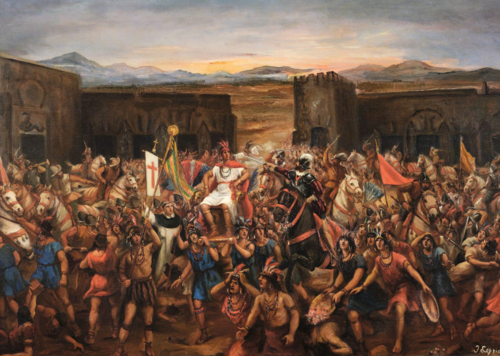
Atahualpa arrives at Cajamarca plaza with thousands of unarmed attendants. The Spanish ambush them, opening fire with cannons and charging with cavalry. Within two hours, thousands of Incas are killed while the Spanish suffer zero casualties. Atahualpa is captured. The lopsided outcome reflects the advantages of steel weapons, firearms, and cavalry against an Inca force armed primarily with clubs, slings, and bronze axes, though the Incas' lack of metal weapons for war reflected their different metallurgical priorities rather than technological backwardness.
Atahualpa Executed Despite Paid Ransom

To secure his release, Atahualpa promises to fill a room 22 feet by 17 feet once with gold and twice with silver. The Incas deliver the largest ransom in history. Despite receiving it, Pizarro tries Atahualpa for treason, worship of false gods, and the murder of Huascar. He is condemned to death and executed by garrote on July 26, 1533. His death demoralizes the Inca resistance.
Spanish Capture the Inca Capital of Cusco
Marching south with thousands of native allies (including Cañari and Huanca who resented Inca rule), the Spanish enter Cusco, the Inca capital, unopposed. They loot the city's treasures and melt down its gold and silver artwork. Pizarro installs Manco Inca, a puppet ruler, as Sapa Inca, believing the monarchy can be controlled.
Manco Inca Escapes and Launches a Massive Uprising
Manco Inca, after suffering abuse and humiliation at the hands of Pizarro's brothers, escapes Cusco and calls for a general uprising. An Inca army of up to 100,000 besieges Cusco for months, setting the city's thatched roofs on fire with flaming arrows. A smaller force simultaneously besieges Lima. The Spanish barely hold out until reinforcements arrive.
Conquistadors Fight Each Other for Control of Peru
Rivalries between Pizarro and his former partner Diego de Almagro erupt into open warfare. Almagro's forces seize Cusco and capture Pizarro's brothers. Francisco Pizarro is assassinated by Almagrists in 1541. The civil wars continue for a decade, with battles at Las Salinas, Chupas, and Jaquijahuana, eventually resulting in royal authority being imposed from Spain through the Viceroyalty of Peru in 1542.
Inca Resistance Endures in the Vilcabamba Jungle
After their defeat at Cusco, Manco Inca retreats to the remote jungle region of Vilcabamba and establishes a Neo-Inca State, a small rump kingdom that resists Spanish rule for 35 years. Manco is assassinated by Spanish defectors in 1545. His successors -- Sayri Tupac, Titu Cusi, and Tupac Amaru I -- maintain the independent Inca state through diplomacy and occasional guerrilla warfare.
Disease and Colonial Rule Transform the Andes
The conquest devastated the indigenous population. European diseases (smallpox, measles, typhus) killed an estimated 5.5 million people in the former Inca lands, reducing the population by up to 90% over a century. The Spanish imposed the encomienda system of forced labor, introduced Catholicism and the Inquisition, and established the city of Lima as the capital of the Viceroyalty of Peru. The Quechua language and many Inca cultural practices survived, and the Inca legacy remains central to Andean identity.
Spanish Execute Tupac Amaru I; Conquest Complete
Viceroy Francisco de Toledo, determined to end the Inca resistance once and for all, launches a campaign against Vilcabamba. The Spanish capture the last Inca emperor, Tupac Amaru I, and bring him to Cusco. He is publicly executed by beheading in the main plaza of Cusco. With his death, the Inca Empire formally ends, and the Viceroyalty of Peru is firmly established.