
The Songhai Empire (1464-1591)
The Songhai Empire rose from the trading city of Gao to become the largest of the West African Sahel empires, controlling trans-Saharan gold and salt routes and the scholarly centers of Timbuktu and Jenne before falling to a Moroccan invasion in 1591.
Events
A Songhai State Emerges at Gao
A Songhai kingdom established itself around the Niger bend city of Gao, positioned on trans-Saharan trade routes linking the Sahel to North Africa. By the late 13th century the expanding Mali Empire absorbed Gao and its surroundings into its sphere.
Location: Gao, present-day Mali/Niger border region
Independence from Mali
As the Mali Empire weakened, the Songhai rulers of Gao reasserted their independence during the 1430s. The stage was set for Songhai to expand into the power vacuum left by its former overlord.
Location: Gao, West Africa
Sunni Ali Takes the Throne
Sunni Ali became ruler of Songhai and transformed it from a regional kingdom into an empire through sustained military campaigns. Contemporary Arab chroniclers recorded both his military successes and the harsh treatment of scholars and towns that resisted him, particularly in Timbuktu.
Location: Gao, West Africa
Conquest of Timbuktu
Sunni Ali's forces captured Timbuktu, the celebrated center of Islamic learning and trans-Saharan commerce. The conquest gave Songhai control over one of the most important intellectual and trading cities of the Sahel.
Location: Timbuktu, present-day Mali
Conquest of Djenné
After a prolonged siege, Sunni Ali took Djenné, the commercial hub of the inland Niger delta. With Timbuktu and Djenné under Songhai control, the empire dominated the middle Niger trade in gold, salt, and grain.
Location: Djenné, present-day Mali
Askia Mohammad I Seizes Power

Mohammad Touré, a commander who had served Sunni Ali, defeated the ruler's son Sonni Baru in battle and founded the Askiya dynasty. The coup began what many historians regard as Songhai's administrative and cultural golden age.
Location: Gao, West Africa
The Pilgrimage of Askia Mohammad

Askia Mohammad made a pilgrimage to Mecca, where he was named Caliph of the Sudan by the Abbasid claimant in Cairo and returned with scholars and prestige. The journey deepened Songhai's identification with the wider Islamic world and strengthened Timbuktu's role as a center of Islamic scholarship under figures such as the jurist al-Maghili.
Location: Mecca, Arabia
Height of the Empire under Askia Daoud
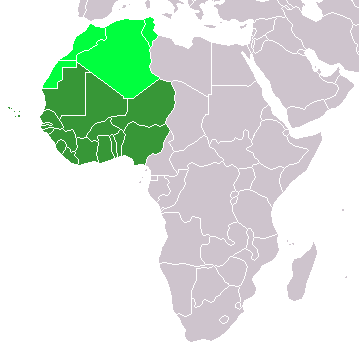
Under Askia Daoud (reigned 1549-1582), Songhai reached its greatest territorial extent, covering roughly 1.4 million square kilometers (540,000 square miles) at its peak. Timbuktu's Sankore scholars, legal bureaucracy, and trade networks flourished, and the empire's revenue rested on taxing the gold, salt, and slave commerce crossing the Sahara.
Location: Gao and Timbuktu, West Africa
The Moroccan Invasion

A Moroccan force of some 4,000 musketeers under Judar Pasha, sent by Sultan Ahmad al-Mansur to seize control of the Songhai gold trade, defeated a far larger Songhai army at the Battle of Tondibi. Moroccan firearms overcame Songhai's numerical advantage, and the empire's central structure collapsed.
Location: Tondibi, present-day Mali
Aftermath: The Dendi Kingdom
Songhai nobles retreated south to the Dendi region and established a successor kingdom that resisted Moroccan expansion for decades. The fall of the imperial Songhai state ended the era of great Sahel empires and ushered in a period of regional fragmentation, while Morocco's occupation of Timbuktu contributed to the city's long commercial decline.
Location: Dendi, present-day Niger