
The Seven Years' War -- The First Global Conflict (1754-1763)
The Seven Years' War (1756-1763) was a global conflict fought between the major European powers across four continents -- Europe, North America, India, West Africa, and the Atlantic and Indian Oceans. Often described as the first true world war, it pitted Great Britain and Prussia against France, Austria, Russia, Spain, and Sweden. The war reshaped global power: Britain emerged as the dominant colonial power, France lost its North American possessions, Prussia cemented its status as a great power, and the war's financial legacy contributed directly to the American Revolution.
Events
The North American Spark -- Washington's Skirmish at Jumonville Glen
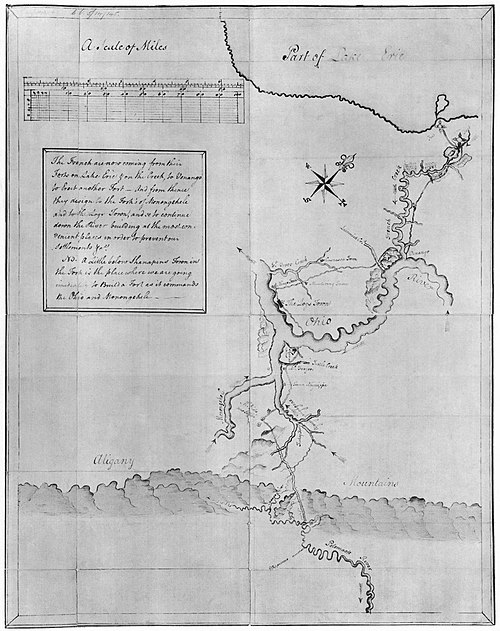
A young Lieutenant Colonel George Washington, leading Virginia militia, ambushes a French force under Ensign Joseph Coulon de Villiers de Jumonville in the Ohio Valley. Jumonville is killed in the skirmish, and the French claim the party was on a diplomatic mission. This incident ignites the French and Indian War in North America, which will escalate into a global conflict.
The Diplomatic Revolution -- Alliances Realign

Europe's traditional alliance system undergoes a dramatic reversal, known as the Diplomatic Revolution. Austria and France, centuries-old enemies, become allies through the Treaty of Versailles, while Britain allies with Prussia. The realignments are driven by Austria's desire to recapture Silesia from Prussia (lost in 1742) and Britain's need for a continental ally against France.
Frederick the Great Invades Saxony

Frederick II (the Great) of Prussia launches a preemptive invasion of Saxony, beginning the European phase of the war. Frederick argues the attack is a preventive strike against an imminent Austrian-French-Russian coalition. The Saxons are quickly surrounded and forced to surrender, but the invasion galvanizes opposition and ensures Prussia will face a hostile coalition of Austria, France, Russia, Sweden, and most of the Holy Roman Empire.
Robert Clive's Victory at Plassey -- Britain Conquers Bengal

A British East India Company force of approximately 3,000 men under Robert Clive defeats a vastly larger Bengali army of 50,000 loyal to Nawab Siraj-ud-Daulah, aided by the defection of the nawab's own commander Mir Jafar. The Battle of Plassey establishes British military supremacy in Bengal, giving the Company control over one of India's wealthiest provinces and laying the foundation for the British Raj.
Frederick's Victory at Rossbach

Frederick the Great, with approximately 22,000 Prussian troops, defeats a combined Franco-Imperial army of over 40,000 men at Rossbach in one of his most brilliant victories. Prussian cavalry, led by General Friedrich Wilhelm von Seydlitz, charges through the disorganized enemy columns. The victory saves Prussia from invasion and cements Frederick's reputation as a military genius.
Frederick's Decisive Victory at Leuthen

Less than a month after Rossbach, Frederick's army of 36,000 men defeats an Austrian force of 65,000 under Prince Charles of Lorraine at Leuthen in Silesia. Frederick uses an oblique order tactic, feinting against the Austrian right flank while massing his forces against the left. The victory secures Prussian control of Silesia for the remainder of the war and is widely regarded as one of the greatest tactical masterpieces of the 18th century.
The British Capture of Louisbourg
After a 48-day siege, a British expeditionary force of 27,000 under Jeffery Amherst and James Wolfe captures the French fortress of Louisbourg on Cape Breton Island. The fortress, guarding the entrance to the St. Lawrence River, was considered one of the strongest in North America. Its fall opens the route to Quebec, the capital of New France.
Prussia's Worst Defeat at Kunersdorf
A combined Austrian-Russian army of 79,000 under Pyotr Saltykov and Ernst von Laudon inflicts a devastating defeat on Frederick the Great's 49,000 Prussians at Kunersdorf, just east of Berlin. Frederick loses over half his army and is nearly killed himself, a musket ball flattening against a snuffbox in his pocket. The defeat leaves Frederick in despair, contemplating suicide, and Prussia on the verge of collapse.
The Battle of Quebec -- Wolfe and Montcalm
British forces under General James Wolfe scale the cliffs above Quebec City at night, surprising the French army under General Louis-Joseph de Montcalm. In a brief but bloody battle, both commanders are mortally wounded, but the British victory is decisive. Quebec, the capital of New France, surrenders days later. The battle, part of what the British called the Year of Miracles, effectively ends French rule in North America.
The British Capture Montreal -- End of New France
Three British armies converging on Montreal force the French governor, the Marquis de Vaudreuil, to surrender the city and effectively all of New France to the British under General Jeffery Amherst. With 17,000 British troops against a French garrison of 3,800, resistance is impossible. The surrender ends French colonial rule in mainland North America after more than 150 years.
Russia Withdraws from the War
Empress Elizabeth of Russia dies, and her nephew Peter III succeeds to the throne. An ardent admirer of Frederick the Great, Peter immediately ends Russian occupation of East Prussia and signs the Treaty of St. Petersburg, withdrawing Russia from the war and returning all conquered territories to Prussia. He even offers Russian troops to assist Frederick. Peter's defection saves Prussia from certain defeat and dramatically alters the strategic balance.
The Treaty of Paris and Treaty of Hubertusburg End the War
Two peace treaties conclude the war. The Treaty of Paris (February 10) reshapes the colonial world: France cedes Canada, the Ohio Valley, and all territory east of the Mississippi to Britain, and cedes Louisiana to Spain. Spain cedes Florida to Britain. In India, France is reduced to five trading posts. The Treaty of Hubertusburg (February 15) confirms Prussian possession of Silesia, establishing Prussia as a major European power. The war's enormous cost leaves Britain deeply in debt, setting the stage for colonial taxation that will spark the American Revolution a decade later.