
The Roman Empire (27 BC - 476 AD)
The Roman Empire dominated the Mediterranean world and much of Europe, Western Asia, and North Africa for nearly five centuries. From the establishment of Augustus and his principate to the fall of the Western Empire, Rome and its political institutions, legal system, engineering marvels, language, and culture left a lasting imprint on Western civilization and beyond. The empire reached vast territorial extent, built economic networks, and wielded military power that created an era of unprecedented stability known as the Pax Romana, while its eventual decline and division shaped the medieval world order.
Events
Construction of Hadrian's Wall

Emperor Hadrian orders the construction of a defensive fortification across northern Britain, stretching 73 miles from the River Tyne to the Solway Firth. Hadrian's Wall marks the northern limit of Roman Britain and serves as a military barrier, customs checkpoint, and symbol of imperial power. It becomes one of the best-preserved Roman frontier systems.
Location: Northern England
Edict of Caracalla: Universal Citizenship

Emperor Caracalla issues the Constitutio Antoniniana, extending Roman citizenship to all free inhabitants of the empire. The edict dramatically expands the citizen base, homogenizing the empire's legal status. Originally intended to increase tax revenue, it transforms Roman identity from a privilege of birth or grant into a universal imperial status.
Location: Throughout the Roman Empire
Diocletian Restores Order: The Tetrarchy

Emperor Diocletian, coming to power after the Crisis of the Third Century (a period of civil war, invasion, and plague), implements sweeping reforms. He divides the empire into four administrative regions (the Tetrarchy), with two senior Augusti and two junior Caesars. Diocletian also introduces price controls, administrative reforms, and the most severe persecution of Christians in imperial history.
Location: Nicomedia / Roman Empire
Constantine and the Edict of Milan
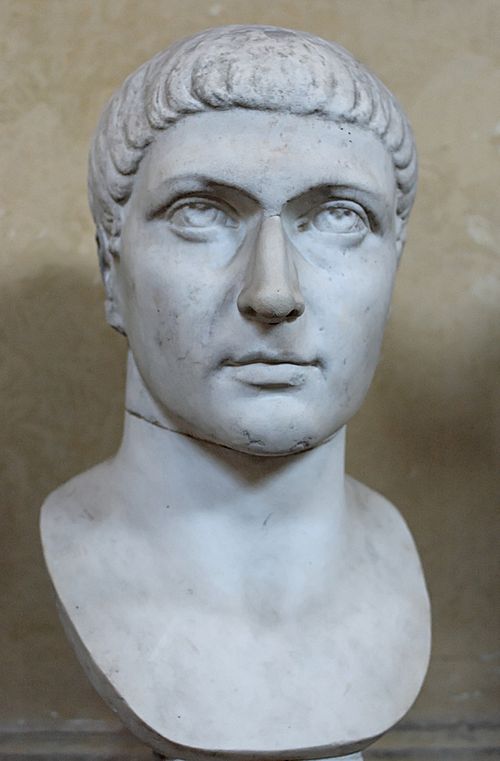
After his conversion to Christianity before the Battle of the Milvian Bridge (312 AD), Constantine the Great issues the Edict of Milan with co-emperor Licinius, granting religious toleration to Christians throughout the empire. Christianity emerges from persecution to legal status, beginning its transformation into the dominant religion of the Roman world. Constantine also convenes the First Council of Nicaea in 325 AD.
Location: Milan / Roman Empire
Constantinople Dedicated as New Capital

Constantine formally dedicates the city of Constantinople (formerly Byzantium) as the new eastern capital of the Roman Empire. Strategically located on the Bosporus, the city commands trade routes between Europe and Asia. Constantinople will serve as the imperial capital for over a millennium, surviving the fall of the Western Empire and becoming the center of the Byzantine Empire.
Location: Constantinople (modern Istanbul)
Christianity Becomes State Religion

Emperors Theodosius I, Gratian, and Valentinian II issue the Edict of Thessalonica (Cunctos Populos), declaring Nicene Christianity the official state religion of the Roman Empire. Arianism and pagan practices are banned. This decree establishes Christianity as the sole legitimate religion of the empire, ending centuries of pagan state cults.
Location: Thessalonica / Roman Empire
Final Division of the Empire
Upon the death of Theodosius I, the Roman Empire is permanently divided between his two sons: Arcadius rules the Eastern Empire from Constantinople, and Honorius rules the Western Empire from Milan and later Ravenna. Although temporary divisions had occurred before, this partition becomes permanent, and the two halves follow increasingly divergent paths.
Location: Roman Empire
Visigoths Sack Rome
Visigothic forces under King Alaric breach the walls of Rome and spend three days looting the city. It is the first time in nearly 800 years that Rome has fallen to a foreign enemy. The sack sends shockwaves throughout the Mediterranean world, deeply damaging the prestige of the Western Empire. Augustine of Hippo writes "City of God" partly in response to the event.
Location: Rome
Fall of the Western Roman Empire
The Germanic chieftain Odoacer, leading a revolt of barbarian mercenaries, deposes the boy-emperor Romulus Augustulus. Odoacer declines to name a successor and instead sends the imperial regalia to Constantinople, acknowledging the Eastern Emperor Zeno as sole ruler. This event traditionally marks the end of the Western Roman Empire and the beginning of the Middle Ages in European historiography.
Location: Ravenna / Italy
Death of Augustus and Succession of Tiberius
Augustus dies after 41 years as emperor, ending the first imperial reign. His stepson Tiberius succeeds him, establishing the Julio-Claudian dynasty. The succession sets a precedent — though not yet a formal rule — for hereditary succession in the empire.
Location: Nola / Rome
The Great Fire of Rome

A catastrophic fire devastates Rome for six days, destroying three of the city's fourteen districts and severely damaging seven others. Emperor Nero, rumored to have started the fire, famously blames Christians, initiating the first large-scale persecution of Christians in the Roman Empire. The fire clears space for Nero's ambitious building projects, including his Golden House (Domus Aurea).
Location: Rome
Year of the Four Emperors

Following Nero's suicide, a chaotic civil war engulfs the empire as four successive claimants — Galba, Otho, Vitellius, and Vespasian — each briefly hold the imperial title. Vespasian ultimately emerges victorious, founding the Flavian dynasty. The crisis demonstrates that the emperor's legitimacy ultimately rests on army support, not just senatorial appointment.
Location: Throughout the Roman Empire
Principate Established: Augustus Becomes First Emperor

Following his victory over Mark Antony and Cleopatra at the Battle of Actium (31 BC), Octavian is granted the title "Augustus" by the Roman Senate, marking the end of the Roman Republic and the beginning of the Roman Empire. Augustus initiates the Principate system, where the emperor holds supreme power while preserving republican institutions in name. His reign ushers in the Pax Romana, a period of relative peace and stability lasting over two centuries.
Location: Rome
Siege and Destruction of Jerusalem

Roman forces under Titus, son of Emperor Vespasian, besiege and capture Jerusalem, destroying the Second Temple. The event marks a catastrophic turning point in Jewish history, ending the First Jewish-Roman War and beginning the Jewish diaspora. The Arch of Titus in Rome commemorates the victory, famously depicting Roman soldiers carrying spoils from the Temple.
Location: Jerusalem
Eruption of Mount Vesuvius
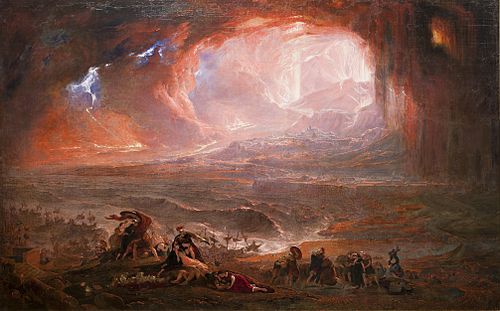
Mount Vesuvius erupts catastrophically, burying the cities of Pompeii, Herculaneum, and Stabiae under ash and pumice. The eruption kills thousands, including the naturalist Pliny the Elder. The cities remain buried and remarkably preserved until their rediscovery in the 18th century, providing an unparalleled archaeological record of Roman daily life.
Location: Bay of Naples, Italy
Trajan's Reign — Empire at its Greatest Extent

Emperor Trajan presides over the Roman Empire's maximum territorial extent, conquering Dacia (modern Romania), Armenia, Mesopotamia, and the Parthian capital Ctesiphon. His rule is remembered as a golden age of imperial expansion, public works (Trajan's Forum, Markets, and Column), and social welfare programs (alimenta for poor children).
Location: Rome / Dacia / Parthia
Claudius Invades Britain

Emperor Claudius orders the Roman invasion of Britain, sending four legions under General Aulus Plautius. The conquest succeeds, and southern Britain becomes the Roman province of Britannia. Claudius himself travels to Britain to accept the surrender of native tribes, a major military achievement for an emperor initially considered weak by the senatorial class.
Location: Britain