
The Rise of Populism
The global rise of populist political movements represents one of the most significant political phenomena of the early 21st century. Since the 2008 financial crisis, populist parties and leaders across the political spectrum have gained power in the United States, Europe, Latin America, and Asia, challenging established political institutions, trade agreements, and immigration policies, while drawing support from voters who felt left behind by globalization and distrustful of traditional elites.
Events
The Tea Party Movement Emerges in the United States

CNBC commentator Rick Santelli's on-air call for a "tea party" protest against the Obama administration's mortgage bailout sparked a nationwide right-wing populist movement. The Tea Party, characterized by fiscal conservatism, anti-establishment rhetoric, and opposition to federal government expansion, mobilized millions of voters and helped the Republican Party gain 63 House seats in the 2010 midterm elections, reshaping the GOP's internal dynamics.
Occupy Wall Street Begins

The Occupy Wall Street protest began in Zuccotti Park in Manhattan's Financial District, with activists protesting economic inequality, corporate influence in politics, and the role of financial institutions in the 2008 crisis. The movement spread to over 900 cities globally, popularizing the "We are the 99 percent" slogan. Though it did not achieve specific policy changes, it shifted public discourse toward inequality and influenced the left-wing populist politics of figures like Bernie Sanders.
Populist Parties Surge in Europe

The European Parliament elections saw major gains for populist and Eurosceptic parties. The UK Independence Party (UKIP) won the largest share of British votes; France's National Front (led by Marine Le Pen) came first among French voters; and the Five Star Movement gained ground in Italy. In Greece, the left-wing populist SYRIZA party won the January 2015 national election on an anti-austerity platform. In Spain, the left-wing Podemos party was founded in 2014.
Populist Governments Consolidate in Central Europe
Poland's Law and Justice (PiS) party won a parliamentary majority in October 2015, proceeding to implement judicial reforms that the European Commission deemed threats to the rule of law. In Hungary, Viktor Orban's Fidesz party, in power since 2010, enacted constitutional changes, a new media law, and anti-immigration policies that drew international criticism. Orban's illiberal model of "Christian democracy" became influential among European populists.
The United Kingdom Votes to Leave the European Union

British voters approved the referendum to leave the European Union by 51.9 percent to 48.1 percent, one of the biggest political shocks in modern British history. The Leave campaign, led by UKIP's Nigel Farage and Conservative Boris Johnson, argued that EU membership undermined British sovereignty and immigration control, while the Remain campaign warned of economic damage. The result reflected a populist backlash against the political establishment and triggered years of political crisis over the terms of withdrawal.
Donald Trump Elected President of the United States
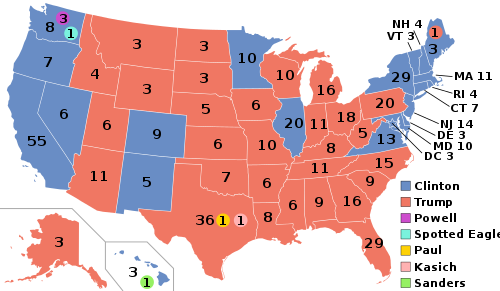
Republican candidate Donald Trump defeated Democratic nominee Hillary Clinton in the US presidential election, winning the Electoral College despite losing the popular vote. Running on a platform of "America First," Trump campaigned on restricting immigration, renegotiating trade deals, and draining the Washington establishment. His victory, driven by strong support from white working-class voters in Rust Belt states, was widely seen as a watershed moment for populism globally.
The AfD Enters the German Bundestag
The Alternative for Germany (AfD) won 12.6 percent of the vote and 94 seats in the federal election, becoming the first far-right party to enter the Bundestag since the 1950s. Founded in 2013 as a Eurosceptic party, the AfD shifted to an anti-immigration platform after the 2015 migrant crisis and capitalized on public anxiety about refugee integration and cultural change.
Jair Bolsonaro Elected President of Brazil
Far-right candidate Jair Bolsonaro won the Brazilian presidential election with 55 percent of the vote, running on a platform of anti-corruption, law-and-order, and conservative social values. Bolsonaro's victory, backed by the military and agribusiness interests, represented a sharp rightward turn for Latin America's largest democracy and drew comparisons to the Trump and Orban phenomena.
The January 6 US Capitol Attack
A mob of supporters of President Donald Trump stormed the US Capitol building in an attempt to prevent Congress from certifying the 2020 presidential election results. The attack followed weeks of Trump's false claims of election fraud and resulted in multiple deaths, dozens of injuries, and over 1,000 subsequent criminal prosecutions. The event represented the most serious challenge to the peaceful transfer of power in modern American history.
Giorgia Meloni Becomes Prime Minister of Italy
Giorgia Meloni of the Brothers of Italy party, a party with neo-fascist roots, was sworn in as Prime Minister, leading the most right-wing Italian government since World War II. Meloni campaigned on a nationalist, anti-immigration, and socially conservative platform, and her victory was seen as part of a broader trend of right-wing populist gains in Southern Europe.
Javier Milei Elected President of Argentina

Libertarian outsider Javier Milei won the Argentine presidential election in a landslide, campaigning on a platform of abolishing the central bank, dollarizing the economy, and slashing government spending. Milei's victory, fueled by anger over 140 percent inflation and economic decline, marked a major shift in a country with a long history of Peronist populism and represented a new variant of right-wing populism focused on radical economic deregulation.
Populist Right Consolidates in European Parliament Elections

In the June 2024 European Parliament elections, right-wing populist and nationalist parties made significant gains across the continent. The Identity and Democracy group and the European Conservatives and Reformists group expanded their influence, while a new populist faction, Patriots for Europe, would later coalesce around figures including Hungary's Viktor Orban. The results demonstrated that right-wing populism had become a durable force in European politics, evolving from protest movements into established political power. The outcome prompted French President Emmanuel Macron to dissolve the National Assembly and call snap elections, a gamble that further polarized French politics. The elections confirmed that the populist wave that began in the 2010s was not receding but consolidating at the continental level.
Location: Brussels, Belgium
Donald Trump Re-Elected President in Historic Comeback

Donald Trump won the 2024 US presidential election, defeating Vice President Kamala Harris with 312 electoral votes to 226. Trump flipped all seven battleground states and became the first Republican to win the popular vote since 2004. The victory marked the first non-consecutive presidential re-election since Grover Cleveland in 1892, representing a stunning political comeback after his 2020 defeat and the January 6 Capitol attack. Trump's return validated the America First platform and demonstrated that the populist movement he catalyzed in 2016 had become the dominant force in the Republican Party. The result signaled that right-wing populism in the United States was not a passing phenomenon but a durable realignment, with implications for trade policy, immigration, democratic institutions, and America's role in the global order.
Location: Washington, D.C., United States
Péter Magyar Defeats Viktor Orbán, Ending 16 Years of Populist Rule in Hungary

Hungarian opposition leader Péter Magyar's Tisza Party won a landslide victory in parliamentary elections, ending Viktor Orbán's 16-year rule, the longest tenure of any populist leader in the European Union. Tisza secured 138 of 199 parliamentary seats with 53.6 percent of the vote, earning a two-thirds supermajority. Orbán, who had pioneered the concept of "illiberal democracy" and served as a model for right-wing populists across Europe, conceded defeat in what he called a "painful but clear" result. The election saw record turnout exceeding 77 percent. Magyar's victory was widely interpreted as a potential turning point in the European populist wave, demonstrating that populist incumbents could be unseated at the ballot box. The result carried significant geopolitical implications: Orbán had been Russia's closest ally within the EU and had repeatedly blocked aid to Ukraine. US Vice President JD Vance had visited Budapest days before the vote to support Orban, underscoring the transatlantic dimensions of the populist movement.
Location: Budapest, Hungary
Keiko Fujimori Elected President of Peru

After three previous presidential defeats, Keiko Fujimori, leader of the right-wing Popular Force party and daughter of former authoritarian president Alberto Fujimori, narrowly won Peru's June 7, 2026 presidential runoff, defeating leftist Roberto Sanchez by about 50,000 votes (50.1 percent to 49.9 percent). The outcome extended Latin America's rightward populist shift and made her Peru's ninth president in a decade. Her victory was contested, with fraud allegations and a disinformation campaign against electoral authorities that international observers and Peruvian officials rejected. She was sworn in on July 28, 2026, pledging a military-led crackdown on crime.
Abelardo de la Espriella Elected President of Colombia

Trump-endorsed right-wing populist Abelardo de la Espriella, nicknamed 'The Tiger,' won Colombia's June 21, 2026 runoff with 49.7 percent of the vote against leftist Ivan Cepeda's 48.7 percent, the closest presidential contest in the country's modern history. His 12.9 million votes made him the most-voted presidential candidate in Colombian history, returning the presidency to the right after leftist Gustavo Petro's single term. Cepeda conceded on June 24 after Petro alleged fraud and foreign interference before also recognizing the result. De la Espriella, who ran as an independent promising a hard line against armed groups, was inaugurated on August 7, 2026 in Cali in a break with tradition, part of a regional wave of right-wing populist victories across Latin America.
AfD Wins Landmark German State Election

The far-right Alternative for Germany (AfD) won 43.8% of the vote in Saxony-Anhalt, its best result in any German state election and the strongest showing by a far-right party since the Nazi era, falling just short of an absolute majority. The CDU collapsed to 17.2%, its worst state result, and the AfD's possible path to power lay in a coalition with the left-populist BSW party (5.3%). Germany's mainstream parties maintain a 'firewall' refusing coalition with the AfD, though forming one would require cooperation with the Left party. Germany's domestic intelligence classifies the Saxony-Anhalt AfD as extremist, and its platform of 'remigration' mass deportations drew alarm at home and abroad, with Polish Prime Minister Donald Tusk and France's Europe minister calling it a grave moment for Europe, while Elon Musk and U.S. President Trump publicly welcomed the result. AfD lead candidate Ulrich Siegmund declared, 'We have made history in this country.'
AfD Wins Second German State as CDU Suffers Worst Result Since 1949

In state elections on September 20, 2026, the far-right Alternative fur Deutschland (AfD) took first place in Mecklenburg-Western Pomerania with roughly 37 percent of the vote, its second state victory in two weeks after Saxony-Anhalt. Chancellor Friedrich Merz's Christian Democratic Union collapsed to about 5.5 percent and was shut out of a state parliament for the first time in the Federal Republic's history, a result Merz called a 'disaster.' In Berlin, the left populist Die Linke placed first. The results intensified Germany's debate over the traditional party firewall against cooperation with the AfD, which other parties have refused to govern alongside even as its electoral strength in the former East grows.