
The Rise of China (Reform and Opening Up)
From the launch of Deng Xiaoping's economic reforms in 1978 to China's emergence as a global superpower, this timeline chronicles the transformation of the world's most populous nation from a poor, isolated planned economy into an upper-middle-income country and the world's largest economy by purchasing power parity. The story covers domestic reforms, integration into global trade, rising geopolitical influence, the social and political tensions that accompanied rapid growth, and the international responses to China's ascent.
Events
Deng Xiaoping Launches Reform and Opening Up

At the Third Plenary Session of the 11th Central Committee of the Chinese Communist Party, Deng Xiaoping launches the "Reform and Opening Up" policy, marking a decisive break from Mao Zedong's planned economy. The session sets China on a path of market-oriented reforms aimed at modernizing agriculture, industry, national defense, and science and technology. This event is widely regarded as the turning point that began China's economic transformation.
Special Economic Zones Established

China establishes four Special Economic Zones (SEZs) in Shenzhen, Zhuhai, Shantou, and Xiamen, granting them preferential tax policies, reduced regulation, and autonomy to experiment with market-based reforms. Shenzhen, a small fishing village of 30,000 people at the time, becomes the most prominent SEZ and later grows into a global technology hub of over 17 million residents. The SEZ model allows China to test capitalist-style economic policies within a nominally socialist framework.
Fourteen Coastal Cities Opened to Foreign Investment

The Chinese government opens 14 coastal cities to foreign investment, including Shanghai, Tianjin, Guangzhou, Dalian, and Qingdao. These cities are granted expanded decision-making power over foreign trade and investment, creating a second wave of economic liberalization after the SEZs. Foreign companies gain greater access to Chinese markets, while China acquires technology, management expertise, and capital. The policy reflects the government's stated rationale of gradual, controlled integration with the global economy.
Tiananmen Square Protests and Crackdown
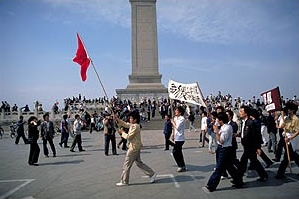
In the spring of 1989, large-scale pro-democracy demonstrations led primarily by students and urban workers converge on Tiananmen Square in Beijing, calling for political reform, greater freedoms, and anti-corruption measures following years of inflation and social unrest. The Chinese government declares martial law and deploys the People's Liberation Army to clear the square, resulting in an unknown number of civilian deaths — estimates from human rights organizations range from hundreds to thousands. The Chinese government states the intervention was necessary to prevent social chaos and maintain political stability under the principle of "stability overrides everything." The crackdown draws widespread international condemnation and leads to military and economic sanctions from the United States, the European Union, and other Western nations. Domestically, the aftermath ushers in a period of political conservatism that halts economic reform momentum until 1992.
Shanghai Stock Exchange Reopens

The Shanghai Stock Exchange reopens after a 40-year closure, marking the revival of China's capital markets as part of economic reform. The Shenzhen Stock Exchange follows shortly after. The exchanges provide a mechanism for state-owned enterprises to raise capital and for the growing private sector to access public investment. This step moves China from a purely state-directed allocation of capital toward market-based financing.
Deng Xiaoping's Southern Tour Reinvigorates Reforms

Deng Xiaoping undertakes a tour of southern China's economic zones, delivering speeches that reassert the primacy of economic reform after the political uncertainty and reform freeze that followed the 1989 Tiananmen Square crackdown, which had frightened foreign investors and emboldened conservative Party factions. Deng's call to "accelerate reform and opening up" reignites foreign investment and domestic entrepreneurial activity. The tour breaks the post-1989 reform freeze and leads to a new wave of market liberalization. Deng argues that "to get rich is glorious," encouraging private enterprise and foreign partnerships.
China Joins the World Trade Organization
China formally joins the World Trade Organization after 15 years of negotiations, agreeing to reduce tariffs, open markets, and adopt WTO-compliant trade rules. WTO membership accelerates China's integration into the global economy, leading to an explosion in exports and foreign direct investment. Between 2001 and 2010, China's exports grow nearly fivefold. The accession was backed by President Jiang Zemin and Premier Zhu Rongji, who argued that WTO membership would serve as a catalyst for domestic reform. In the United States and Europe, critics later raise concerns about the "China shock" — the impact of Chinese imports on manufacturing jobs in Western economies — contributing to a broader discourse about China's state-capitalist model and its compatibility with free-market trade rules.
Beijing Olympics Showcase China's Rise
China hosts the Summer Olympics in Beijing with an opening ceremony that is widely praised as the most spectacular in Olympic history, showcasing China's economic achievements and cultural heritage. The event is seen as China's "coming out party" on the global stage, demonstrating its emergence as a world power. The Chinese government spent an estimated 40 billion dollars on Olympic-related infrastructure. The games also draw international attention to China's human rights record, with protests during the global torch relay and criticism from human rights organizations over China's record on Tibet, censorship, and political repression. The Chinese government states the Olympics demonstrated China's openness and development achievements.
China Becomes World's Second-Largest Economy
China surpasses Japan to become the world's second-largest economy by nominal GDP, with a GDP of approximately 5.9 trillion dollars compared to Japan's 5.5 trillion. The milestone confirms the success of China's reform era, which saw GDP grow from 150 billion dollars in 1978. China's rise reshapes global economic hierarchies and intensifies debates about the implications of its state-capitalist model for international trade rules. Concerns about a "China threat" gain traction in Washington and other capitals, with policymakers debating whether China's economic rise poses a challenge to the liberal international order. The Chinese government states it pursues a "peaceful development" path and rejects containment rhetoric as outdated Cold War thinking.
Environmental Crisis: China's "Airpocalypse" and the War on Pollution

In the winter of 2012–2013, Beijing and other major Chinese cities experience severe air pollution episodes, with PM2.5 concentrations exceeding 40 times the World Health Organization's recommended safety levels. The "Airpocalypse" brings unprecedented public attention to the environmental consequences of China's rapid industrialization, which had prioritized economic growth over pollution control for decades. The crisis sparks widespread public anger and rare public protests, including the "Under the Dome" documentary that goes viral before being censored. In response, the Chinese government launches the "War on Pollution" in 2014, introducing stricter emissions standards, closing coal-fired plants, and investing heavily in renewable energy. China becomes the world's largest investor in solar and wind power. Critics argue enforcement remains uneven, water and soil contamination persist, and pollution continues to pose serious health risks — the World Bank estimates that air and water pollution cost China annually an amount equivalent to nearly 6% of its GDP.
Belt and Road Initiative Announced

President Xi Jinping announces the Belt and Road Initiative (BRI), a massive infrastructure and investment project spanning Asia, Europe, Africa, and beyond. The initiative, framed as a revival of the ancient Silk Road, aims to build roads, railways, ports, and pipelines across dozens of countries. By 2022, China had invested over one trillion dollars in BRI projects. Critics characterize the initiative as "debt-trap diplomacy," arguing it creates dependency among recipient nations and raises concerns about Chinese geopolitical influence expansion. China states the BRI promotes shared development and regional connectivity. The initiative becomes a central element of the "China threat" discourse, with Western analysts characterizing it as a tool for reshaping global governance norms.
China Becomes World's Largest Economy by PPP
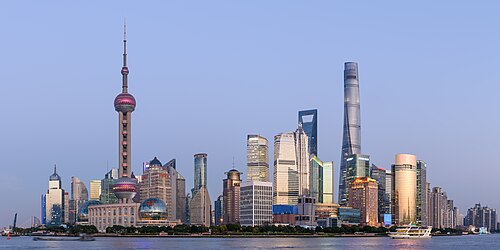
The International Monetary Fund reports that China has overtaken the United States as the world's largest economy when measured by purchasing power parity (PPP), with China's GDP reaching 17.6 trillion dollars compared to the US's 17.4 trillion. By nominal GDP, China remains second behind the US. The milestone underscores the scale of China's economic transformation and its growing influence in global economic governance institutions, while also sharpening debates about whether China's authoritarian model can coexist with or will challenge Western democratic capitalism.
Xinjiang Security Measures and International Condemnation

Beginning around 2017, the Chinese government under Xi Jinping intensifies security operations in Xinjiang, an autonomous region in northwest China home to the predominantly Muslim Uyghur ethnic group. Authorities establish a system of vocational training centers that international human rights organizations, governments, and United Nations investigators describe as mass detention camps where an estimated one million or more Uyghurs and other Turkic Muslims are held. Reports allege forced labor, mass surveillance, coercive contraceptive use and sterilization, and cultural assimilation programs. The Chinese government states the measures are necessary for counter-terrorism, deradicalization, and maintaining social stability, and denies allegations of human rights abuses, describing the facilities as vocational education centers. The situation leads to sanctions and diplomatic disputes with the United States, the European Union, Canada, and other nations, with some governments and human rights groups classifying China's actions as crimes against humanity and genocide. China rejects these accusations as interference in its internal affairs and attempts to contain its development.
Hong Kong Protests and National Security Law

In 2019, Hong Kong experiences the largest protests since its handover from British to Chinese rule in 1997, triggered by a proposed extradition bill that would allow criminal suspects to be sent to mainland China. The protests escalate into a broader movement demanding democratic reforms and expressing concerns about the erosion of Hong Kong's autonomy under the "one country, two systems" framework. The protests draw millions of participants and are met with increasingly heavy police force, including the use of tear gas, rubber bullets, and mass arrests. In June 2020, Beijing imposes a National Security Law on Hong Kong that criminalizes secession, subversion, terrorism, and collusion with foreign forces. The law leads to mass arrests of pro-democracy activists, the dissolution of the elected Legislative Council opposition, and the effective elimination of Hong Kong's independent political opposition. The Chinese government states the law is necessary to protect national security, end violence and instability, and prevent foreign interference. The United States, the United Kingdom, the European Union, and other nations impose sanctions on Chinese and Hong Kong officials in response, while China describes these actions as interference in its internal affairs.
Common Prosperity Campaign Announced
President Xi Jinping announces a "Common Prosperity" campaign aimed at addressing China's growing wealth inequality, including crackdowns on monopolistic tech companies, regulation of private education, and limits on corporate profits perceived as excessive. The campaign reflects concerns that rapid economic growth had produced stark income disparities — China's Gini coefficient had risen from roughly 0.3 in the early 1980s to over 0.47 by 2020. It triggers a broad sell-off in Chinese technology stocks and sparks debate about the limits of private enterprise under China's political system. Supporters argue it addresses legitimate inequality concerns; critics view it as a political consolidation move that strengthens Party control over the economy.