
The Revolutions of 1989 (1989-1990)
The wave of largely peaceful uprisings that ended Soviet-style communist one-party rule across Central and Eastern Europe, from Poland's Solidarity election to the fall of the Berlin Wall and Romania's violent Christmas revolution, dissolving the Cold War division of Europe.
Events
Poland's Round Table Talks Legalize Solidarity

Poland's communist government, facing economic crisis and repeated strikes, opened negotiations with the banned Solidarity trade union led by Lech Walesa. The Round Table Talks, which ran until April, legalized Solidarity and agreed to partially free elections — a concession the ruling party believed it could control.
Location: Warsaw, Poland
Solidarity Wins Poland's Elections

In the partially free vote, Solidarity candidates won nearly every contested parliamentary seat, while voters left the Communist Party list largely blank. On the same day, China's leadership crushed pro-democracy protests in Tiananmen Square — a contrast historians cite to underline that Eastern Europe's transformation was not inevitable. Poland's communists, with Moscow under Mikhail Gorbachev signaling it would not intervene, accepted defeat.
Location: Warsaw, Poland
Hungary Opens Its Border

Hungary's reform communist government had begun dismantling its Austrian border fence in May. On August 19, the Pan-European Picnic saw the border briefly opened and hundreds of East Germans flee west. By September 11, Budapest formally allowed East German refugees to leave, puncturing the Iron Curtain and triggering mass flight from East Germany.
Location: Sopron, Hungary
Leipzig's Monday Demonstrations Grow

Weekly Monday peace vigils at Leipzig's Nikolaikirche swelled into a mass protest movement. On October 9, roughly 70,000 people marched despite threats of gunfire; security forces stood down. The demonstrations, fed by East Germans' frustration with travel restrictions and economic stagnation, grew to hundreds of thousands in subsequent weeks.
Location: Leipzig, East Germany
The Berlin Wall Falls

A confused press statement by East Berlin party spokesman Gunter Schabowski, interpreted as meaning border crossings were open with immediate effect, drew crowds to the Wall. Overwhelmed guards opened the checkpoints at Bornholmer Strasse and elsewhere. The regime that had called the Wall an "anti-fascist protection rampart" conceded within hours, and Berliners began dismantling the concrete by hand.
Location: Berlin, East Germany
Bulgaria's Longtime Ruler Ousted

The day after the Wall opened, Bulgaria's Politburo removed Todor Zhivkov, leader since 1954, in an internal party coup. The reform faction presented the change as renewal, but opposition groups that had organized environmental and human-rights protests pushed for genuine pluralism; Bulgaria's transition would be slower and less dramatic than its neighbors'.
Location: Sofia, Bulgaria
The Velvet Revolution Topples Czechoslovakia's Regime
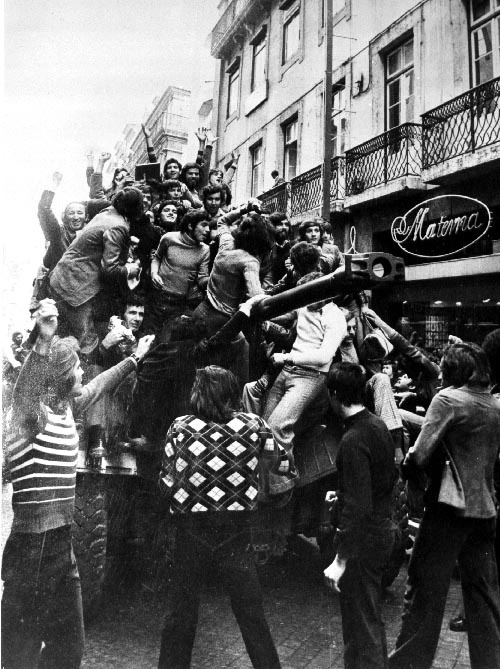
A sanctioned student commemoration in Prague turned into an anti-government demonstration that police brutally dispersed, sparking nationwide strikes. Civic Forum, led by playwright Vaclav Havel, coordinated the pressure; on November 28 the Communist Party gave up its monopoly of power, and on December 10 a coalition government took office.
Location: Prague, Czechoslovakia
The Malta Summit Declares the Cold War Over
President George H. W. Bush and Soviet leader Mikhail Gorbachev met aboard Soviet and US warships off Malta, days after the Romanian uprising began. Both publicly declared an end to the Cold War and pledged cooperation. Gorbachev's explicit non-intervention policy — rejecting the Brezhnev Doctrine that had crushed earlier uprisings in 1956 and 1968 — is widely regarded as having made the peaceful revolutions possible.
Location: Malta
Romania's Bloody Christmas
Romania's revolution was the wave's only violent overthrow. Protests in Timisoara mid-December spread after security forces fired on crowds; on December 22 Nicolae Ceausescu and his wife Elena fled Bucharest as crowds stormed party buildings, then were captured. A summary trial by an ad hoc military tribunal on December 25 ended with their execution by firing squad, broadcast on national television.
Location: Bucharest, Romania
Vaclav Havel Elected President
The Federal Assembly unanimously elected Vaclav Havel, a dissident imprisoned months earlier for his criticism of the regime, as Czechoslovakia's president. The vote capped six weeks of peaceful pressure that dissolved one-party rule without fatalities — the outcome that gave the movement its name, the Velvet Revolution.
Location: Prague, Czechoslovakia
German Reunification
East Germany's first free elections in March 1990 produced a government committed to rapid unification, a demand driven by mass emigration and economic collapse. On October 3, 1990, the five eastern states joined the Federal Republic. Reunification triggered long-running debates over "shock therapy" transition economics, persistent east-west inequality, and later disagreements over NATO's eastward expansion.
Location: Berlin, Germany