
Qin Shi Huang — First Emperor of a Unified China
The founder of the Qin dynasty who in 221 BC conquered the warring states and created the title of emperor, standardizing script, currency, and administration across China. His harsh Legalist rule, massive labor projects, and the famous Terracotta Army mark him as one of history's most consequential and debated rulers.
Events
Birth of Ying Zheng in Handan

Ying Zheng was born in Handan, capital of the rival state of Zhao, where his father was a hostage prince. His path to kingship ran through court intrigue among merchants, regents, and the queen dowager's faction in Qin.
Location: Handan, State of Zhao
Crowned King of Qin at Age Thirteen
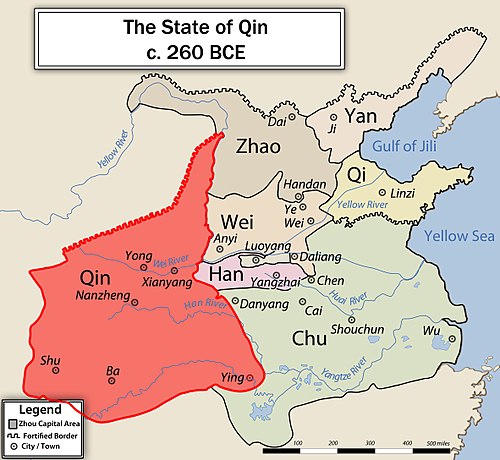
Ying Zheng succeeded his father King Zhuangxiang as king of Qin at age thirteen. Power initially rested with the chancellor Lü Buwei, until Zheng purged the regents and took personal control of the state in his early twenties.
Location: Xianyang, State of Qin
The Wars of Unification

Between 230 and 221 BC, Qin's armies, built on Legalist state organization, mass conscription, and superior logistics, conquered the states of Han, Zhao, Wei, Chu, Yan, and Qi. These wars ended the Warring States period and centuries of interstate warfare.
Location: Central China
The First Emperor Proclaimed
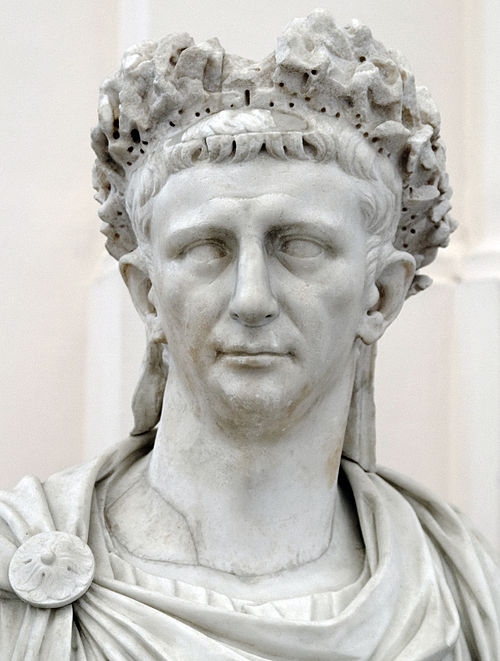
Upon unification, Ying Zheng took the new title Shi Huangdi, or First Emperor, rather than the older title of king. He abolished the feudal enfeoffment system, divided the empire into centrally administered commanderies and counties, and established a bureaucratic model that Chinese dynasties would retain for over two millennia.
Location: Xianyang, Qin Empire
Standardization of Script, Currency, and Measures

The First Emperor imposed a uniform small-seal script, a single coinage (round copper coins with square holes), standardized weights and measures, and uniform cart axle widths across the empire. These reforms enabled administration and trade across regions that had used different systems for centuries.
Location: Xianyang, Qin Empire
Roads, Canals, and the Northern Walls
Massive conscripted labor built imperial highways radiating from the capital, the Lingqu Canal linking the Yangtze and Pearl river systems, and connected earlier northern defensive walls into a single frontier line — the precursor of the Great Wall of China. Tens of thousands of laborers died on these projects, a fact that fueled later revolts.
Location: Northern frontier, Qin Empire
The Burning of Books
On the advice of chancellor Li Si, the imperial court banned and burned private copies of historical and philosophical texts outside official Qin records, aiming to suppress doctrines that criticized the regime. The scale of the destruction is debated by historians, since copies of many works survived and Han-era scholars later reconstructed much of the corpus.
Location: Xianyang, Qin Empire
The Killing of Scholars and the Search for Immortality
According to the Han historian Sima Qian, the emperor ordered several hundred scholars buried alive at the capital after alchemists deceived him — the traditional count of 460 is not independently verifiable. The emperor spent his final years funding alchemists and expeditions seeking an elixir of immortality, reportedly consuming mercury-based preparations.
Location: Xianyang, Qin Empire
Death on the Fifth Inspection Tour
Qin Shi Huang died at age 49 at Shaqiu palace during his fifth tour of the empire. The chief minister Li Si and the eunuch Zhao Gao concealed his death, forging edicts forcing the heir apparent Fusu to commit suicide, and installed the pliable Huhai as the Second Emperor.
Location: Shaqiu, Hebei
Collapse of the Qin Dynasty
Under the Second Emperor, rebellions broke out across the empire, beginning with the Chen Sheng and Wu Guang uprising of 209 BC. By 206 BC the Qin dynasty had collapsed entirely. The succeeding Han dynasty retained the centralized bureaucratic model, script, and measures, while softening the Legalist severity.
Location: Central China
The Terracotta Army Discovered
Farmers digging a well near Xi'an discovered the Terracotta Army, thousands of life-sized clay soldiers guarding the First Emperor's unexcavated mausoleum. The site became a UNESCO World Heritage Site in 1987 and is among the most significant archaeological finds of the twentieth century, drawing millions of visitors annually.
Location: Lintong, Shaanxi, China