
The Ottoman Empire (c.1299-1922)
Osman I, a Turkish tribal leader in northwestern Anatolia, founded a small principality (beylik) on the frontiers of the declining Seljuk Sultanate of Rum and the Byzantine Empire. From this modest beginning, his followers became known as Osmanlis or Ottomans. The beylik's strategic location near Byzantine territories allowed it to expand through both warfare and alliances with local Christian lords.
Events
Foundation of the Ottoman Beylik
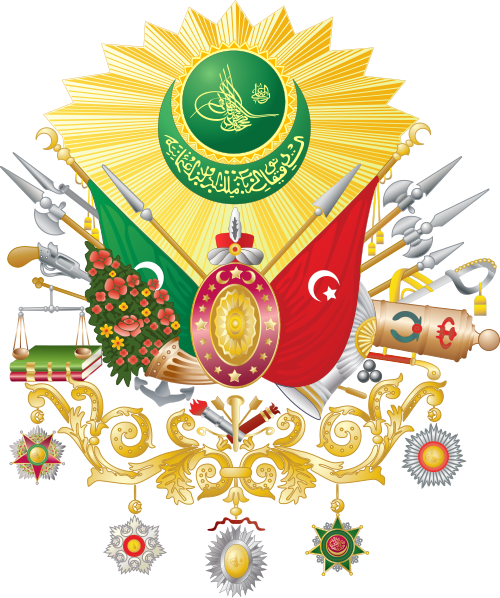
Osman I, a Turkish tribal leader in northwestern Anatolia, founded a small principality (beylik) on the frontiers of the declining Seljuk Sultanate of Rum and the Byzantine Empire. From this modest beginning, his followers became known as Osmanlis or Ottomans. The beylik's strategic location near Byzantine territories allowed it to expand through both warfare and alliances with local Christian lords.
Conquest of Adrianople (Edirne)

Sultan Murad I captured the city of Adrianople (renamed Edirne), making it the first major European capital of the Ottoman state and marking the empire's permanent entry into the Balkans. The conquest opened the path for further Ottoman expansion into Southeastern Europe, bringing the empire into direct conflict with Serbian, Bulgarian, and Hungarian kingdoms.
Battle of Ankara and the Interregnum

The Central Asian conqueror Timur (Tamerlane) defeated Ottoman Sultan Bayezid I at the Battle of Ankara, capturing Bayezid and shattering Ottoman unity. A decade-long civil war, the Ottoman Interregnum, followed as Bayezid's sons fought for control. The empire nearly collapsed but was reunited under Mehmed I, demonstrating the resilience of Ottoman institutions.
Conquest of Constantinople

Sultan Mehmed II, known as "the Conqueror," captured Constantinople after a 53-day siege, using massive cannon and a fleet transported over land. The fall of the thousand-year-old Byzantine Empire shocked Europe and established the Ottomans as a major power. Mehmed made Constantinople (renamed Istanbul) the new Ottoman capital, repopulated it, and transformed Hagia Sophia into a mosque.
Conquest of Egypt and the Caliphate
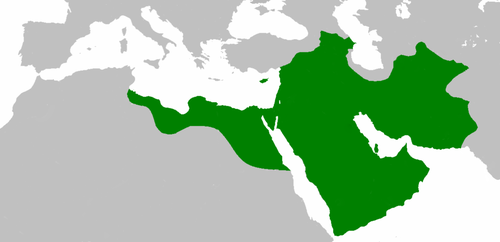
Sultan Selim I conquered Egypt, defeating the Mamluk Sultanate and extending Ottoman rule over the Arabian Peninsula, including the holy cities of Mecca and Medina. Selim assumed the title of Caliph, claiming religious authority over all Sunni Muslims. The Ottomans thus became both a political and religious empire, controlling the most important Islamic pilgrimage sites.
Suleiman the Magnificent — The Golden Age

Suleiman I ascended the throne, beginning a 46-year reign that marked the Ottoman Empire's cultural and military zenith. Known as "the Magnificent" in Europe and "the Lawgiver" in the Islamic world, Suleiman codified Ottoman law, sponsored a golden age of art and architecture (including the Suleymaniye Mosque), and expanded the empire to its greatest extent — from Hungary to Yemen to Algeria.
Failed Siege of Vienna

The Ottoman army under Grand Vizier Kara Mustafa Pasha laid siege to Vienna, the capital of the Habsburg Empire. After two months, a Polish-German relief army under King John III Sobieski arrived and routed the Ottomans at the Battle of Vienna on September 12. The defeat ended Ottoman expansion into Europe and marked the beginning of a long strategic decline, as the empire gradually lost territory to Austria, Russia, and other powers.
The Tanzimat Reforms
Sultan Abdulmejid I proclaimed the Tanzimat ("reorganization") reforms, a sweeping program to modernize the Ottoman state. The reforms established legal equality for all subjects regardless of religion, reorganized the army and bureaucracy, introduced secular courts, and guaranteed property rights. Though intended to strengthen the empire against European pressure, the reforms met resistance from conservative religious and military elements.
First Constitutional Era
Sultan Abdul Hamid II proclaimed a new constitution establishing a parliamentary system with an elected Chamber of Deputies. The constitution, drafted by reformist statesmen, guaranteed civil liberties and equality before the law. However, the sultan suspended the constitution and parliament in 1878 after the disastrous Russo-Turkish War, ushering in 30 years of autocratic rule known as the "Hamidian era."
The Young Turk Revolution
The Young Turk movement, led by the Committee of Union and Progress (CUP), forced Sultan Abdul Hamid II to restore the constitution and reconvene parliament. The revolution raised hopes for democratization and multi-ethnic unity under Ottomanism. However, the CUP's increasingly authoritarian rule, the rise of ethnic nationalism among subject peoples, and the empire's military defeats led to the Balkan Wars and further territorial losses.
World War I and the Armenian Genocide
The Ottoman Empire entered World War I on the side of the Central Powers. During the war, the CUP government systematically deported and massacred an estimated 1.5 million Armenians, an event recognized as genocide by many historians and governments. The empire also suffered devastating military defeats in the Caucasus, Mesopotamia, and Palestine. By the war's end in 1918, Ottoman forces were exhausted and the Arab provinces were lost.
Abolition of the Sultanate and the End of the Ottoman Empire
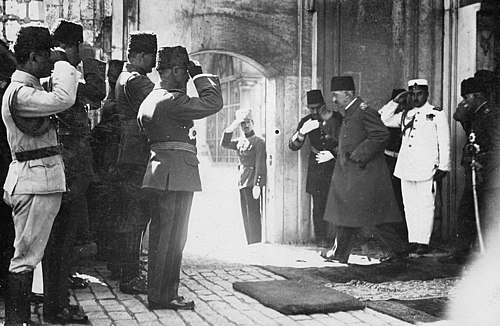
The Turkish Grand National Assembly under Mustafa Kemal (Ataturk) abolished the Ottoman sultanate, ending 623 years of Ottoman rule. The last sultan, Mehmed VI, fled Istanbul on a British warship. The following year, the Republic of Turkey was proclaimed. In 1924, the caliphate was also abolished. The Ottoman Empire, once one of the world's most powerful states, was replaced by the modern Turkish nation-state.