
The Norman Conquest of England (1066-1087)
The Norman Conquest of 1066 placed William, Duke of Normandy, on the English throne and transformed England's ruling class, language, church, and architecture. It replaced the Anglo-Saxon aristocracy with Norman lords, built the castle network that anchored feudal control, and reshaped English law and vocabulary for centuries.
Events
Vikings Settle in Normandy
The Frankish king Charles the Simple granted the Viking leader Rollo lands at the mouth of the Seine under the Treaty of Saint-Clair-sur-Epte. The "Northmen" and their descendants became the Normans, adopting Christianity, the French language, and feudal military organization that made them one of medieval Europe's most effective fighting peoples.
Location: Saint-Clair-sur-Epte, France
The English Succession Crisis
Edward the Confessor died childless on 5 January 1066, leaving the English throne contested. Harold Godwinson, the most powerful English noble, was crowned the next day, but Duke William of Normandy claimed Edward had promised him the throne, and King Harald Hardrada of Norway pressed his own claim, setting up a three-way struggle.
Location: Westminster, England
Battle of Stamford Bridge
Harold Godwinson force-marched his army north and destroyed the invading Norwegian force of Harald Hardrada, who was killed along with much of his army. The victory eliminated the Norwegian claim but exhausted Harold's army days before William's fleet landed in the south.
Location: Stamford Bridge, England
Battle of Hastings
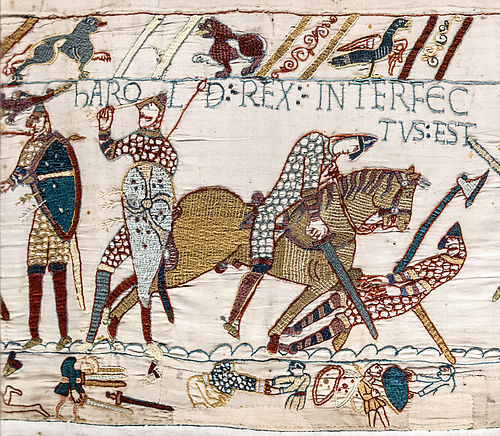
William's army of Normans, French, Bretons, and Flemish troops met Harold's exhausted force on Senlac Hill. After a day-long battle decided by coordinated archery, infantry, and cavalry, Harold was killed and his army destroyed, opening England to Norman rule.
Location: Battle, Sussex, England
William Crowned King
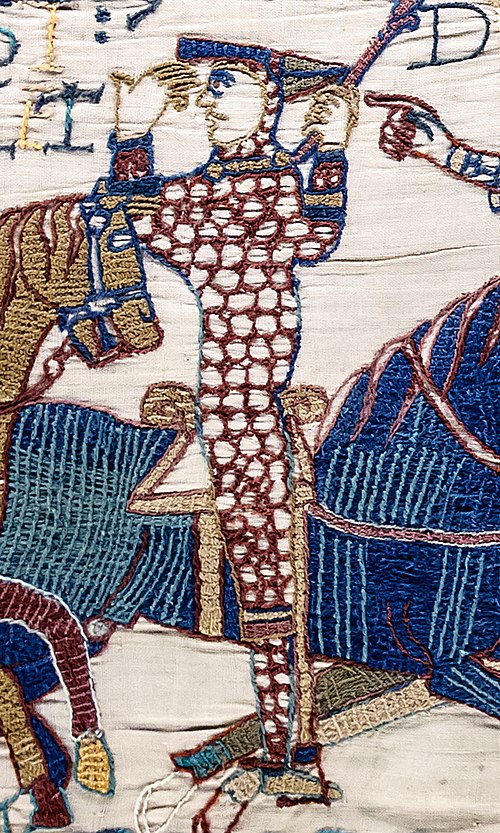
William was crowned King of England in Westminster Abbey on Christmas Day, while nervous Norman guards outside set fire to surrounding buildings amid shouts that a riot had broken out. William spent his first years crushing rebellions in the south-west, the Welsh Marches, and the north of England.
Location: Westminster Abbey, London, England
The Harrying of the North

Responding to a northern rebellion backed by Danish forces, William's armies systematically destroyed villages, crops, and livestock across Yorkshire and the north during the winter of 1069-1070. Contemporary chronicles describe mass starvation; modern historians estimate tens of thousands died and large areas remained depopulated for a generation, recorded in Domesday Book as "waste."
Location: Yorkshire, England
The Revolt of the Earls

The last serious revolt against Norman rule, led by the earls of Norfolk and Hereford, was crushed swiftly by William's loyalist forces. The failure of native and mixed rebellions confirmed that armed resistance was futile and completed the transfer of power in England.
Location: East Anglia and the Welsh Marches, England
The Domesday Book
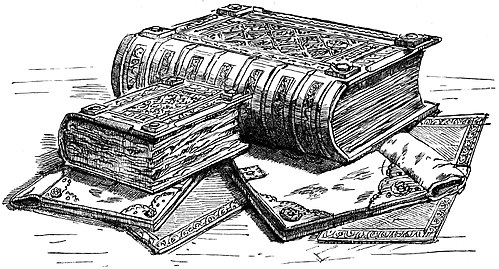
The great survey of landholding across England, ordered by William to assess taxable resources and land tenure, was completed after the Salisbury Oath, at which all major landowners swore fealty directly to the king. The resulting Domesday Book, unique in medieval Europe for its scale and detail, recorded the massive transfer of land from English to Norman hands.
Location: Winchester, England
Death of William the Conqueror
William died while campaigning in France, leaving Normandy to his eldest son Robert and England to his second son William Rufus, whose succession was contested. The conquest's legacy endured: French dominated the language of England's courts and elite for over two centuries, Norman castles reshaped the landscape, and a new Anglo-Norman aristocracy replaced the Anglo-Saxon one.
Location: Rouen, France