
The Neo-Assyrian Empire (911-609 BC)
The first empire to span the entire Near East, built by Assyrian kings through professional armies, mass deportations, and provincial bureaucracy — and remembered both for documented brutality and for libraries, cities, and administration that shaped every empire after it.
Events
Adad-nirari II Restores Assyrian Power

Adad-nirari II ascended the throne and began campaigns that recovered territory lost during Assyria's earlier decline, consolidating the core lands between the Tigris and Euphrates. His reign is conventionally dated as the start of the Neo-Assyrian period, during which Assyria grew from a regional kingdom into the dominant power of the Near East.
Location: Assyria (northern Mesopotamia)
Ashurnasirpal II Rebuilds Kalhu as Capital

Ashurnasirpal II rebuilt the city of Kalhu (modern Nimrud) and made it his capital, hosting a dedication feast that his inscriptions claim was attended by nearly 70,000 people. His palace reliefs and annals describe campaigns and mass deportations in explicit detail, a practice Assyrian kings used to break resistance and resettle depopulated regions.
Location: Nimrud (Kalhu), Iraq
Battle of Qarqar
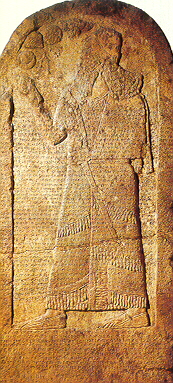
Shalmaneser III met a coalition of Levantine states including Damascus and Israel at the Qarqar river. The Assyrian inscriptions claim victory, but Shalmaneser returned to campaign against the same coalition repeatedly in the following years, and modern historians read the battle as at most an indecisive encounter that checked Assyrian advance westward for a time.
Location: Qarqar, Syria
Tiglath-Pileser III Seizes the Throne and Rebuilds the State

After decades of internal weakness, Tiglath-Pileser III took the throne and transformed Assyria into a machine of conquest: a professional standing army, a reorganized network of provinces with Assyrian governors, and systematic deportation of conquered populations. His annexation of Damascus in 732 BC reduced neighboring kingdoms to vassals or provinces and set the pattern for the empire's later expansion.
Location: Kalhu, Assyria
Fall of Samaria and the Kingdom of Israel

Sargon II completed the capture of Samaria, ending the Kingdom of Israel. Large numbers of Israelites were deported to Mesopotamia and Media, and foreign populations were settled in their place — the origin of the tradition of the Ten Lost Tribes. The event is documented in both Assyrian royal inscriptions and the Hebrew Bible, a rare case of parallel sources from both conqueror and conquered.
Location: Samaria, Kingdom of Israel
Sennacherib's Siege of Jerusalem
Sennacherib campaigned against Judah, capturing 46 fortified cities and besieging Jerusalem under King Hezekiah. The Assyrian annals record Hezekiah trapped "like a bird in a cage" and paying heavy tribute, while the Biblical account describes the Assyrian army's withdrawal. The two accounts diverge on outcome but agree that Jerusalem was not taken, making the episode a foundational case study in comparing conqueror and subject sources.
Location: Jerusalem, Kingdom of Judah
Nineveh Rebuilt as Imperial Capital
Sennacherib made Nineveh his capital and undertook a vast rebuilding: the "Palace Without Rival," new city walls, canals, and an aqueduct at Jerwan that carried water tens of kilometers (about 50 km) to the city's reservoirs. Nineveh became the largest city of its time and the administrative center of the empire.
Location: Nineveh, Iraq
Esarhaddon Conquers Egypt
Esarhaddon's army crossed the Sinai, defeated Pharaoh Taharqa, and took Memphis, bringing Egypt under Assyrian control for the first time. Egyptian resistance continued, and Esarhaddon died in 669 BC while marching to reassert control. The conquest marked the empire's greatest territorial extent, stretching from the Nile to the Iranian plateau.
Location: Memphis, Egypt
Ashurbanipal's Library at Nineveh
Ashurbanipal, the last great Assyrian king, assembled a royal library of more than 30,000 tablets and writing boards — the best-documented collection from the ancient Near East, including the most complete surviving text of the Epic of Gilgamesh. His scribes systematically collected and copied Babylonian literature, preserving works that would otherwise have been lost. The library was excavated in the 19th century and now forms a core of the British Museum's Middle East collection.
Location: Nineveh, Assyria
Civil War and the Destruction of Elam
Ashurbanipal fought a prolonged civil war against his brother Shamash-shum-ukin, who ruled Babylon, crushing the revolt in 648 BC. He then waged war against Elam, sacking Susa in 640 BC and destroying the kingdom. The reliefs celebrating these victories are among the most violent images of the ancient world, but the wars exhausted Assyria's resources within a generation of its collapse.
Location: Susa, Elam
The Fall of Nineveh
After Ashurbanipal's death in 627 BC the empire disintegrated rapidly. In 612 BC a coalition of Babylonians under Nabopolassar and Medes under Cyaxares stormed and sacked Nineveh. The destruction of the ancient capital was so complete that the Greek historian Xenophon, marching past the site two centuries later, found only mounds and did not know a city had stood there. The Hebrew Book of Nahum celebrates the fall.
Location: Nineveh, Assyria
Final Defeat at Harran

An Assyrian force under general Ashur-uballit II, supported by Egypt, made a last stand at Harran. After its defeat in 609 BC the Assyrian state vanished from history. Within years, Babylon under Nebuchadnezzar II inherited most of its lands, and the empire's administrative practices, Aramaic administrative language, and deportation policies became models for its successors.
Location: Harran, Assyria