
Wolfgang Amadeus Mozart — Composer of the Classical Era
Wolfgang Amadeus Mozart (1756-1791) was an Austrian composer who completed more than 800 works across every major genre of his time, from symphonies and concertos to opera. A child prodigy turned freelance composer in Vienna, he became one of the most performed and influential figures in the history of Western music.
Events
Born in Salzburg
Wolfgang Amadeus Mozart was born on Getreidegasse 9 in Salzburg, the youngest child of the violinist and pedagogue Leopold Mozart. His father recognized his extraordinary musical gifts early and made his education and career the family's central project.
Location: Salzburg, present-day Austria
The Grand Tour of Europe
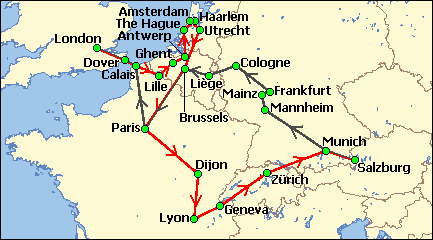
Leopold Mozart took seven-year-old Wolfgang and his sister Nannerl on a more than three-year tour of European capitals, where the children performed before courts and paying publics in Munich, Paris, London, and the Netherlands. The tour established Mozart's reputation as one of the celebrated child prodigies of the century and exposed him to the leading musical styles of Europe.
Location: Munich, Paris, London, The Hague
First Opera in Milan
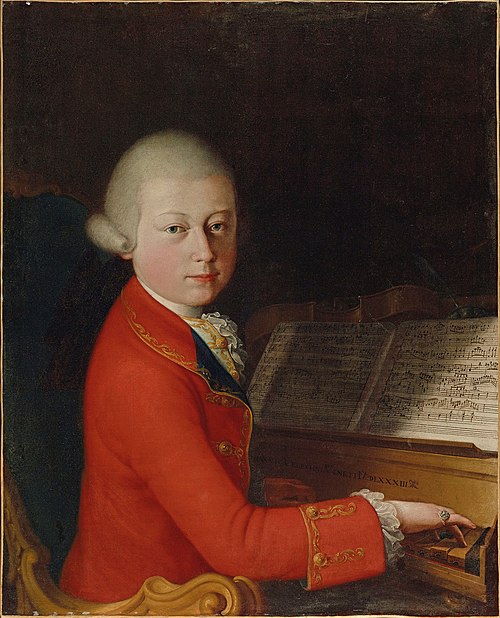
Fourteen-year-old Mozart's opera seria Mitridate, re di Ponto premiered at Milan's Teatro Regio Ducal to a successful run during his first Italian journey. His three trips to Italy between 1769 and 1773 brought him commissions, an audience with the Pope, and direct study of Italian opera and counterpoint.
Location: Milan, Italy
Court Musician in Salzburg
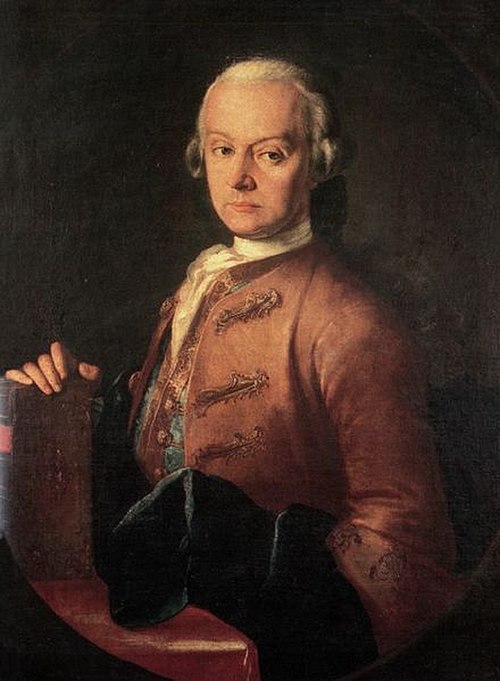
Mozart served the Salzburg court of Prince-Archbishop Colloredo as a salaried musician, composing symphonies, concertos, and sacred works while chafing at the restricted role. His search for better employment took him on journeys including an extended trip of 1777-1779 toward Mannheim and Paris.
Location: Salzburg, present-day Austria
The Paris Journey and His Mother's Death

During his job-seeking journey to Paris, Mozart's mother Anna Maria, who had accompanied him, fell ill and died in July 1778. The trip brought no lasting position, and the composer returned to Salzburg in 1779 to take up a post as court organist.
Location: Paris, France
Idomeneo Premieres in Munich
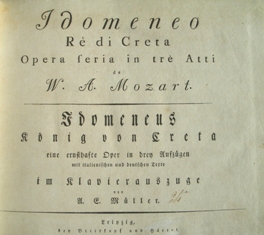
Mozart's opera Idomeneo, commissioned by the Munich court, premiered to strong acclaim and is regarded as his first great operatic achievement. While in Munich for the premiere, his long-simmering conflict with his Salzburg employer came to a head.
Location: Munich, Bavaria
Independence in Vienna

After a final quarrel, Mozart was dismissed from the Salzburg archbishop's service and chose to remain in Vienna as one of the first major composers to attempt a freelance career independent of a court appointment. He supported himself through teaching, publishing, subscription concerts, and commissioned operas, achieving fame but never long-term financial security.
Location: Vienna, Austria
Marriage and Die Entfuehrung aus dem Serail
Mozart married Constanze Weber, against his father's initial wishes, days after the successful Vienna premiere of his singspiel Die Entfuehrung aus dem Serail. The Turkish-influenced work was his biggest stage success of the decade and helped secure his standing in Viennese musical life.
Location: Vienna, Austria
The Marriage of Figaro
Mozart's collaboration with the librettist Lorenzo Da Ponte produced The Marriage of Figaro, adapted from Beaumarchais's controversial comedy, which premiered at the Burgtheater. The opera's sympathetic treatment of servants outwitting their aristocrat became one of the most performed works in the operatic repertoire.
Location: Vienna, Austria
Don Giovanni Conquers Prague
Don Giovanni premiered in Prague, where Mozart's music had an especially enthusiastic following, and was received as a triumph. The opera's blending of comedy and the supernatural in the story of the seducer facing retribution has made it a cornerstone of the repertoire.
Location: Prague, Bohemia
The Final Symphonies
In the summer of 1788 Mozart composed his last three symphonies in about six weeks, including No. 39, the lyrical No. 40 in G minor, and No. 41, the Jupiter. The three works together summarize and extend the expressive range of the Classical symphony.
Location: Vienna, Austria
The Magic Flute
The Magic Flute, a Singspiel filled with Masonic symbolism composed to a German libretto by Emanuel Schikaneder, premiered in a suburban Vienna theater in the last months of Mozart's life. It became one of his most beloved and frequently staged works.
Location: Vienna, Austria
Death and the Unfinished Requiem
Mozart died at age 35 while composing his Requiem, which was left unfinished and completed by his pupil Sussmayr; legends about the commission circulated widely in later decades. He was buried in a common grave in Vienna's St. Marx Cemetery in keeping with contemporary Josephine burial practices.
Location: Vienna, Austria