
Martin Luther King Jr. — Civil Rights Leader
Martin Luther King Jr. was an American Baptist minister and civil rights activist who became the most prominent leader of the US civil rights movement. Advancing racial equality through nonviolent resistance and civil disobedience, he led the Montgomery Bus Boycott, the Birmingham campaign, and the March on Washington where he delivered his legendary "I Have a Dream" speech. Awarded the Nobel Peace Prize in 1964, King's activism helped secure the Civil Rights Act of 1964 and the Voting Rights Act of 1965 before his assassination in 1968.
Events
Born in Atlanta, Georgia
Michael King Jr. is born in Atlanta, Georgia, to Michael King Sr. and Alberta Williams King. His father is pastor of Ebenezer Baptist Church. In 1934, after traveling to Germany, King Sr. changes his own name and his son's to Martin Luther in honor of the Protestant Reformation leader.
Enters Morehouse College at Age 15
King skips his final year of high school and enters Morehouse College, a historically Black college in Atlanta. He initially considers careers in medicine and law, but under the mentorship of Morehouse president Benjamin Mays, a civil rights activist and theologian, King begins to consider the ministry.
Ordained as a Baptist Minister
King is ordained as a Baptist minister at age 19, becoming assistant pastor at Ebenezer Baptist Church alongside his father. He graduates from Morehouse with a BA in sociology the same year. He then attends Crozer Theological Seminary in Pennsylvania, where he graduates as valedictorian in 1951.
Marries Coretta Scott

King marries Coretta Scott, a singer and civil rights activist, at her family home in Marion, Alabama. They will have four children: Yolanda, Martin III, Dexter, and Bernice. King pursues a PhD in systematic theology at Boston University, writing his dissertation on the concept of God in the thought of Paul Tillich and Henry Nelson Wieman.
King Leads the Montgomery Bus Boycott
Following Rosa Parks's arrest for refusing to give up her bus seat, King is elected president of the Montgomery Improvement Association and leads a 381-day boycott of the city's segregated bus system. King's home is bombed during the protest. The boycott ends in victory when the US Supreme Court declares bus segregation unconstitutional. King emerges as a national figure.
Southern Christian Leadership Conference Founded

King convenes 60 Black ministers and leaders in Atlanta to found the Southern Christian Leadership Conference (SCLC), with King as its first president. The SCLC becomes the organizing force for the civil rights movement, coordinating nonviolent direct action across the South. King's philosophy of nonviolent resistance, inspired by Gandhi, becomes the movement's guiding principle.
Birmingham Campaign and Letter from Birmingham Jail

King and the SCLC launch a campaign against segregation in Birmingham, Alabama, one of the most segregated cities in America. King is arrested on April 12 and writes his famous "Letter from Birmingham Jail" defending civil disobedience. When the campaign stalls, King authorizes the "Children's Crusade" — marches by schoolchildren. Police Commissioner Bull Connor's brutal response with fire hoses and police dogs shocks the nation and galvanizes support for civil rights legislation.
"I Have a Dream" at the March on Washington

King delivers his most famous speech from the steps of the Lincoln Memorial to over 250,000 people gathered for the March on Washington for Jobs and Freedom. His improvised "I Have a Dream" refrain envisions a future where people are judged by character rather than color. The speech becomes the defining oratorical moment of the civil rights movement.
Civil Rights Act Signed Into Law
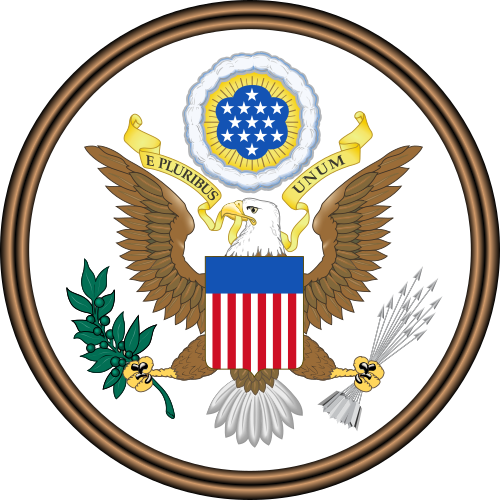
President Lyndon B. Johnson signs the Civil Rights Act of 1964 into law, prohibiting discrimination based on race, color, religion, sex, or national origin. The act bans segregation in public accommodations and employment discrimination — the most sweeping civil rights legislation since Reconstruction. King attends the signing ceremony.
King Awarded Nobel Peace Prize
At age 35, King becomes the youngest person ever awarded the Nobel Peace Prize. The Nobel Committee recognizes his leadership of nonviolent resistance to racial prejudice. King donates the prize money of 54,123 to civil rights organizations. He uses the international platform to call for an end to the Vietnam War and economic justice.
Bloody Sunday and the Selma March
King organizes three marches from Selma to Montgomery to demand voting rights for Black Americans. The first march, known as Bloody Sunday, ends in violence as state troopers attack peaceful marchers on the Edmund Pettus Bridge. Televised footage of the brutality shocks the nation. The third march, with federal protection, reaches Montgomery with 25,000 participants. The Selma campaign directly leads to passage of the Voting Rights Act.
Voting Rights Act Signed Into Law
President Johnson signs the Voting Rights Act of 1965, which prohibits racial discrimination in voting and eliminates barriers such as literacy tests that had disenfranchised Black Americans. The act is a direct legislative outcome of the Selma campaign. King stands behind Johnson at the signing ceremony. The act's impact is immediate: Black voter registration in the South triples within five years.
King Speaks Out Against the Vietnam War
In a landmark speech at Riverside Church in New York, King publicly opposes the Vietnam War, calling the United States "the greatest purveyor of violence in the world today." The speech alienates many allies, including President Johnson and the NAACP, who fear it will weaken the civil rights coalition. King expands his focus to the Poor People's Campaign, connecting racial justice to economic inequality.
King Assassinated in Memphis
King is assassinated by a single gunshot while standing on the balcony of the Lorraine Motel in Memphis, Tennessee, where he was supporting striking sanitation workers. His death triggers riots in over 100 US cities. James Earl Ray is convicted of the murder. King's assassination leads to the passage of the Fair Housing Act of 1968 and enshrines him as a martyr for racial justice. Martin Luther King Jr. Day is established as a federal holiday in 1986.