
The Kingdom of Aksum (c. 100-960 AD)
A trading empire of the Horn of Africa and southern Arabia, based in modern Ethiopia and Eritrea, that the prophet Mani ranked alongside Rome, Persia, and China as a great power of the third century. Aksum controlled Red Sea commerce, minted sub-Saharan Africa's first indigenous coinage, and became one of the earliest states to adopt Christianity.
Events
A Power Rises on the Red Sea

Emerging from the earlier D'mt civilization, the Kingdom of Aksum was founded in the first century AD with its capital at the city of Axum in the Ethiopian highlands. Its position commanding the Red Sea and the trade routes between the Mediterranean, Arabia, and India shaped its entire history, and its monumental stone stelae remain among the largest monoliths ever raised.
Location: Axum, Horn of Africa
Adulis and the India Trade

The Periplus of the Erythraean Sea, a Greek merchant handbook of the first century AD, described the port of Adulis as a hub where ivory, tortoiseshell, and rhinoceros horn were traded for cloth, iron, and wine from Egypt and India. Aksum's prosperity rested on taxing this exchange and exporting African goods through Adulis into the Roman world.
Location: Adulis, Aksumite coast (modern Eritrea)
Africa's First Indigenous Coinage
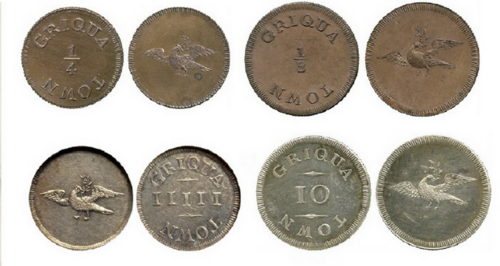
From around 230, King Endybis issued gold, silver, and bronze coins, making Aksum the first state in sub-Saharan Africa to mint its own currency. The coins bore his image and initially pagan symbols, and they eased trade with the Roman Empire, which accepted Aksumite gold coinage in its markets — a mark of the kingdom's commercial weight.
Location: Axum, Kingdom of Aksum
One of the Four Great Powers
In the third century, the prophet Mani, founder of Manichaeism, listed Aksum alongside Rome, Persia, and China as one of the four great powers of the world. The kingdom by then exercised influence across the Red Sea in South Arabia and over the African interior, projecting power from Nubia to the Yemeni coast.
Location: Horn of Africa
King Ezana Adopts Christianity
Around 330, King Ezana converted to Christianity, traditionally through the Syrian shipwreck survivor Frumentius, and made it the state religion. Aksumite coins replaced their old disc-and-crescent symbols with the cross, making Ezana's realm one of the first states in the world to officially adopt Christianity, and the Ethiopian Orthodox Church traces its continuity to this conversion.
Location: Axum, Kingdom of Aksum
The Fall of Kush
In the mid-fourth century, Ezana's armies conquered the ancient Kingdom of Kush, ending the Meroitic state that had ruled the middle Nile for a millennium. Aksumite inscriptions record campaigns against the Noba and the destruction of Meroë's power, extending Aksumite influence deep into Nubia and leaving Kush's successors to fill the vacuum.
Location: Meroë, Kingdom of Kush (modern Sudan)
The Invasion of Himyar
In the 520s, after the Jewish Himyarite king Dhu Nuwas persecuted Christians in Najran, Aksumite King Kaleb invaded Himyar at Byzantine prompting and installed a viceroy, placing South Arabia under Aksumite control. The intervention made Aksum a participant in the great-power rivalry between Byzantium and Persia on Arabia's edge.
Location: Himyar (modern Yemen)
The Persian Wars
From about 570 to 578, Aksum fought the Aksumite-Persian wars as Sassanid Persia expelled the Aksumite viceroy Abraha's successors from Yemen. The loss of South Arabian territories ended Aksum's trans-Red Sea empire and diminished its control over the trade routes that had underwritten its wealth.
Location: South Arabia and the Red Sea
The First Hijra
In the early 610s, a group of the prophet Muhammad's early followers migrated to Aksum to escape persecution in Mecca, an episode known as the First Hijra. Islamic tradition records that King Ashama received the refugees and refused to hand them over to a Quraysh delegation. The episode began a long history of contact between Aksum and the rising Islamic world.
Location: Axum, Kingdom of Aksum
Decline and Collapse

From the seventh century onward, the expansion of the Islamic caliphates redirected Red Sea trade away from Aksum's ports, isolating the kingdom and shrinking its revenue. Around 960, the last Aksumite king, Dil Na'od, was overthrown and the Zagwe dynasty took power. Aksum's church, language, and imperial tradition survived to shape the later Ethiopian state.
Location: Ethiopian highlands