
John Maynard Keynes — Economist and Architect of the Postwar Order
British economist (1883-1946) whose critique of the Versailles Treaty, theory of employment, and design of the postwar monetary system made him the most consequential economic thinker of the twentieth century.
Events
Cambridge Prodigy
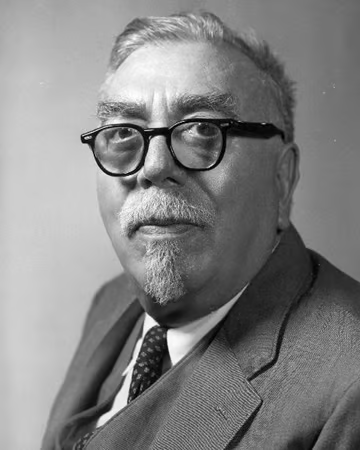
John Maynard Keynes was born in Cambridge on 5 June 1883, son of economist John Neville Keynes. Educated at Eton and King's College, Cambridge, he graduated in mathematics in 1904, joined the intellectual circle of the Cambridge Apostles, and worked briefly at the India Office before returning to Cambridge and to economics under Alfred Marshall's influence.
Location: Cambridge, England
The Economic Consequences of the Peace
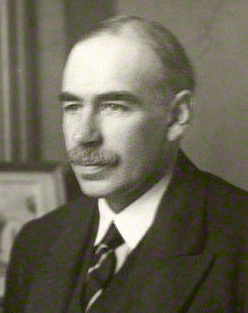
Resigning from the British Treasury in protest, Keynes published "The Economic Consequences of the Peace" in December 1919, arguing that the reparations imposed on Germany at Versailles were economically unsustainable and would destabilize Europe. The book made him internationally famous, and its core argument — that the settlement sowed economic ruin — was later cited as an explanation of the conditions that produced the Second World War, though other historians dispute that the reparations burden was as crushing as Keynes claimed.
Location: London, England
Battle Over the Gold Standard

When Chancellor Winston Churchill returned Britain to the gold standard at its prewar parity in 1925, Keynes published "The Economic Consequences of Mr. Churchill," predicting that the overvalued pound would force wage deflation and depress exports and employment. British export industries suffered through the rest of the decade, and Britain abandoned the gold standard in 1931, in an outcome broadly consistent with Keynes's warning.
Location: London, England
The General Theory
Keynes published "The General Theory of Employment, Interest and Money" in February 1936. Against the prevailing view that market economies automatically tend toward full employment, he argued that aggregate demand determines output and that inadequate demand can produce prolonged mass unemployment, which governments could counter through fiscal and monetary policy. The book created macroeconomics as a discipline and, by the late 1930s, leading Western economies had begun adopting its policy prescriptions.
Location: London, England
Peerage and War Finance
Keynes was raised to the peerage as Baron Keynes of Tilton in 1942 and served as an adviser to the Treasury through the Second World War. His 1940 pamphlet "How to Pay for the War" proposed compulsory saving to restrain wartime inflation, and he sat on the court of the Bank of England — the same institution whose orthodoxy he had spent two decades challenging.
Location: London, England
Bretton Woods
Keynes led the British delegation to the United Nations Monetary and Financial Conference at Bretton Woods in July 1944, where he proposed an International Clearing Union with a supranational reserve currency he called "bancor." The American plan prevailed in the final design, but the conference created the International Monetary Fund and the World Bank, establishing the monetary system that governed the postwar world economy and Keynes as its principal architect alongside Harry Dexter White.
Location: Bretton Woods, New Hampshire, USA
The Anglo-American Loan and Final Negotiations
In December 1945 Keynes negotiated the American loan to Britain of 3.75 billion US dollars, negotiated while Britain, virtually bankrupt by the war, ended Lend-Lease. The loan's conditions — including sterling convertibility — were controversial in Britain, and Keynes faced criticism at home for the terms, though the credit helped bridge the country's postwar dollar gap.
Location: Washington, DC, USA
Death and Legacy
Keynes died of a heart attack on 21 April 1946 at age 62, weeks after attending the inaugural meetings of the IMF and World Bank at Savannah, Georgia. Keynesian demand management became the dominant framework of Western economic policy for three decades, was challenged by monetarist and free-market critics during the inflation of the 1970s, and returned to prominence in the policy responses to the 2008 financial crisis and the 2020 pandemic — a record of revival and contest that keeps his legacy actively debated.
Location: Firle, Sussex, England