
Joseph Stalin — Leader of the Soviet Union
Joseph Stalin ruled the Soviet Union from the mid-1920s until his death in 1953, transforming the country into an industrial and military superpower through a program of rapid industrialization, forced collectivization, and political terror. His leadership through World War II and the early Cold War reshaped global geopolitics, while his domestic policies resulted in millions of deaths through famine, execution, and the Gulag labor camp system.
Events
Birth and Early Life
Joseph Stalin was born Ioseb Besarionis dze Jughashvili in the Georgian town of Gori, then part of the Russian Empire. He was the only child of poor parents to survive infancy. After attending the Gori Church School, he enrolled at the Tiflis Theological Seminary in 1894 on a scholarship. He became drawn to Marxist literature and revolutionary ideas, and was expelled from the seminary in 1899 for spreading revolutionary propaganda.
Early Revolutionary Activity and Exile

Stalin joined the Marxist Russian Social Democratic Labour Party (RSDLP) and organized workers' strikes in Tiflis and Batumi. He was arrested in 1902, exiled to Siberia, escaped, and was repeatedly arrested and re-exiled over the following decade. He aligned with Vladimir Lenin's Bolshevik faction in 1904 and helped organize the 1907 Tiflis bank robbery, a violent heist that funded Bolshevik activities.
Bolshevik Central Committee and Pravda
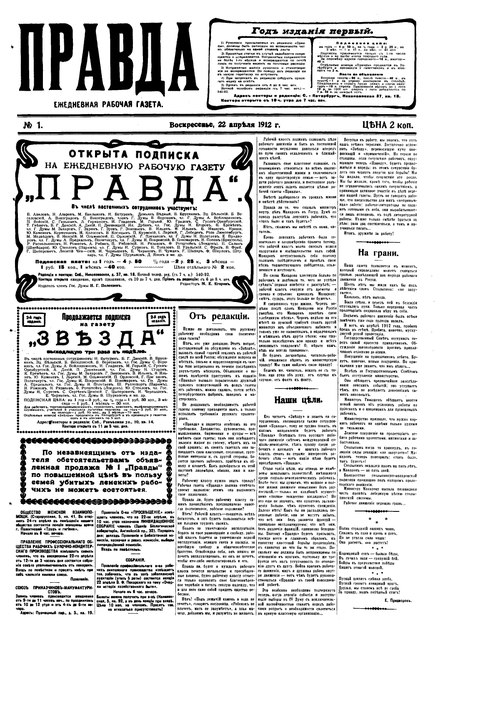
Stalin was co-opted onto the first Bolshevik Central Committee at the Prague Conference in January 1912. He helped edit Pravda, the Bolshevik newspaper. In 1913, he was arrested and exiled again to Siberia, remaining there until the February Revolution of 1917 overthrew the Tsar.
Russian Revolution and Civil War

After returning from Siberian exile following the February Revolution, Stalin played a supporting role in the October Revolution that brought the Bolsheviks to power. He was appointed People's Commissar for Nationalities in Lenin's government. During the Russian Civil War (1918-1921), he led campaigns on multiple fronts including Tsaritsyn and Perm, demonstrating organizational ability and securing key victories on multiple fronts.
General Secretary and Rise to Power

Stalin was appointed General Secretary of the Communist Party in April 1922. The position gave him control over party appointments and personnel. After Lenin's death in January 1924, Stalin skillfully outmaneuvered his rivals - first Trotsky, then Zinoviev and Kamenev, then Bukharin - to become the undisputed leader of the Soviet Union by 1928, while presenting himself as Lenin's faithful heir.
First Five-Year Plan and Forced Collectivization
Stalin launched the First Five-Year Plan in 1928, a crash program of rapid industrialization centered on heavy industry and resource extraction. Simultaneously, he ordered the forced collectivization of agriculture, seizing private farms and combining them into state-controlled collective farms. Millions of peasants resisted, and those classified as kulaks were deported. The resulting disruptions caused a catastrophic famine (the Holodomor) in Ukraine and other regions in 1930-1933, with an estimated 5-7 million deaths.
The Great Terror
Following the assassination of party official Sergei Kirov in December 1934, Stalin launched a systematic campaign of political repression known as the Great Terror. Show trials targeted old Bolsheviks including Zinoviev, Kamenev, and Bukharin. The NKVD arrested, tortured, and executed hundreds of thousands of party officials, military officers (including much of the Red Army high command), intellectuals, and ordinary citizens. The Gulag system of labor camps expanded massively. An estimated 700,000 people were executed and millions imprisoned between 1934 and 1939.
Molotov-Ribbentrop Pact and the Outbreak of WWII
Stalin signed a non-aggression pact with Nazi Germany, the Molotov-Ribbentrop Pact, which included secret protocols dividing Eastern Europe into spheres of influence. The USSR invaded eastern Poland in September 1939, and later annexed the Baltic states and parts of Finland following the Winter War. Germany ended the pact by invading the Soviet Union in Operation Barbarossa on June 22, 1941.
World War II — The Great Patriotic War
When Nazi Germany invaded the Soviet Union, Stalin assumed the role of Supreme Commander (Chairman of the State Defence Committee). Despite early disastrous losses and near-capture of Moscow, Stalin rallied the nation, oversaw the relocation of industry east of the Urals, and directed the war effort. Key Soviet victories at Stalingrad (1942-1943) and Kursk (1943) turned the tide. The Red Army advanced through Eastern Europe and captured Berlin in May 1945. Stalin attended the Tehran, Yalta, and Potsdam conferences, shaping the post-war order.
Post-War Reconstruction and Early Cold War
After WWII, the Soviet Union emerged as one of two global superpowers alongside the United States. Stalin established Soviet-aligned communist governments throughout Eastern Europe, creating the Eastern Bloc. The Berlin Blockade of 1948-49 deepened Cold War divisions. The USSR successfully tested its first atomic bomb in August 1949, breaking the US nuclear monopoly years earlier than Western intelligence had predicted.
Final Years and Death
Stalin died of a cerebral hemorrhage on March 5, 1953, at age 74. His body was embalmed and placed in Lenin's Mausoleum. His death triggered a power struggle eventually won by Nikita Khrushchev, who in 1956 delivered the "Secret Speech" denouncing Stalin's cult of personality and launching de-Stalinization. Stalin's body was removed from the mausoleum in 1961 and buried at the Kremlin Wall Necropolis.