
José Rizal — Novelist, Physician, and Martyr of the Philippines
Filipino polymath whose two novels exposing colonial abuses gave the Philippine independence movement its intellectual foundation, and whose execution by Spanish firing squad in 1896 transformed him into the national hero of the Philippines.
Events
Born in Calamba

José Protasio Rizal Mercado y Alonso Realonda was born to a prosperous landed family in the town of Calamba, Laguna, the seventh of eleven children of Francisco Rizal Mercado and Teodora Alonso. His mother taught him to read at age three; the family's later persecution by Spanish friars over a land dispute shaped his political consciousness.
Location: Calamba, Laguna, Philippines
Studies in Manila

Rizal enrolled at the Ateneo Municipal de Manila, where he graduated with highest honors, then studied medicine and philosophy at the University of Santo Tomas. Confronting the racial and clerical discrimination that barred Filipinos from advancement, he left for Spain in 1882 without his parents' knowledge.
Location: Manila, Philippines
Education in Europe

At the Universidad Central de Madrid, Rizal earned degrees in medicine and in philosophy and letters, later pursuing ophthalmology in Paris, Heidelberg, and Berlin. He joined Filipino student reform societies and wrote for La Solidaridad, the propaganda journal of the Filipino ilustrado reformists campaigning for representation and equal rights under Spanish law.
Location: Madrid, Spain
Noli Me Tangere Published
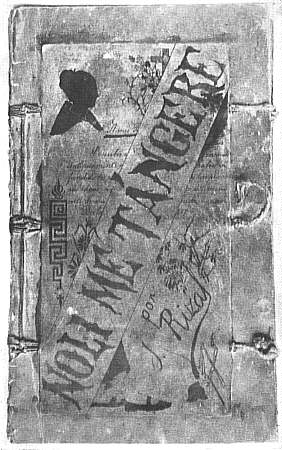
Rizal completed his first novel, Noli Me Tangere, printed in Berlin with money partly borrowed from friends. The novel depicted the abuses of Spanish friars and colonial officials in a Philippine town, was banned in the Philippines, and became required reading for Filipino reformists and revolutionaries alike.
Location: Berlin, Germany
El Filibusterismo Published

Rizal's darker sequel, El Filibusterismo, was printed in Ghent, its publication financed in part by a lottery prize and by loans from friends. Where the first novel argued for reform, the second followed its protagonist toward violent conspiracy, dramatizing the consequences of a colonial system that ignored peaceful demands.
Location: Ghent, Belgium
La Liga Filipina and Arrest

Days after founding La Liga Filipina, a civic association of Filipinos seeking reforms through legal means, Rizal was arrested by Spanish authorities on charges connected to his writings and the order of the governor-general. The association was suppressed and many members later joined the revolutionary Katipunan.
Location: Manila, Philippines
Exile in Dapitan
Rizal spent four years in exile in the remote town of Dapitan on Mindanao. There he practiced medicine, built a school and a water system, engaged in scientific and ethnographic work, and won a lottery that he used to buy land. When the Katipunan's revolution broke out in August 1896, its leaders sought his support; he disavowed the armed uprising while asking to serve as a military doctor for Spanish forces in Cuba.
Location: Dapitan, Mindanao, Philippines
Arrest En Route to Cuba
While his passage to Cuba was being processed, Rizal was arrested in Barcelona and returned to Manila as a prisoner aboard a Spanish ship. The uprising begun by the Katipunan in August 1896 had made his writings and associations the basis for accusations of complicity in the rebellion.
Location: Barcelona, Spain
Trial by Military Court
A military court tried Rizal on charges of rebellion, sedition, and illegal association, presenting testimony and documents linking his novels and associations to the revolution. He was defended by an army officer, as his own chosen counsel faced restrictions. The court found him guilty on all charges and recommended the death penalty.
Location: Manila, Philippines
Execution at Bagumbayan
Rizal was executed by firing squad at Bagumbayan field before a large crowd. Before his death he smuggled to his sister his farewell poem, Mi último adiós, and was buried in an unmarked grave. His execution enraged Filipino society and swelled the ranks of the revolution against Spain; the annual commemoration of his death, Rizal Day, became a national holiday of the Philippines.
Location: Bagumbayan (site of present-day Rizal Park), Manila, Philippines