
The Japanese Economic Miracle (1945-1991)
Between 1945 and 1991, Japan transformed from a devastated wartime economy into the world's second-largest economy. Through American occupation reforms, Korean War procurement, heavy government industrial policy, and high domestic savings, Japan achieved annual growth rates near 10 percent for nearly two decades, becoming a global leader in automobiles, electronics, and steel before the collapse of its asset bubble in 1991.
Events
Japan's Postwar Collapse

Japan formally surrendered to the Allied powers, ending World War II. The country's industrial production had fallen to 27.6 percent of pre-war levels by 1946, its colonial empire was lost, and the economy suffered hyperinflation and near-famine conditions, averted only by American food shipments. The surrender marked the beginning of the Allied occupation under General Douglas MacArthur.
Occupation Reforms
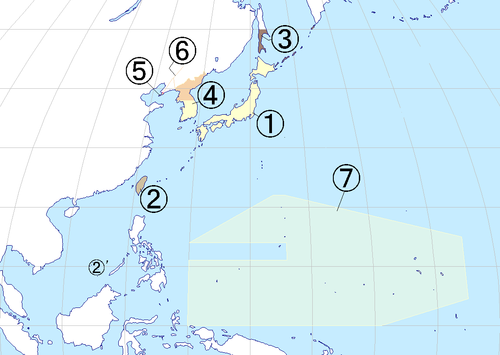
The postwar constitution drafted under the Allied occupation took effect, alongside sweeping reforms including land redistribution to tenant farmers, the dissolution of the zaibatsu industrial conglomerates, and the establishment of labor rights. The reforms were intended to democratize Japan and remove its capacity to wage war. The Ministry of International Trade and Industry (MITI), established in 1949, became the central agency coordinating industrial policy.
Korean War Procurement Boom
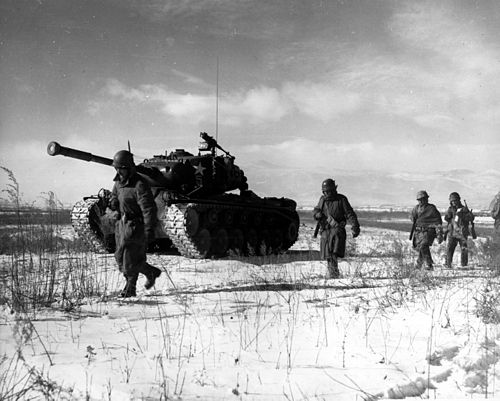
The outbreak of the Korean War triggered massive American military procurement from Japanese industry, including vehicle orders that saved Toyota from bankruptcy and work repairing military aircraft and vehicles. The special procurement orders injected demand into Japan's economy and accelerated its recovery, while the US shifted from punishing to rebuilding policy in the context of the Cold War.
Recovery to Pre-War Living Standards
Japan's per capita gross national income recovered to pre-war levels, a milestone that historians mark as the start of the economic miracle proper. The economy then entered a period of sustained high growth, driven by heavy industry, the expansion of the middle class, high domestic savings, and government-guided investment.
The Income Doubling Plan
Prime Minister Hayato Ikeda introduced the Income Doubling Plan, which aimed to double the size of Japan's economy within ten years through tax breaks, targeted investment, infrastructure spending, and export promotion. The plan called for 7.2 percent annual growth, but Japan's economy actually grew at more than 10 percent per year and doubled in size in under seven years. Ikeda had developed the plan partly to redirect national attention from contentious security treaty politics toward economic growth.
The Tokyo Olympics and the Shinkansen
Japan hosted the 1964 Summer Olympics, showcasing its postwar reconstruction to the world. The games coincided with the opening of the Tokaido Shinkansen, the world's first high-speed rail line connecting Tokyo and Osaka, and extensive expressway construction. Japan also joined the OECD that year, marking its recognition as a developed economy.
Japan Becomes the World's Third-Largest Economy
Japan overtook West Germany to become the world's third-largest economy, behind the United States and the Soviet Union. Japanese steel, shipbuilding, and coal-related industries were growing at annual rates around 25 percent during the 1960s, and consumer electronics and automobiles made by keiretsu conglomerates like Sony and Toyota were expanding into international markets.
The 1973 Oil Crisis Ends the High-Growth Era
The OPEC oil embargo quadrupled oil prices from about 3 dollars to over 13 dollars per barrel, delivering a severe shock to oil-importing Japan. Industrial production fell by 20 percent as supply could not keep pace with demand, ending the era of double-digit growth. Japan adapted by shifting from energy-intensive product manufacturing toward technology-intensive production, but growth never returned to pre-crisis levels.
The Plaza Accord and Yen Appreciation

Finance ministers of the G5 nations signed the Plaza Accord, agreeing to depreciate the US dollar against the yen and other major currencies to address the American trade deficit. The resulting rapid appreciation of the yen prompted the Bank of Japan to cut interest rates to support exporters, a policy that contributed to the surge in asset prices and credit expansion that became the Japanese bubble economy.
The Bubble Bursts and the Miracle Ends

The Japanese asset price bubble collapsed as stock prices fell by roughly half from their 1989 peak and land prices entered a sustained decline, leaving banks with massive bad debts. The collapse marked the end of the economic miracle and the beginning of the Lost Decades, a period of stagnation, deflation, and banking crises that extended into the 21st century.