
The Italian Unification (Risorgimento) (1815-1871)
A 56-year movement that transformed the Italian peninsula from a patchwork of seven states, most under Austrian or papal authority, into a single Kingdom of Italy. The Risorgimento combined republican agitation, monarchist diplomacy, and popular insurgency. It produced a constitutional state but failed to resolve the deep social and economic divisions between northern and southern Italy that continue to shape Italian politics.
Events
The Congress of Vienna Reshapes Italy

At the Congress of Vienna, which concluded on 9 June 1815, the Italian peninsula was reorganized into seven states under the principle of restoring pre-Napoleonic arrangements. Austria directly ruled Lombardy-Venetia and garrisoned key fortresses in the north; the Kingdom of Sardinia-Piedmont, the Grand Duchy of Tuscany, the Papal States, and the Kingdom of the Two Sicilies became nominally sovereign but Austrian-influenced. The smaller duchies of Parma and Modena were ruled by Habsburg relatives. The settlement frustrated Italian nationalists who had hoped for unification under Napoleonic reforms, and it was the trigger for the next 56 years of revolutionary activity.
Location: Vienna, Austria
The Carbonari Revolts of 1820-1821

On 2 July 1820, a military revolt led by the secret Carbonari society broke out in Naples, forcing King Ferdinand I to grant a constitution. In March 1821, a similar revolt erupted in Piedmont under Prince Charles Albert's equivocal encouragement. Both revolts were suppressed by Austrian troops intervening on behalf of the legitimist monarchs. The revolts established a recurring pattern: Italian nationalism would erupt in armed uprisings, and the Powers of the Holy Alliance would intervene to restore the status quo. The failures pushed new thinkers like Giuseppe Mazzini toward more systematic organization of exile networks across Europe.
Location: Naples and Turin, Italy
Mazzini and the Founding of Young Italy
In July 1831, the Genoese patriot Giuseppe Mazzini founded Giovine Italia (Young Italy) in exile in Marseille, calling for a unified Italian republic founded on popular sovereignty, equality, and the brotherhood of peoples. Though Mazzini never held state power, his writing and conspiracy shaped two generations of Italian nationalists. His insistence that the risorgimento was a moral and educational struggle, not merely a diplomatic rearrangement, gave the movement its enduring ideological framework — and its lasting internal tension with the monarchist-conservative path that ultimately produced unification.
Location: Marseille, France
The Revolutions of 1848
On 18-22 March 1848, the Five Days of Milan drove Austrian forces from the city, sparking a wave of revolts across Italy. Venice declared a republic under Daniele Manin; Sicily forced its Bourbon king to grant a constitution; Florence, Parma, and Modena followed. Pope Pius IX, initially seen as a liberal reformer, refused to support the war against Catholic Austria. Charles Albert of Sardinia declared war on Austria and was defeated at Custoza in July 1848 and Novara in March 1849; he abdicated in favor of his son Victor Emmanuel II. A French expedition overthrew the Roman Republic in July 1849, scattering Mazzini and Garibaldi into exile. The 1848 revolutions failed, but they taught the next generation that unification would require foreign alliances and patient state-building.
Location: Milan, Italy
The Plombières Agreement and the Second War of Independence
On 20 July 1858, at a secret meeting at Plombières-les-Bains, Sardinian prime minister Camillo Benso, Count of Cavour, secured a French alliance with Napoleon III. The agreement provided that France would support Sardinia against Austria in exchange for the post-war cession of Savoy and Nice. After Austrian mobilization prompted Cavour's prearranged counter-provocation, war began in April 1859. Franco-Sardinian forces won the battles of Magenta (4 June) and Solferino (24 June), the latter producing 40,000 casualties in a single day. The bloodshed at Solferino inspired the Swiss businessman Henri Dunant to found what became the International Committee of the Red Cross. Austria ceded Lombardy to Sardinia by the Armistice of Villafranca, but retained Venetia. Central Italian states voted to join Sardinia, doubling its territory.
Location: Northern Italy
Garibaldi's Expedition of the Thousand

On 11 May 1860, Giuseppe Garibaldi landed at Marsala in western Sicily with approximately 1,089 red-shirted volunteers (the "Thousand"), supported by secret funds from the Cavour government. Within three months his force had defeated the larger Bourbon army and captured Sicily. He crossed to the mainland in August, entered Naples on 7 September 1860 in triumph, and ruled as dictator in the name of Victor Emmanuel II. Concerned by Garibaldi's republican sympathies, Cavour ordered Piedmontese forces southward to ensure the conquest was formally annexed to the monarchy rather than declared a republic. Garibaldi handed over the conquered territories at a meeting with Victor Emmanuel on 26 October 1860 and retired to his farm on Caprera. The expedition was the most popular chapter of the Risorgimento and made Garibaldi a global icon of revolutionary nationalism.
Location: Marsala, Sicily
The Kingdom of Italy Is Proclaimed

On 17 March 1861, the Kingdom of Italy was officially proclaimed in Turin, with Victor Emmanuel II as king and Cavour as the first prime minister. The new state included all of peninsular Italy except Venetia, Rome, and a few minor enclaves, with a population of about 22 million. It was a constitutional monarchy under the Statuto Albertino of 1848, which guaranteed civil liberties but concentrated power in the executive. Republicans including Mazzini denounced the new state as a Piedmontese conquest that had betrayed the popular, democratic promise of the Risorgimento. Cavour died in June 1861; the unification he had engineered was incomplete, and the social conflicts it unleashed in the south would last decades.
Location: Turin, Italy
The Great Brigandage in the South

Beginning in 1861, the new Italian state faced widespread armed resistance in the south, called the "Grande Brigantaggio." Former Bourbon soldiers, southern peasants displaced by the new land tax, and rural communities hostile to Piedmontese centralization and northern economic interests took up arms against the new regime. The Italian government deployed more than 120,000 troops to suppress the uprising, employing mass arrests, summary executions, and the burning of suspected villages. Estimates of those killed range from 20,000 to 100,000, with civilian casualties forming the majority. The brutal suppression entrenched the "Questione Meridionale" — the economic and cultural divide between the Italian North and the Mezzogiorno that continues to shape Italian politics.
Location: Southern Italy (Mezzogiorno)
The Third War of Independence and the Acquisition of Venetia

In June 1866, Italy entered the Austro-Prussian War as Prussia's ally, hoping to complete unification by acquiring Venetia. Italian forces were defeated at the Battle of Custoza (24 June) and the naval Battle of Lissa (20 July), the latter being the first major fleet engagement involving ironclad warships. However, Prussia's decisive victory at Königgrätz on 3 July forced Austria to cede Venetia to Italy by the Treaty of Vienna (3 October), even though Italian arms had contributed little to the outcome. The acquisition was principally a diplomatic gift from Bismarck, who wished to keep Italy aligned against France. Italian voters ratified the acquisition in a plebiscite on 21 October 1866.
Location: Venetia, Italy
The Capture of Rome and the End of the Papal States

On 20 September 1870, Italian forces under General Raffaele Cadorna breached the Aurelian Walls at the Porta Pia after a brief bombardment lasting several hours, with 49 Italian soldiers and 19 papal troops killed. The Pope's small garrison could not resist the modernized Italian army, and Pius IX ordered a surrender to avoid further bloodshed. The Papal States ceased to exist as a temporal power after more than a thousand years. Pius IX retreated into the Vatican, declared himself a "prisoner of the Vatican," and excommunicated the Italian government. The "Roman Question" — the relationship between the Kingdom of Italy and the Catholic Church — would remain one of European politics' most contentious disputes until resolved by the Lateran Treaty of 1929.
Location: Rome, Italy
Rome Becomes the Capital of Italy
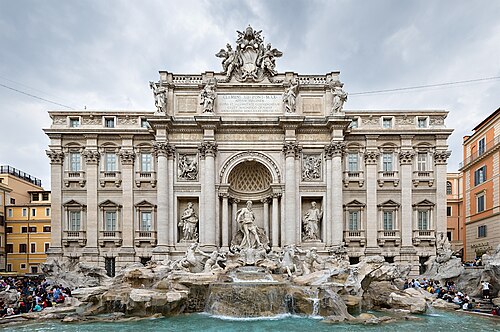
On 1 July 1871, Rome was officially declared the capital of the Kingdom of Italy, completing the territorial unification of the peninsula. The new parliament met in the Palazzo Montecitorio, and ministries were organized in the new administrative capital. The unification that Mazzini had dreamed of and Garibaldi had fought for was geographically complete, with the major exceptions of Trentino, Trieste, and Dalmatia — Italian-speaking territories still under Austrian rule that would only be acquired after Italy's victory in World War I. Yet the social and political promises of the Risorgimento — the republican ideal, the economic integration of the South, the moral regeneration of public life — remained contested throughout the new state's first century.
Location: Rome, Italy