
Isaac Newton — English Polymath and Father of Classical Physics
Isaac Newton was an English polymath whose discoveries in mathematics, physics, and optics laid the foundations of classical mechanics. His Principia Mathematica unified celestial and terrestrial physics under universal laws.
Events
Birth at Woolsthorpe Manor

Isaac Newton was born prematurely at Woolsthorpe Manor in Lincolnshire, England. His father, also named Isaac Newton, had died three months before his birth. His mother, Hannah Ayscough, later said he could have fit inside a quart mug. When Newton was three, his mother remarried and left him with his maternal grandmother.
Education at The King's School

Newton attended The King's School in Grantham, where he learned Latin and Ancient Greek. After his mother's second widowhood, she attempted to make him a farmer, a vocation he hated. The King's School headmaster, Henry Stokes, and Newton's uncle persuaded his mother to send him back to school. Motivated by beating a schoolyard bully, Newton became the top-ranked student, distinguishing himself by building sundials and model windmills.
Admitted to Trinity College, Cambridge
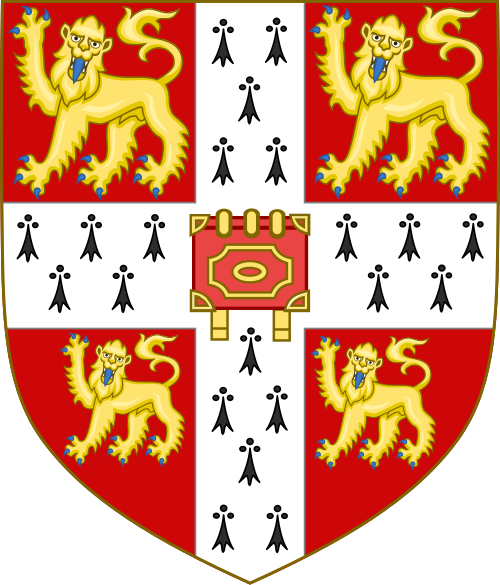
Newton was admitted to Trinity College at the University of Cambridge, initially as a subsizar (paying his way through valet duties). He was awarded a scholarship in 1664. He read Aristotle, Descartes, and astronomers including Galileo, setting down a series of "Quaestiones" about mechanical philosophy.
The Annus Mirabilis — Calculus, Optics, and Gravitation

After obtaining his BA degree, the university closed due to the Great Plague. Newton returned to Woolsthorpe for two years, described as "the richest and most productive ever experienced by a scientist." During this period, he developed the generalized binomial theorem, began formulating calculus (his "method of fluxions"), conducted experiments on optics and light, and conceived the law of universal gravitation after observing an apple fall.
Elected Fellow of Trinity College
Newton returned to Cambridge in April 1667 and was elected a Fellow of Trinity College in October. He received his MA in 1668. His academic work impressed Lucasian Professor Isaac Barrow, who recognized Newton's extraordinary abilities.
Appointed Lucasian Professor of Mathematics
At age 26, Newton succeeded Isaac Barrow as the second Lucasian Professor of Mathematics at Cambridge. He was the youngest person to hold the chair. Newton argued that his position exempted him from the ordination requirement, and King Charles II accepted this, avoiding a conflict between Newton's unorthodox religious views and Anglican orthodoxy.
Reflecting Telescope and Election to the Royal Society
Newton built the first practical reflecting telescope, now known as the Newtonian telescope, which used a mirror instead of a lens to avoid chromatic aberration. The telescope impressed the Royal Society so much that he was elected a Fellow in January 1672. He also published his first paper on light and color, demonstrating that white light is composed of the colors of the spectrum.
Publication of the Principia Mathematica
Edmond Halley visited Newton in 1684 and learned that Newton had already solved the problem of planetary orbits. With Halley's encouragement and financial support, Newton published "Philosophiae Naturalis Principia Mathematica" (Mathematical Principles of Natural Philosophy). The work formulated the three laws of motion and the law of universal gravitation, unifying celestial and terrestrial mechanics. It is considered the most influential scientific book ever written.
Member of Parliament
Newton served his first term as a Member of Parliament for Cambridge University, sitting with the Whigs. He served a second term in 1701-1702. His parliamentary contributions were minimal — he is recorded as speaking only once, to ask an usher to close a window.
Appointed Warden of the Royal Mint
Newton was appointed Warden of the Royal Mint, moving to London and ending his active academic career. He took the position seriously, investigating counterfeiters, improving the coinage, and overseeing the Great Recoinage of 1696. He was promoted to Master of the Mint in 1699, a position he held until his death.
President of the Royal Society

Newton was elected President of the Royal Society, a position he held until his death. His presidency was notable for its autocratic style, but he oversaw the Society's growth and influence. He also published "Opticks" in 1704, synthesizing his work on light and color.
Knighted by Queen Anne

Queen Anne knighted Newton at Trinity College during a royal visit to Cambridge. He was the first scientist to be knighted for his work, reflecting the growing status of science in British society. The knighthood was also a recognition of his service at the Royal Mint.
Calculus Priority Dispute with Leibniz

The dispute over who first developed calculus erupted in full force. The Royal Society, with Newton secretly writing the committee's conclusions, declared Newton the true discoverer and labeled Leibniz a fraud. The bitter controversy marred the lives of both men until Leibniz's death in 1716. Historians now recognize both as independent discoverers, with Newton having developed calculus first but Leibniz publishing earlier and creating the notation still used today.
Legacy: The Newtonian Revolution

Newton's legacy is unparalleled in the history of science. His laws of motion and universal gravitation dominated physics for over two centuries until Einstein's relativity. His work on calculus, optics, and mathematics reshaped every scientific field. Alexander Pope's famous epitaph captures his stature: "Nature and Nature's laws lay hid in night; God said, 'Let Newton be,' and all was light." The SI unit of force is named the newton in his honor.
Death and Burial at Westminster Abbey
Newton died in Kensington, London, at age 84. He was given a state funeral and buried in Westminster Abbey, the first scientist to be honored with burial there. His monument in the Abbey reads: "Let mortals rejoice that there has existed such and so great an ornament of the human race." French philosopher Voltaire, who attended the funeral, noted that Newton was buried like a king who had done well by his subjects.