
The Indus Valley Civilisation (c. 3300-1300 BC)
The Bronze Age civilisation of the Indus and Ghaggar-Hakra river basins, one of the four earliest centres of urban civilisation, whose planned cities, undeciphered script, and gradual decline were only discovered in the 20th century.
Events
The Roots at Mehrgarh

Farming and herding communities established themselves at Mehrgarh in present-day Pakistani Baluchistan, cultivating wheat and barley and herding cattle and sheep. The settlement, occupied for thousands of years, laid the agricultural foundation for the urban civilisation that later emerged on the Indus floodplain.
Location: Baluchistan, South Asia
The Early Harappan Phase

Villages across the Indus and Ghaggar-Hakra basins adopted agriculture, pottery, and craft specialization, entering what archaeologists call the Early Harappan phase. Trade networks linking settlements with distant sources of raw materials began forming, the precursor to the mature civilisation's integration.
Location: Indus and Ghaggar-Hakra basins, South Asia
The Urban Revolution of the Mature Phase

The mature Harappan phase brought grid-planned cities with standardised bricks, covered drains, granaries, and the Great Bath at Mohenjo-daro, alongside Harappa, Dholavira, and Rakhigarhi. Covering more than a million square kilometres, an area larger than ancient Egypt and Mesopotamia combined, the civilisation's population may have reached the millions, unified by standardised weights and measures without large-scale evidence of kings or standing armies.
Location: Indus basin, South Asia
Trade with Mesopotamia

Indus seals, beads, and carnelian objects appear in Mesopotamian cities, and Mesopotamian texts refer to a trading partner called Meluhha. Trading settlements at Lothal on the Gulf of Khambhat and Shortugai on the Amu Darya near lapis lazuli mines indicate the reach of Harappan commerce, which exchanged timber, copper, and precious stones for grain and textiles.
Location: Indus basin to Mesopotamia
The Undeciphered Script
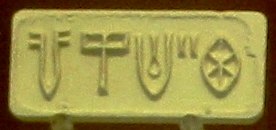
Harappan seals bear an inscription system of several hundred signs, cast in steatite and stamped on clay, that remains undeciphered. Some scholars hold it records a full language, while others argue the short inscriptions make that unlikely; without a bilingual text, the language or languages of the civilisation remain unknown, and much about its governance is inferred from archaeology alone.
Location: Indus basin, South Asia
The Decline and De-urbanization

The mature phase gave way to a Late Harappan pattern of de-urbanization as the monsoon weakened and the Ghaggar-Hakra river system dried, cities were abandoned, and weights and seals went out of use, with the population dispersing eastward toward the Ganges basin. Archaeologists favour multi-causal explanations, and earlier theories of a violent Aryan conquest have been abandoned for lack of evidence.
Location: Indus basin, South Asia
The Rediscovery of Harappa and Mohenjo-daro

Excavations by Daya Ram Sahni at Harappa in 1921 and R.D. Banerji at Mohenjo-daro beginning in 1922 revealed a mature Bronze Age civilisation, announced to the world in 1924, that had been unknown to history. The discovery rewrote South Asian history, establishing an urban tradition 2,500 years older than previously believed in the subcontinent.
Location: Punjab and Sindh, British India
Partition of the Heritage

The partition of British India divided the civilisation's major sites between Pakistan (Mohenjo-daro, Harappa, Mehrgarh) and India (Dholavira, Rakhigarhi, Lothal). Mohenjo-daro was inscribed among the first UNESCO World Heritage Sites in 1980, and Dholavira was inscribed in 2021, with both nations continuing excavation and conservation at their respective sites.
Location: India and Pakistan