
Ibn Rushd (Averroes) — Philosopher, Jurist, and the Bridge to Europe's Aristotle
The Andalusian polymath who wrote the commentaries through which Latin Europe rediscovered Aristotle — a Maliki jurist and court physician celebrated in the West and ultimately banished in his homeland, whose ideas ignited controversies in Paris a generation after his death.
Events
Born into a Family of Córdoban Jurists
Ibn Rushd was born in Córdoba into a lineage of Maliki legal scholars — his grandfather had been chief qadi of the city. He trained in law, medicine, theology, and philosophy, embodying the Andalusian ideal of the comprehensive scholar at a time when Córdoba remained one of the intellectual capitals of the Islamic world.
Location: Córdoba, al-Andalus
Introduction to the Almohad Court
Through the philosopher-physician Ibn Tufayl, Ibn Rushd was introduced to the Almohad caliph Abu Ya'qub Yusuf. According to the famous account, the caliph privately discussed Aristotle with him — a subject dangerous to raise publicly given clerical hostility to philosophy. The meeting began a patronage relationship that would define his career.
Location: Seville, al-Andalus
Appointed Qadi of Seville, then Chief Qadi of Córdoba
Ibn Rushd held the judgeship of Seville beginning in 1169 and by 1172 the chief judgeship of Córdoba — his family's traditional office. His career moved between juridical service and intellectual work, an unusual but not unique double career in Almohad administration.
Location: Seville and Córdoba
The Aristotle Commentaries

At the caliph's urging, Ibn Rushd undertook systematic commentaries on virtually all of Aristotle's surviving works, in short, middle, and long formats. These works aimed to recover Aristotle's authentic thought and became the most influential philosophical texts he produced. He also wrote the Decisive Treatise, arguing that philosophy was not merely permitted but religiously obligatory for those capable of it.
Location: al-Andalus
Chief Physician at the Almohad Court

Ibn Rushd succeeded his old patron Ibn Tufayl as the caliph's personal physician in Marrakesh. In medicine he authored the Colliget (Kulliyyat fi al-Tibb), a general encyclopedia of medical principles that was translated into Latin and Hebrew and taught in Europe for centuries.
Location: Marrakesh
Banishment and the Burning of Philosophy

Under Caliph al-Mansur, Ibn Rushd was banished to the Jewish town of Lucena, removed from his offices, and his books were ordered burned, with philosophy proscribed. The reasons remain debated — a genuine theological turn in Almohad policy, or a political purge cloaked in piety. He was pardoned and restored to favor shortly before his death, dying in Marrakesh in December 1198.
Location: Lucena, al-Andalus
Latin Translations Ignite Averroism in Europe
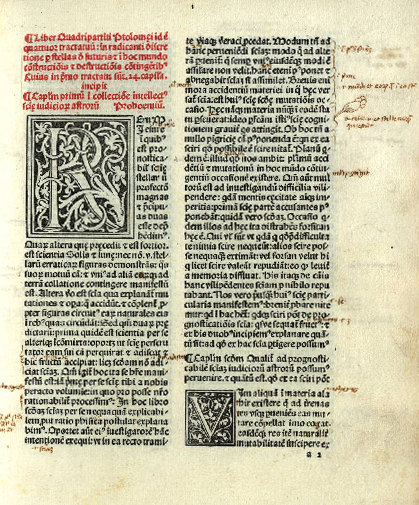
From the 1220s, Latin and Hebrew translations of Ibn Rushd's commentaries circulated in Europe, where he was known simply as "The Commentator" — for scholastic readers, second in authority to "The Philosopher," Aristotle himself. Averroist teachings at the University of Paris, associated with Siger of Brabant, provoked episcopal condemnations in 1270 and 1277, controversies that shaped the trajectory of European philosophy.
Location: Paris and Bologna