
The Hundred Years' War (1337-1453)
An intermittent conflict between England and France spanning 116 years, fought over disputed feudal rights in Gascony, the English claim to the French crown, and control of the French throne. The war transformed medieval warfare through the English longbow and French artillery, produced iconic figures like Joan of Arc, and ended with France expelling England from nearly all its continental possessions.
Events
The English Claim to the French Throne (1328-1337)

Charles IV of France dies without a male heir. Edward III of England claims the French throne through his mother Isabella (Charles's sister). The French nobility instead crowns Philip of Valois as Philip VI. Tensions over English-held Gascony escalate, setting the stage for war.
War Declared — The Confiscation of Gascony (May 24, 1337)
Philip VI confiscates the Duchy of Gascony, an English possession in southwestern France. Edward III responds by formally declaring war on France and publicly asserting his claim to the French crown. The Hundred Years' War begins.
The Battle of Sluys (June 24, 1340)

The English fleet under Edward III annihilates the French fleet off the coast of Flanders. England gains control of the English Channel for the next generation, enabling the transportation and supply of armies in France.
The Battle of Crecy (August 26, 1346)
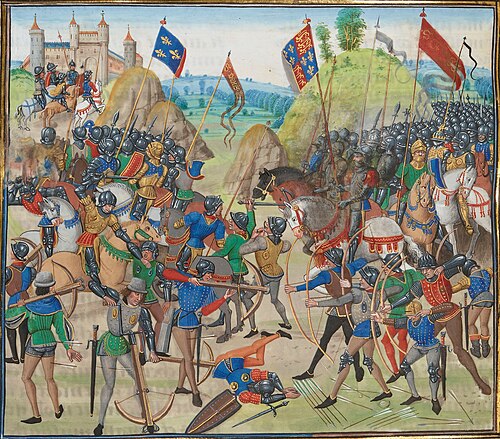
Edward III's English army, heavily outnumbered and using longbowmen, devastates the French cavalry under Philip VI. The battle demonstrates the revolutionary effectiveness of the English longbow against armored knights — a paradigm shift in medieval warfare. Over 1,500 French nobles are killed.
The Siege of Calais and Its Capture (1346-1347)

After an 11-month siege following Crecy, Calais surrenders to Edward III. Famously, six burghers offer themselves for execution (later pardoned). Calais remains under English control for over 200 years, serving as a strategic foothold in France until 1558.
The Black Death Interrupts the War (1348-1355)
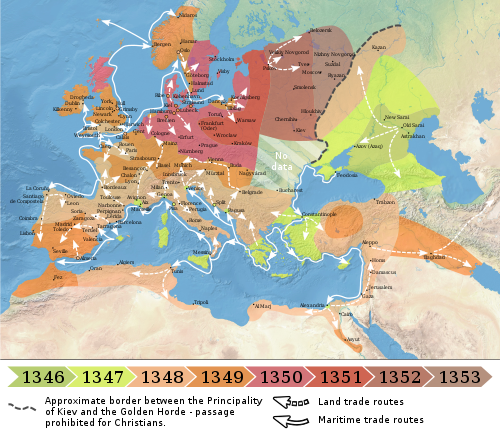
The bubonic plague sweeps across Europe, killing 30-60% of the population. Both sides agree to a truce. Military operations are largely suspended as society and economy collapse across the continent.
The Battle of Poitiers and Capture of King John II (September 19, 1356)

Edward the Black Prince, commanding a smaller English force, defeats and captures King John II of France at Poitiers. The king is taken to England as a prisoner. France descends into political chaos. The Treaty of Bretigny (1360) grants England extensive territory in exchange for Edward III renouncing his claim to the French throne.
French Resurgence Under Charles V (1369-1380)
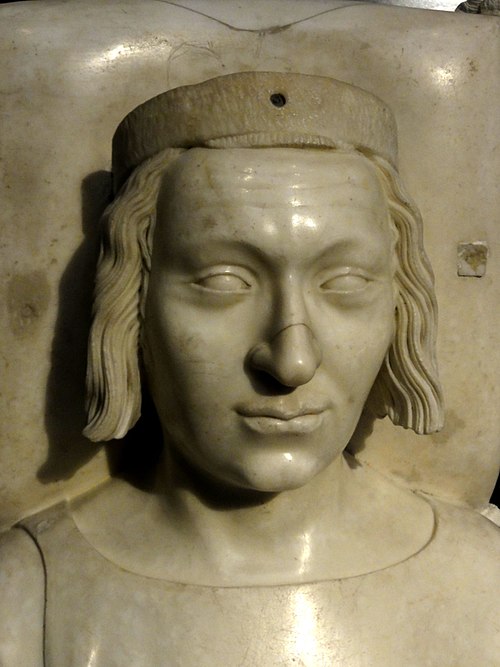
Charles V of France, with his brilliant commander Bertrand du Guesclin, systematically recovers most territory lost to England. Using a strategy of avoiding pitched battles and attacking isolated garrisons, the French reduce English holdings to a narrow coastal strip around Calais, Bordeaux, and Bayonne by 1380.
The Battle of Agincourt (October 25, 1415)
Henry V of England, his army exhausted and outnumbered perhaps 4-to-1 by the French, achieves one of the most famous victories in English military history. English longbowmen slaughter French nobility trapped in mud and heavy armor. Estimates of French dead range from 5,000 to 10,000. Henry proceeds to conquer Normandy.
The Treaty of Troyes (May 21, 1420)

Under the terms of the Treaty of Troyes, Henry V is recognized as heir to the French throne, disinheriting the Dauphin (Charles VII). Henry marries Catherine of Valois, daughter of King Charles VI. England effectively controls northern France, including Paris. The Dauphin retreats south of the Loire.
Joan of Arc and the Siege of Orleans (1428-1429)

A teenage peasant girl, Joan of Arc, claiming divine guidance, leads the French army to lift the English siege of Orleans. This is the turning point of the war. Charles VII is crowned at Reims Cathedral in July 1429. Joan is captured by Burgundian allies of the English in 1430, sold to the English, tried for heresy, and burned at the stake in Rouen on May 30, 1431.
French Consolidation and the Fall of Normandy and Gascony (1449-1453)
After the Treaty of Arras (1435) brings Burgundy back to the French side, the French reorganize their army with professional standing companies and artillery. Normandy is reconquered in 1449-1450. Gascony falls in 1451. English attempts to recover Gascony fail.
The Battle of Castillon and the War's End (July 17, 1453)

The final battle of the Hundred Years' War. French artillery destroys an English army attempting to relieve Bordeaux. England retains only Calais. There is no formal peace treaty — the war simply fizzles out. England descends into the Wars of the Roses. France emerges as the dominant power in Western Europe.