
The HIV/AIDS Pandemic (1981-present)
The HIV/AIDS pandemic emerged in the late 20th century and has since infected an estimated 85 million people worldwide, killing approximately 40 million. From a mysterious illness first identified among gay men in the United States in 1981, to a catastrophic epidemic across sub-Saharan Africa, to the development of effective antiretroviral therapy that transformed HIV into a manageable chronic condition, the pandemic has shaped global health, activism, and society.
Events
HIV Crosses into Humans in Central Africa

Genetic research indicates that the simian immunodeficiency virus (SIVcpz) from chimpanzees crossed into humans in Central Africa in the early 20th century, likely through hunting and butchering of bushmeat, and was circulating in Kinshasa (then Leopoldville) by the 1920s. This gave rise to HIV-1 group M, the pandemic strain.
CDC Reports the First Cases

The US Centers for Disease Control and Prevention's Morbidity and Mortality Weekly Report documents five cases of Pneumocystis carinii pneumonia in young homosexual men in Los Angeles. This is widely recognized as the first official report of what would become known as AIDS.
The Condition Is Named AIDS

The CDC formally names the condition Acquired Immune Deficiency Syndrome (AIDS), establishing a case definition. Cases are reported among injection drug users, hemophiliacs, and recipients of blood transfusions, revealing multiple transmission routes.
HIV Is Identified

French researchers at the Pasteur Institute, led by Luc Montagnier and Francoise Barre-Sinoussi, publish the isolation of a new retrovirus from an AIDS patient, later named HIV. The discovery is followed by a dispute with US researcher Robert Gallo over credit for the discovery, resolved in 1987 with the virus jointly named HIV. Barre-Sinoussi and Montagnier received the Nobel Prize in 2008.
First HIV Blood Test Approved
The FDA licenses the first commercial blood test for HIV antibodies, enabling the screening of blood supplies and protecting transfusion recipients. The test also enables national surveillance of the epidemic.
Rock Hudson's AIDS Diagnosis
Actor Rock Hudson announces he has AIDS, becoming the first major American celebrity to publicly acknowledge the disease. His death in October 1985 brings unprecedented global media attention to the epidemic and prompts a significant increase in public awareness and research funding.
ACT UP Is Founded
The AIDS Coalition to Unleash Power (ACT UP) is founded in New York City to protest government inaction and pharmaceutical profiteering in the AIDS crisis. ACT UP's direct-action tactics — including the 1988 shutdown of the FDA and the "Silence = Death" campaign — force accelerated drug approval and expanded access to treatment.
AZT Becomes the First Antiretroviral Drug
The FDA approves zidovudine (AZT), the first drug to treat HIV/AIDS, after clinical trials show it reduces mortality. AZT's high cost (about USD 10,000 per year) and side effects spark activism over drug pricing and access, while the drug extends lives but does not cure.
Magic Johnson Announces He Is HIV-Positive
NBA star Earvin "Magic" Johnson announces he has tested positive for HIV and retires from basketball. His announcement, at the peak of his fame, dramatically increases awareness among the general public and counters the perception that HIV/AIDS only affected gay men.
HAART Revolutionizes Treatment

At the 11th International AIDS Conference in Vancouver, researchers present evidence that highly active antiretroviral therapy (HAART) — combinations of drugs including a new class of protease inhibitors — can suppress HIV to undetectable levels. AIDS deaths in the US and Europe plummet by more than 60% within two years, transforming HIV from a death sentence into a chronic manageable condition.
The Epidemic Devastates Sub-Saharan Africa

By the end of the 1990s, sub-Saharan Africa is the epicenter of the pandemic, with over 20 million people living with HIV and millions of children orphaned. The region faces catastrophic mortality as antiretroviral drugs remain unaffordable for most. Around the same time, South African President Thabo Mbeki's government questions the link between HIV and AIDS and delays treatment provision, a position widely criticized by scientists and activists as contributing to hundreds of thousands of preventable deaths.
The Global Fund and PEPFAR

US President George W. Bush announces the President's Emergency Plan for AIDS Relief (PEPFAR), committing billions of dollars to HIV treatment and prevention in Africa and the Caribbean, following the creation of the Global Fund to Fight AIDS, Tuberculosis and Malaria in 2002. These programs expand antiretroviral treatment access from tens of thousands to millions of people.
PrEP Is Approved
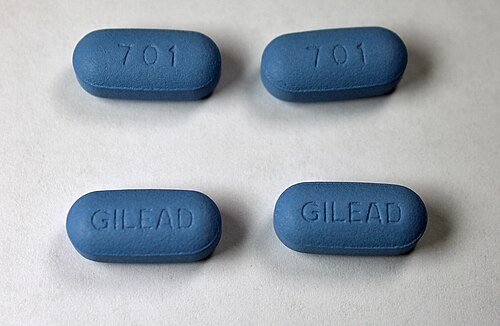
The FDA approves Truvada as pre-exposure prophylaxis (PrEP), a daily pill that HIV-negative people can take to prevent infection. PrEP becomes a cornerstone of HIV prevention, and later studies confirm its effectiveness at over 99% when taken consistently.
The U=U Consensus

The PARTNER study provides definitive evidence that people living with HIV who maintain an undetectable viral load through treatment cannot transmit the virus sexually. The "Undetectable = Untransmittable" (U=U) consensus is formally endorsed by major health organizations, reducing stigma and reinforcing the importance of treatment as prevention.
Stem Cell Cures and Long-Acting Treatments
Researchers announce that a second patient, the "London Patient" Adam Castillejo, has been cured of HIV after a stem cell transplant from a donor with the CCR5-delta32 mutation (which confers HIV resistance), following the first such cure — the "Berlin Patient" Timothy Ray Brown, reported in 2008. These cases demonstrate a potential cure pathway, though stem cell transplants remain too risky for general use. Meanwhile, long-acting injectable antiretrovirals, including twice-yearly lenacapavir, show high efficacy in trials in the 2020s.
The Pandemic in the 2020s
UNAIDS reports that 41.0 million people globally were living with HIV in 2025. New HIV infections have fallen 40% and AIDS-related deaths 56% since 2010, yet the response faces a funding crisis: UNAIDS projects that a collapse in international funding could produce more than 4 million additional AIDS-related deaths and 6 million additional infections in 2025-2029. Around 9 million people with HIV remain without access to treatment.
Lenacapavir Reaches 100,000 People Across 9 Countries

The Global Fund reports that nearly 100,000 people had received lenacapavir -- a twice-yearly injectable PrEP nearly 100% effective at preventing HIV -- across nine high-burden African countries by mid-August 2026. The drug became the first HIV prevention innovation to reach both high-income and low- and middle-income countries in the same year (2025), a historic departure from the inequitable delays that characterized early antiretroviral therapy rollout. By end of 2026, 24 countries worldwide are expected to receive lenacapavir with support from the Global Fund, the United States, and other partners. A 2026 study found that scaled rollout could prevent nearly one-third of new HIV infections in Eastern and Southern Africa and accelerate the end of the epidemic by up to 14 years.