
The History of Writing — From Clay Tokens to the Digital Word
The story of how humans learned to record language — from Mesopotamian clay accounting marks and Egyptian hieroglyphs through Chinese oracle bones, the Phoenician alphabet, and the modern digital word — the invention that made history itself possible.
Events
Cuneiform Emerges in Sumer

In the temple complexes of Uruk, Sumerian administrators pressed styluses into wet clay to record grain, livestock, and labor obligations. What began as simplified pictures of traded goods evolved over centuries into wedge-shaped signs (cuneiform) capable of recording names, verbs, and abstract ideas. This is the earliest generally accepted writing system, and it emerged for bookkeeping before literature.
Location: Uruk, Mesopotamia
Egyptian Hieroglyphs Appear

Nearly contemporaneously with Sumer, Egypt developed hieroglyphic writing, attested on labels and ceremonial palettes from the late predynastic period. The script paired phonetic signs with visual determinatives and remained in ceremonial use for over three millennia, outlasting nearly every other ancient script.
Location: Abydos, Egypt
The Indus Valley Script
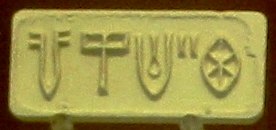
The Harappan civilization produced thousands of short inscribed seals whose script remains undeciphered. Scholars continue to debate whether the signs constitute a full writing system or a set of symbols; the collapse of the civilization left no bilingual key. The debate itself illustrates how fragile the transmission of writing is.
Location: Indus Valley, South Asia
Chinese Oracle Bone Script

The Shang dynasty royal court inscribed questions to ancestors on turtle shells and ox bones, which were then heated and read for divination cracks. These inscriptions (jiaguwen) are the earliest attested Chinese writing and the direct ancestor of the characters used by over a billion people — the longest continuous writing tradition on Earth.
Location: Anyang, China
The Phoenician Alphabet Standardizes

Phoenician merchants distilled centuries of Canaanite writing into a standardized set of 22 consonantal letters, discarding logograms and syllabaries entirely. Their maritime trade networks carried the script across the Mediterranean. Nearly every alphabet in modern use — Greek, Latin, Hebrew, Arabic, and their descendants — traces back to this Levantine merchant script.
Location: Levant (Phoenician coast)
The Greeks Add Vowels
Greek adapters of the Phoenician script repurposed consonantal letters their language did not use (such as aleph and he) to represent vowels, creating the first alphabet that recorded speech fully with both consonants and vowels. This made writing far easier to learn and spread literacy beyond professional scribes.
Location: Greece
The Typewriter Commercializes Mechanical Writing
The Remington No. 1, based on Christopher Latham Sholes' 1867 patented design, brought machine writing to offices. The QWERTY layout, designed to slow typists enough to prevent key jams, persists on keyboards to this day — a lasting example of how an early technical constraint can fossilize into a standard.
Location: New York, United States
The First Network Email
Ray Tomlinson sent the first message between two machines on ARPANET, choosing the @ symbol to separate user from host. Written communication, which had depended on physical transport for five millennia, became instantaneous and effectively free. Email became one of the defining written genres of the late 20th century.
Location: Cambridge, Massachusetts, United States
Emoji Enter the Unicode Standard
After Japanese mobile carriers popularized picture characters in the late 1990s, emoji were incorporated into the international Unicode standard, unifying them across platforms. Emoji are the first globally standardized pictographic layer added to everyday writing since antiquity — and a reminder that the visual, symbolic roots of writing never fully disappeared.