
The History of Wine
The story of humanity's oldest cultivated beverage, from Neolithic villages in the mountains of Iran and Armenia through pharaonic Egypt, classical Greece and Rome, monastic medieval Europe, the phylloxera catastrophe, and the globalization of modern winemaking. Wine shaped religion, medicine, trade, and empire across eight thousand years.
Timeline
The First Chemical Evidence of Wine
Chemical residue analysis of Neolithic pottery jars from Hajji Firuz Tepe, dated to around 5400 BC, identified tartaric acid and pine resin, the earliest secure evidence of grape wine. Wine thus begins not as a luxury but as a village product of the earliest farming societies, likely valued for its preservative and perceived medicinal effects.
Location: Hajji Firuz Tepe, Zagros Mountains, Iran
The Oldest Known Winery

Archaeologists uncovered the world's earliest known winery in the Areni-1 cave, complete with a pressing platform, fermentation jars, and a wine cup. The find shows that by the fourth millennium BC viniculture was already a planned, equipped industry rather than incidental fermentation.
Location: Areni-1 cave, Armenia
Wine in Pharaonic Egypt

Wine entered Egypt by the early dynastic period, where it became the drink of the elite and of religious ritual, stocked in royal tombs for the afterlife and offered to the gods. Egyptian jars labeled with vintage, vineyard, and quality represent some of the earliest wine labeling in history.
Location: Nile Valley, Egypt
The Minoan and Canaanite Wine Trade

Minoan Crete and the Canaanite city-states built the first great commercial wine networks, shipping amphorae across the eastern Mediterranean, with "wine of Byblos" prized in Egyptian records. Vineyard terracing and standardized shipping jars spread viticulture as a traded commodity rather than a local craft.
Location: Eastern Mediterranean
Greece, Phoenicia, and the Wine Mediterranean
From around the eighth century BC, Greek colonists and Phoenician traders carried viticulture across the Mediterranean, planting vineyards from Sicily and southern France to Iberia. Wine became embedded in Greek symposium culture, religious cult, and medicine, and spread together with the alphabet and civic cults of the ancient world.
Location: Mediterranean basin
Rome Spreads the Vine
Under the Roman Empire, viticulture spread with the legions into Gaul, Hispania, Germania, and Britain, and regions that became Bordeaux, Burgundy, and the Rhine were first systematically planted. Roman writers such as Pliny the Elder codified vine cultivation, vintage ranking, and even an early appellation system.
Location: Roman Empire
The Islamic Prohibition of Wine
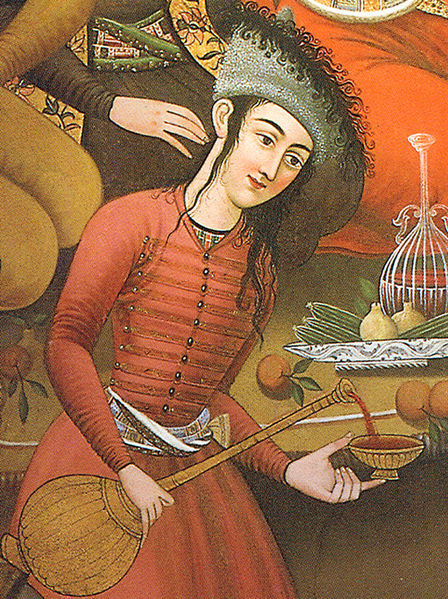
The Islamic conquests of the seventh century brought the Quranic prohibition of intoxicants across most of the former wine heartlands of Egypt, Syria, Mesopotamia, and Persia. Wine production survived mainly among Christian and Jewish communities, and the center of gravity of winemaking shifted decisively to Christian Europe.
Location: Middle East
Monastic Wine and the Idea of Terroir
Cistercian and Benedictine monasteries systematically farmed vineyards in Burgundy and along the Rhine, mapping plots by soil quality (the origin of the concept of terroir), building the Clos de Vougeot and cellars still used today. Monastic record-keeping made wine the most documented European agricultural product of the Middle Ages.
Location: Burgundy, France
Champagne and the Science of Sparkling Wine
In the late seventeenth century, glass bottle strength and cork technology enabled controlled secondary fermentation, and the Benedictine cellar master Dom Pierre Perignon became the celebrated pioneer of blending and sparkling production at Hautvillers. Sparkling Champagne rose from a winemaking accident to the aristocracy's ceremonial drink.
Location: Champagne, France
The 1855 Bordeaux Classification
For the Paris Exposition, Bordeaux brokers ranked the region's chateaux from first to fifth growths based on market reputation and price. The 1855 Classification, unchanged apart from one promotion in 1973, remains the most famous wine ranking ever created and shaped the global perception of fine wine for a century and a half.
Location: Paris and Bordeaux, France
The Phylloxera Catastrophe
The aphid-like insect phylloxera, accidentally imported from North America, devastated French vineyards and then most of European viticulture, destroying well over half of France's vineyards by the 1880s. The crisis was ultimately solved by grafting European vines onto resistant American rootstock, the first great rescue of an industry by scientific plant pathology.
Location: France and Europe
The Judgment of Paris

In a blind tasting organized by British wine merchant Steven Spurrier, California wines outscored leading French Bordeaux and Burgundy labels, a result Time magazine's coverage made famous. The tasting upended the assumption of French supremacy and opened the modern era of global, quality-driven winemaking in the Americas, Australia, and beyond.
Location: Paris, France
The French Paradox and Global Wine Culture

A 60 Minutes segment on the "French Paradox," linking moderate red wine consumption to lower heart disease, triggered a surge in American and global red wine demand. Combined with the rise of New World producers and critics such as Robert Parker, wine consumption became a global mass culture for the first time in its history.
Location: United States