
The History of Vaccination -- From Jenner to mRNA (1796-present)
The history of vaccination tracks one of humanity's greatest public health achievements: the development of biological preparations that train the immune system to prevent infectious diseases. Beginning with Edward Jenner's smallpox inoculation in 1796 and progressing through Louis Pasteur's germ theory, the 20th-century explosion of vaccines (polio, measles, DPT), the global eradication of smallpox in 1980, and the revolutionary mRNA technology deployed against COVID-19, vaccination has saved an estimated 154 million lives since 1974 alone. The story also encompasses persistent controversies: antivaccination movements, vaccine hesitancy, debates over mandates, and issues of global equity in vaccine access.
Events
Early Variolation in China

The first recorded use of variolation (deliberate infection with smallpox matter to induce immunity) appears in China, where powdered smallpox scabs are blown into the nostrils. The technique spreads along trade routes to India, the Ottoman Empire, and Africa. In the Ottoman Empire, variolation involves scratching material from a smallpox pustule into the skin -- a technique that would later be introduced to the West by Lady Mary Wortley Montagu in 1721.
Edward Jenner's First Smallpox Vaccination

English physician Edward Jenner tests his hypothesis that infection with cowpox, a mild disease, can protect against the deadly smallpox. He inoculates eight-year-old James Phipps with matter from a cowpox sore on the hand of milkmaid Sarah Nelmes. Phipps suffers only a mild reaction. Two months later, Jenner exposes Phipps to smallpox -- the boy remains healthy. Jenner calls the procedure vaccination (from vacca, Latin for cow).
Pasteur's Rabies Vaccine -- The Second Major Vaccine

Louis Pasteur, building on his germ theory of disease, successfully administers the first human rabies vaccine to nine-year-old Joseph Meister, who had been severely bitten by a rabid dog. Pasteur had developed an attenuated (weakened) form of the rabies virus. The boy survives, and Pasteur becomes an international hero. The rabies vaccine is the second major vaccine in history and the first created using laboratory attenuation, establishing the scientific framework for modern vaccinology.
The Diphtheria Antitoxin Breakthrough

Emil von Behring and Shibasaburo Kitasato discover that serum from immunized animals contains antitoxins that can neutralize diphtheria and tetanus toxins. Von Behring develops a diphtheria antitoxin from horse serum, dramatically reducing the diphtheria death rate. His work establishes the principle of passive immunization and wins him the first Nobel Prize in Physiology or Medicine in 1901.
The BCG Vaccine for Tuberculosis

Albert Calmette and Camille Guerin develop the Bacille Calmette-Guerin (BCG) vaccine against tuberculosis, using a weakened strain of Mycobacterium bovis. It is first administered to a human infant in 1921. BCG remains the only TB vaccine available and is one of the most widely administered vaccines in history, though its efficacy varies considerably by geographic region and it is not reliably effective against adult pulmonary TB.
Jonas Salk's Polio Vaccine Declared Safe
After the largest peacetime medical trial in American history, involving 1.3 million children, Jonas Salk's inactivated polio vaccine (IPV) is declared safe and effective. Polio had paralyzed an average of 35,000 Americans annually. Salk becomes a national hero but famously declines to patent the vaccine, stating it belongs to the people. Mass vaccination campaigns begin immediately, reducing polio cases in the US by over 90% within five years.
Albert Sabin's Oral Polio Vaccine
Albert Sabin develops a live attenuated oral polio vaccine (OPV), which is easier to administer than Salk's injectable version and provides intestinal immunity that blocks transmission of the virus. After successful mass trials in the Soviet Union involving 10 million children, the Sabin vaccine is licensed in the United States in 1961 and becomes the primary weapon in global polio eradication efforts for the next four decades.
The Measles, Mumps, Rubella (MMR) Vaccine Combination
Maurice Hilleman of Merck & Co. develops the combined MMR vaccine, administering three live attenuated viruses in a single shot. Hilleman had previously developed individual vaccines for measles (1963) and mumps (1967) using viruses isolated from his own daughter. The MMR vaccine dramatically reduces the incidence of all three diseases worldwide and becomes a standard childhood immunization.
The WHO Expanded Programme on Immunization
The World Health Organization launches the Expanded Programme on Immunization (EPI), aiming to provide routine vaccination against diphtheria, pertussis, tetanus, measles, polio, and tuberculosis to all children worldwide. The EPI is initially estimated to reach less than 5% of children; by 1990 it reaches over 80%. A 2024 Lancet study estimates that vaccination prevented 154 million deaths over the 50-year period from the EPI's launch.
Smallpox Eradication Declared
The World Health Assembly formally declares the global eradication of smallpox -- the first and only human disease ever to be eliminated through deliberate public health intervention. The achievement, confirmed after a sustained global vaccination campaign led by the WHO, represents the culmination of nearly two centuries of effort since Jenner's first vaccination. Smallpox had killed an estimated 300-500 million people in the 20th century alone.
The Human Papillomavirus (HPV) Vaccine
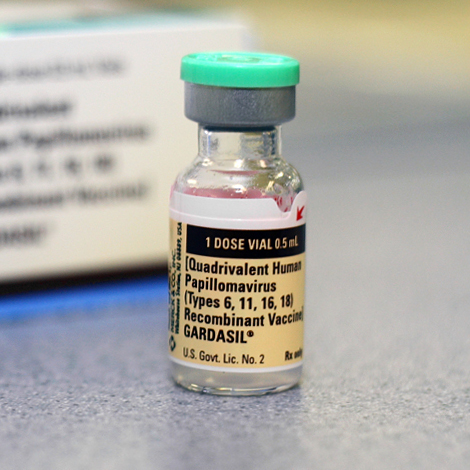
The US Food and Drug Administration approves Gardasil, a vaccine against human papillomavirus, the primary cause of cervical cancer. Developed by Ian Frazer and Jian Zhou at the University of Queensland, it is the first vaccine designed to prevent a specific cancer. The recommendation of the HPV vaccine for adolescent girls (and later boys) sparks widespread debate about mandatory vaccination and sexual health.
The COVID-19 mRNA Vaccines -- A Scientific Revolution

The first doses of the Pfizer-BioNTech COVID-19 vaccine, using revolutionary mRNA technology, are administered in the United States, less than a year after the SARS-CoV-2 virus was identified. A second mRNA vaccine from Moderna follows shortly. The rapid development, testing, and emergency authorization of highly effective vaccines represents an unprecedented scientific achievement. The mRNA platform had been in development for over a decade, building on foundational research by Katalin Kariko and Drew Weissman, who would later win the 2023 Nobel Prize for their work.
Nobel Prize for mRNA Vaccine Technology

Katalin Kariko and Drew Weissman are awarded the Nobel Prize in Physiology or Medicine for their discoveries concerning nucleoside base modifications that enabled the development of effective mRNA vaccines against COVID-19. Kariko, a Hungarian-born biochemist who faced decades of career difficulty and funding rejection, becomes only the 13th woman to win the Nobel Prize in Medicine. The award recognizes both the specific COVID-19 breakthrough and the broader potential of mRNA therapeutic technology.
First mRNA Influenza Vaccine Approved in the United States

The FDA approved Moderna's mFlusiva, the first messenger RNA influenza vaccine authorized in the United States, for adults aged 50 and older. The approval extended mRNA technology beyond COVID-19 into seasonal flu, an application Moderna had pursued since before the pandemic. The regulatory path was contentious: the FDA initially refused to accept the application in February 2026 amid a broader political climate of mRNA skepticism, before its vaccine advisory committee voted 9-0 in June that benefits outweighed risks for both the 50-64 and 65-plus age groups.
Executive Order Reshapes the U.S. Childhood Vaccine Schedule

President Donald Trump signed an executive order establishing 'Gold Standard Childhood Vaccine Recommendations,' cutting routine childhood immunizations from 18 to 11 diseases and recommending that the combined MMR vaccine be split into three single-disease shots administered at separate visits. The administration cited an HHS scientific assessment finding that the United States recommended more childhood vaccine doses than any peer nation, and framed the changes as maximizing parental choice and aligning with international practice. The move drew immediate pushback: WHO Director-General Tedros Adhanom Ghebreyesus said the changes were 'not aligned with decades of evidence,' reiterated that vaccines including MMR are safe and do not cause autism, and warned that vaccination policy should be guided by rigorous, independent and transparent review of science rather than political influence. Medical groups opposed the changes, experts estimated splitting MMR could take up to a decade, and the order arrived amid one of the worst U.S. measles outbreaks in decades and ongoing litigation over earlier schedule changes made under HHS Secretary Robert F. Kennedy Jr. Supporters welcomed expanded exemption rights and individualized decision-making.
mRNA Cancer Vaccine Succeeds in Phase 3 Melanoma Trial

Moderna and Merck announce positive topline results from the Phase 3 INTerpath-001 trial of intismeran autogene (mRNA-4157/V940), a personalized mRNA neoantigen therapy, in combination with pembrolizumab (Keytruda) as adjuvant treatment for patients with completely resected high-risk stage IIB-IV melanoma. The trial met its primary endpoint of recurrence-free survival and key secondary endpoint of distant metastasis-free survival. This is the first successful Phase 3 trial of an individualized mRNA cancer vaccine, marking a landmark expansion of vaccine technology from infectious disease prevention to personalized cancer treatment. The findings build on the same mRNA platform used for COVID-19 vaccines and follow five-year Phase 2 data showing a 49 percent reduction in risk of recurrence or death.
Medical Societies Issue Independent U.S. Vaccine Recommendations

In an unprecedented departure from normal practice, four major U.S. medical organizations -- the American Academy of Pediatrics, the American College of Obstetricians and Gynecologists, the American Academy of Family Physicians, and the Infectious Diseases Society of America -- simultaneously released their own recommendations for COVID-19, influenza, and RSV vaccination for the 2026-27 respiratory virus season, filling a vacuum left by the absence of updated federal guidance from the CDC and its advisory committee. The societies recommended vaccination more broadly than current federal policy, including routine COVID-19 vaccination for healthy younger adults, young children, and pregnant people -- groups not covered by federal recommendations following the August 2026 restructuring of U.S. vaccine policy. Their guidance drew on systematic reviews conducted with support from the Vaccine Integrity Project, an independent initiative at the University of Minnesota. Policy researchers warned the fractured guidance landscape would create public confusion and depress vaccination rates, while supporters of the federal changes argued the societies' recommendations understated safety concerns. The episode marked the first time in the modern era that private medical societies rather than federal agencies set the de facto national immunization agenda for a respiratory virus season.
Supreme Court Declines Religious Exemption to School Vaccine Mandate

The U.S. Supreme Court declined to block New York's school vaccination requirement, rejecting an emergency appeal from a Catholic mother who sought a religious exemption for her five-year-old son. The one-line order effectively upheld the state's 2019 repeal of religious exemptions to school vaccine mandates, leaving them in place while lower-court litigation over their constitutionality continues. The case highlighted the persistent legal tension between religious liberty claims and public health powers that has surrounded vaccination since Jacobson v. Massachusetts in 1905.
Measles Deaths Return as U.S. Outbreak Hits 35-Year High
Pennsylvania health officials confirmed a fourth measles-linked death, an unvaccinated 18-year-old who died of measles-induced brain inflammation, marking the first measles deaths in the state in 35 years amid the worst U.S. outbreak in over three decades. The CDC concurrently switched its measles death tracking to National Center for Health Statistics data, leaving its 2026 count at zero and prompting House Democrats to demand a briefing; Pennsylvania Governor Josh Shapiro said he would refuse federal outbreak aid until the CDC confirmed the deaths. Senator Bill Cassidy, a physician, called the surge "going to be a terrible legacy for this administration," reflecting the deepening political conflict over vaccination policy and falling measles vaccine confidence documented in national polls.