
The History of Sugar
From a domesticated New Guinea grass to the commodity that reshaped empires, drove the transatlantic slave system, triggered consumer boycotts and technological substitutes, and became central to modern debates over diet and health - the global history of the world's most consequential sweet.
Events
Sugarcane Domesticated in New Guinea
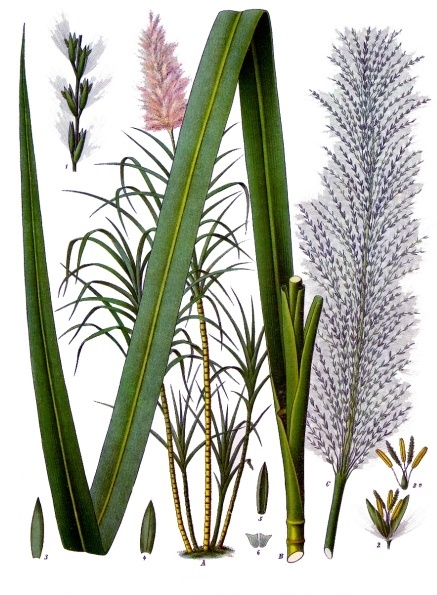
Papuan farmers selectively bred sugarcane from wild Saccharum robustum, beginning around 4000-6000 BC on New Guinea and nearby islands. Austronesian voyagers carried cane across the Pacific and into Island Southeast Asia, where it became one of the original crops of the Austronesian expansion and later reached India and China.
Location: New Guinea
India Crystallizes the First Sugar

By around 500 BC, Indian producers were boiling cane juice to produce crystallized sugar, called sarkara in Sanskrit - the root of most modern words for sugar. Persian and Greek writers described "honey from reeds, without bees," and the technique of refining spread with trade along the Persian and Hellenistic worlds.
Location: India
The Arab World Spreads Cane Cultivation

Following the Arab conquests of the 7th-8th centuries, cane cultivation and sugar refining spread across Egypt, Mesopotamia, Syria, North Africa, and Mediterranean islands. Arab agronomists improved milling and clarification techniques, and sugar became a traded luxury from Baghdad to Cairo, still costly enough to be sold by apothecaries as a medicine in Europe.
Location: Middle East and Mediterranean
Crusaders Carry Sugar to Europe

Crusaders encountering cane plantations in the Levant brought sugar home to Europe in the 11th-12th centuries, and Venice built a fortune shipping and refining it. European demand grew steadily, and sugar's high value made it a driver of the colonial plantation experiments that followed the Atlantic voyages.
Location: Europe
The First Atlantic Plantations

Portuguese and Spanish planters established large-scale sugar plantations on Madeira, the Canaries, and Sao Tome from the 1420s-1450s, using enslaved African labor on an unprecedented scale for sugar. This model - cane, capital, and coerced labor on seized island land - became the template that sugar planters would carry to the Americas.
Location: Madeira and Canary Islands
Columbus Plants Cane in the Americas
On his second voyage in 1493, Christopher Columbus carried sugarcane to Hispaniola. Cane spread through the Caribbean and Brazil over the following century, and by the 1600s the "triangular trade" exchanged European manufactures for enslaved Africans, whose forced labor in cane fields produced sugar, molasses, and rum for Atlantic markets.
Location: Hispaniola
The Barbados Sugar Revolution
Barbados planters converted from tobacco to sugar in the 1640s, and the island's economy, demography, and society were transformed within a generation: the enslaved population grew to outnumber whites several times over, smallholders were displaced, and Barbados became England's richest colony. The model spread to Jamaica, and by 1750 British and French Caribbean islands produced most of the world's sugar.
Location: Barbados
Abolitionists Boycott the Slave-Sweet
Beginning in 1791, British abolitionists organized a mass consumer boycott of slave-produced sugar, with an estimated 300,000 people - many of them women - refusing to buy it, while pamphlets argued no English family needed sugar grown by enslaved hands. Parliament abolished the slave trade in 1807, though slavery itself in the sugar colonies persisted until 1833-1838.
Location: Great Britain
Beet Sugar Breaks the Cane Monopoly
After Andreas Marggraf demonstrated in 1747 that sugar existed in beets, his student Franz Achard opened the first beet sugar factory at Cunern in 1801-02. Napoleon aggressively expanded beet cultivation during the British blockade of the 1810s, and Europe's temperate-zone sugar industry permanently ended the tropics' monopoly and reshaped colonial sugar economies.
Location: Cunern, Silesia
Free Trade and Mass Consumption
Britain abolished its protective sugar duties in 1874, opening the home market to cheap cane and beet and turning sugar from luxury into a staple of working-class diets. By the 20th century, per-capita consumption had risen dramatically across industrialized countries, and sugar was embedded in confectionery, soft drinks, and processed foods.
Location: Great Britain
The Health Debate
As high-fructose corn syrup industrialized in the 1970s and sweetened drinks spread, medical researchers increasingly linked high sugar intake to obesity, type 2 diabetes, and dental disease, with the 1972 book "Pure, White and Deadly" and later WHO guidance exemplifying the growing concern. The sugar industry lobbied against restrictive recommendations, and the science and policy disputes over sugar in processed foods continued into the 21st century.
Location: United States and Europe