
The History of Opera
The story of the art form that fused music and drama — born in Florentine experiments to revive Greek theater, matured in the commercial opera houses of Europe, and continually reinvented from Verdi to minimalism and cinema broadcasts.
Events
Peri's Euridice
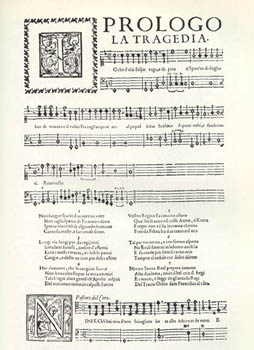
Jacopo Peri's Euridice, composed with Giulio Caccini for the Medici court wedding of Maria de' Medici and Henry IV of France, is the earliest surviving complete opera. It grew from the Florentine Camerata's attempt to restore what they believed was the expressive power of ancient Greek drama.
Location: Florence, Italy
Monteverdi's Orfeo
Claudio Monteverdi's L'Orfeo, written for the Gonzaga court, gave the new sung-drama form its first masterpiece, with an orchestra of varied instruments and psychologically pointed music that still reaches modern stages.
Location: Mantua, Italy
The First Public Opera House
The Teatro San Cassiano opened as the world's first public opera house, selling tickets to anyone who could pay. Opera shifted from court spectacle to commercial entertainment, and Venice soon supported multiple competing theaters.
Location: Venice, Italy
Gluck's Reform
Christoph Willibald Gluck's Orfeo ed Euridice stripped away the elaborate vocal ornamentation that had accumulated in Italian opera seria, aiming to restore drama and simplicity. His reform sparked a lasting argument over what opera should be.
Location: Vienna, Austria
Mozart's Figaro
Mozart's The Marriage of Figaro premiered at the Burgtheater, transforming Beaumarchais's provocative comedy about servants outwitting aristocrats into an opera of lasting social and musical force. It was followed within four years by Don Giovanni and The Magic Flute.
Location: Vienna, Austria
Verdi and the Risorgimento
Giuseppe Verdi's Nabucco premiered at La Scala, and its chorus of Hebrew slaves, "Va, pensiero," was embraced as an anthem of Italian national feeling. Verdi became the dominant Italian operatic voice of the century across works including Rigoletto, Il trovatore, La traviata, Aida, and Otello.
Location: Milan, Italy
Bayreuth and the Ring
Richard Wagner's purpose-built Festspielhaus opened with the first complete performance of the Ring cycle. Wagner's ideal of total artwork — music, poetry, and staging unified — extended harmony and orchestration to their limits and reshaped European music, while his antisemitic writings later made his legacy a matter of continuing controversy.
Location: Bayreuth, Germany
Puccini's La bohème

Giacomo Puccini's La bohème premiered under Arturo Toscanini, depicting ordinary lives and deaths with a naturalistic emotional directness that became verismo opera's international face. Tosca, Madama Butterfly, and Turandot followed, and La bohème later served as the basis for the musical Rent.
Location: Turin, Italy
Gershwin's Porgy and Bess

George Gershwin's Porgy and Bess, with an all-African-American cast drawn from DuBose Heyward's play, brought American musical idiom and Black American life onto the operatic stage. Its journey from mixed critical reception to canonical status tracked broader changes in American cultural institutions.
Location: New York, USA
Britten and the Postwar English Revival

Benjamin Britten's Peter Grimes premiered at Sadler's Wells days after VE Day, re-establishing English-language opera as a living tradition. Britten built a body of operas centered on outsiders and social judgment, performed worldwide.
Location: London, England
Minimalism Redefines Opera

Philip Glass and Robert Wilson's Einstein on the Beach, nearly five hours without intermission, abandoned conventional narrative for structured repetition and imagery. It opened the way for contemporary opera to detach from tradition entirely.
Location: New York, USA
Opera Goes to the Cinema

The Metropolitan Opera launched its Live in HD series, transmitting live performances to movie theaters worldwide. The broadcasts brought opera to millions of viewers who had never entered an opera house, a structural response to aging audiences and declining attendance.
Location: New York, USA