
The History of Gunpowder — The Invention That Ended the Age of Castles
The story of the first explosive, developed by Chinese alchemists seeking medicines and later deployed in war, and of its transmission through the Islamic world to Europe, where artillery reshaped fortifications, armies, and states.
Events
Chinese Alchemists Record the First Gunpowder Mixtures
In ninth-century China, alchemists searching for elixirs of immortality recorded combinations of saltpeter, sulfur, and charcoal that ignited violently. Treatises warned fellow alchemists of the dangers of mixing these ingredients, preserving the earliest knowledge of what became gunpowder.
Location: Tang dynasty, China
The First Written Gunpowder Formulas

The Song-dynasty military compendium Wujing Zongyao recorded several gunpowder formulas for incendiary and explosive weapons, the earliest dated chemical recipes for gunpowder. The formulas circulated as the Song faced mounted threats from the north.
Location: Song dynasty, China
Fire Lances and Bombs in the Jin-Song Wars
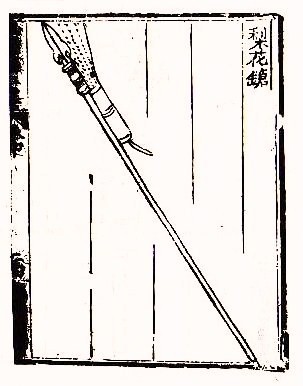
During the Mongol siege of Kaifeng, Jin defenders used fire lances — bamboo tubes expelling gunpowder flames — along with iron-cased bombs. These are among the first documented gunpowder weapons used at scale in siege warfare, in the conflict that transmitted gunpowder knowledge across Eurasia.
Location: Kaifeng, China
Gunpowder Reaches the Islamic World

Arabic military treatises, including Hasan al-Rammah's works on cavalry tactics and war machines, described purified saltpeter and torpedoes, rockets, and other gunpowder devices. Mongol conquests and trade carried the technology west; the Mamluks used early cannon against the Mongols at Ain Jalut in 1260.
Location: Syria and Egypt
The First European Cannons

A manuscript made for England's future Edward III contains the earliest known European illustration of a cannon. Within twenty years cannon were used in the field, including at the Battle of Crecy in 1346, where English forces deployed small guns alongside longbowmen.
Location: England
Ottoman Bombards Breach the Walls of Constantinople

Sultan Mehmed II's army besieged Constantinople with the largest gunpowder artillery train of the age, including bombards cast by Hungarian founder Orban. The Theodosian walls, unbreached for a thousand years, were pounded down; the city fell on May 29, 1453, ending the Byzantine Empire.
Location: Constantinople, Byzantine Empire
Firearms Reach Japan at Tanegashima

Portuguese merchants shipwrecked on the island of Tanegashima sold matchlock muskets to a local lord. Japanese smiths copied and mass-produced the design within decades, and by the 1570s arquebuses were decisive in Japanese warfare, including at the Battle of Nagashino in 1575.
Location: Tanegashima, Japan
The Trace Italie and the Gunpowder Fortification Revolution
European military engineers developed the trace italienne — low, thick, star-shaped bastion forts designed to absorb and deflect cannon fire. The new designs ended the military dominance of high medieval castle walls and made siege warfare a long, expensive engineering contest that only centralized states could sustain.
Location: Italy