
The History of Cotton — The Fiber That Built Empires
Domestically independently on four continents, cotton became the world's dominant textile fiber — driving the Industrial Revolution, entrenching slavery in the American South, reshaping colonial India and Egypt, and sparking independence movements woven from cloth.
Events
Independent Domestication in the Old and New Worlds
Cotton was domesticated independently in the Americas, Africa-India, and Asia. The earliest Old World evidence — cotton thread used to string copper beads — comes from Mehrgarh in Pakistan around the 6th millennium BC, while cotton in Peru's Nanchoc valley dates to the 7th-6th millennia BC. In Mexico, cultivation of upland cotton dates to roughly 3400-2300 BC; the Aztec state later collected it as tribute on a scale of some 53,000 tonnes annually.
Location: Mehrgarh, Pakistan / Peru
India's Textile Dominance
For most of recorded history India was the world's premier cotton textile producer. Dhaka's muslins, Gujarati chintz, and South Indian calicoes were exported across Asia, Africa, and Europe, and Indian artisans held weaving and dyeing techniques — including multi-color printed cloth — that Europe could not replicate until the 18th century.
Location: India
The Calico Acts and the British Turn Against Indian Cloth
Indian painted and printed calicoes so captured English markets that Parliament passed the Calico Acts (1700 and 1721) banning their import and wear to protect the domestic wool and linen trades. The restrictions pushed British merchants toward importing raw Indian cotton for home processing instead — laying the commercial foundation for mechanized spinning.
Location: London, England
Mechanized Spinning Ignites the Industrial Revolution
A cascade of British inventions mechanized cotton processing: Kay's flying shuttle (1733), Hargreaves' spinning jenny (c. 1764), Arkwright's water frame (1769), and Crompton's spinning mule (1779). Machine-spun yarn collapsed the cost of cloth, and cotton mills clustered around Manchester — "Cottonopolis" — making cotton the first industry of the Industrial Revolution and drawing workers into the first modern factory towns.
Location: Lancashire, England
Whitney's Cotton Gin Rebuilds American Slavery
Eli Whitney patented the cotton gin, a machine that separated seeds from short-staple upland cotton roughly fifty times faster than by hand. The invention transformed upland cotton from unprofitable to lucrative, and US production exploded from a few thousand bales to nearly five million by 1860. The enslaved population of the cotton states grew correspondingly, from under 700,000 to about four million — a direct line between mechanical invention and the entrenchment of slavery in the American South.
Location: Georgia, United States
Egypt's Cotton Monoculture and the Road to Occupation

Muhammad Ali, Egypt's modernizing viceroy, introduced long-staple cotton as a state export crop in the 1820s. Cotton revenues financed Egyptian industrialization and military expansion — but by the 1870s reliance on the crop had also loaded Egypt with European debt, a spiral that ended in the British occupation of 1882. Cotton bound Egypt into the global economy on terms set abroad.
Location: Egypt
Cotton Kingdom and the Lancashire Cotton Famine
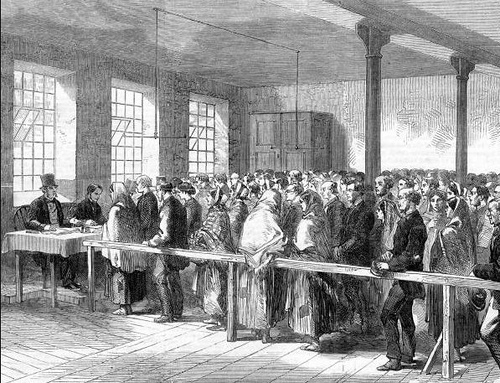
By the Civil War, cotton accounted for nearly two-thirds of US exports, and Britain's mills depended heavily on Southern supplies. The Union blockade and the Confederacy's self-embargo during the war produced the Lancashire Cotton Famine (1861-65), throwing hundreds of thousands of British mill workers into poverty. Despite the economic pain, British workers largely supported the Union cause, weakening the case for British intervention on the Confederacy's behalf.
Location: United States / England
The Boll Weevil devastates the American South

The boll weevil, crossing from Mexico into Texas around 1892, spread across the cotton South over the following decades, destroying crops and collapsing the sharecropping economy that had replaced slavery. The pest's devastation ultimately pushed crop diversification, agricultural science, and out-migration from the rural South — a single insect reshaping a regional economy.
Location: Texas, United States
Cotton Boycott and the Indian Independence Movement

The Swadeshi movement, launched during the 1905 partition of Bengal, urged Indians to burn imported Manchester cloth and spin their own. Gandhi later made the hand-spun khadi cloth and the charkha spinning wheel central symbols of the independence struggle, turning cotton from a commodity into a political statement against colonial rule. India reclaimed its textile industry through tariff protections in the 1930s and after independence.
Location: Bengal, India
Cotton in the Global Economy

Cotton today is grown on every continent's warm latitudes, with annual production around 25 million tonnes (110 million bales). India became the largest producer, the United States the largest exporter, and China the largest importer and manufacturer. Controversies shifted rather than ended — from genetically modified Bt cotton's rapid spread to forced-labor allegations in Xinjiang's cotton sector — keeping the fiber at the center of trade, science, and human-rights debates.
Location: India / China / United States