
The History of Coffee
Coffee traveled from the Ethiopian highlands and Yemeni Sufi monasteries to the coffeehouses of Istanbul, London, and Vienna, and then to colonial plantations across the tropics, becoming one of the most valuable traded commodities on Earth. Its history is punctuated by religious and royal prohibitions, revolutions in commerce and science, and modern crises of price, labor, and climate.
Events
Sufi Monasteries of Yemen Brew Coffee

By the mid-15th century, coffee was cultivated in Yemen and used by Sufi monasteries to sustain nighttime devotions, the first documented use of the beverage as we know it. From the port of Mocha, Yemeni coffee dominated world supply for over two centuries, and the Ethiopian highlands remained the plant's wild origin. The legend of the goatherd Kaldi, though unverifiable, became the founding myth of coffee's Ethiopian discovery.
Location: Yemen
The Mecca Coffee Ban
The governor of Mecca, Khair Beg, banned coffee in 1511, closing coffeehouses and denouncing the drink before a council of jurists as an intoxicant forbidden by Islamic law. The council, and later the Ottoman sultan in Cairo, ruled coffee permissible, and the ban was reversed, a landmark early debate over the beverage's legality. Similar prohibitions were attempted in Cairo in 1534, reflecting recurring unease with the coffeehouse as a site of gathering and talk.
Location: Mecca
The First Coffeehouses of Constantinople
Coffeehouses opened in Constantinople in the 1550s after earlier appearances in Damascus and Cairo, spreading rapidly as social institutions where men gathered to talk, listen to poetry, and play chess; Ottomans called them "schools of the wise." Their popularity drew periodic state suspicion, and Sultan Murad IV famously banned coffee and tobacco in 1633, even punishing drinkers, though the ban did not outlast him. The coffeehouse had become an engine of urban public life.
Location: Istanbul, Ottoman Empire
Coffee Conquers London
Pasqua Rosee, an Armenian or Greek servant of a Levant Company merchant, opened London's first coffeehouse in 1652, and hundreds followed within decades. Dubbed "penny universities" for the conversation a penny's coffee bought, they became centers of commerce, news, and politics; the insurance market Lloyd's of London and even the London Stock Exchange trace their origins to coffeehouses. Venice had opened Europe's first coffeehouses in the 1640s, and Vienna's followed after the 1683 siege.
Location: London, England
Charles II Tries to Ban the Coffeehouses
King Charles II issued a proclamation suppressing coffeehouses as "places where the disaffected... devised and published scandalous reports," fearing sedition against his court. So fierce was the backlash from merchants and the gentry that he was forced to withdraw the ban within days, a landmark episode in the defense of public discussion. Coffeehouses continued to thrive as organs of English civil society.
Location: London, England
The Dutch Break Yemen's Monopoly
Dutch merchants smuggled coffee seedlings out of Mocha in the 1690s and established colonial plantations on Java, breaking Yemen's monopoly on the world supply. Amsterdam's botanical garden became the nursery of European coffee; in 1714 the city gifted a seedling to Louis XIV, from which Gabriel de Clieu carried a plant to Martinique in 1723, seeding the French Caribbean industry. Colonial plantation coffee, cultivated with slave and indentured labor, now drove the drink's expansion.
Location: Java, Indonesia
Coffee Reaches Brazil
Francisco de Melo Palheta, sent to arbitrate a border dispute in French Guiana, smuggled coffee seeds back to Brazil in 1727, according to tradition obtained through his flirtation with the governor's wife. Brazilian cultivation expanded from the 1760s and exploded in the 19th century, powered by enslaved African labor until abolition in 1888. By the 1840s Brazil was the world's largest coffee producer, a position it has never lost.
Location: Para, Brazil
Instant Coffee and the Mass Market

Satori Kato, a Japanese-American chemist in Chicago, patented soluble coffee in 1901, and instant coffee reached mass production when Nestle launched Nescafe in 1938 after Brazil asked the company to find an outlet for its coffee surplus. Instant coffee reshaped consumption during the World Wars, in which it was standard ration, and democratized the drink worldwide. Its flavor trade-offs later fueled the specialty coffee revolt against mass-market blends.
Location: Chicago, United States
The International Coffee Agreement

Consumer and producer nations signed the International Coffee Agreement in 1962, a system of export quotas and buffer stocks that stabilized prices for two decades, at times covering more commodity value than any similar pact. The agreement collapsed in 1989 when consuming and producing nations failed to agree on quotas, and prices crashed, deepening poverty among small farmers in Latin America and Africa while benefiting roasters in consuming countries. The collapse remains a standard case study in commodity governance.
Location: London, United Kingdom
Starbucks and Global Coffeehouse Culture
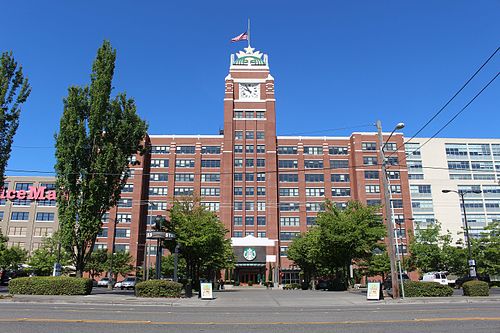
Howard Schultz acquired the small Seattle roaster Starbucks, founded in 1971, and scaled its Italian-style espresso bars into a global chain of tens of thousands of stores. The "third place" coffeehouse, between home and work, returned to mass culture and spread from Tokyo to Buenos Aires, driving a worldwide rise in espresso consumption. Critics debated the chain's effect on independent cafes and its labor practices even as it lifted prices paid in some growing regions.
Location: Seattle, United States
Fair Trade and the Specialty Coffee Wave

Fairtrade Labelling Organizations International was founded in 1997, certifying producers in the Global South and guaranteeing minimum prices, as the fair trade movement sought to address the post-1989 price crash; fair trade certified coffee became the movement's flagship product in supermarkets worldwide. Simultaneously the "third wave" of specialty coffee, with its single-origin beans and direct-trade sourcing, reframed coffee as an artisanal product from named farms. Both trends shifted bargaining power, modestly but measurably, toward some producing communities.
Location: Bonn, Germany
Climate Change and Record Prices

In the 2020s, arabica coffee futures reached their highest levels in decades, driven by Brazil's 2021 frost and drought, and successive poor harvests in Vietnam, alongside long-term studies projecting that climate change could render roughly half of current arabica-growing land unsuitable by 2050. Producers faced rising costs and shifting disease pressures, while global demand continued to grow. The strain reopened debates over genetic diversity, shade-grown cultivation, and the distribution of value along the coffee supply chain.
Location: Global
Brazil's Record August Exports Replenish Global Coffee Supply

On September 10, 2026, Brazil's Coffee Exporters Council reported 4.155 million 60-kilogram bags shipped in August, the largest August volume on record and 31% more than a year earlier. Arabica shipments rose 25.7% as delayed new-crop supplies reached the market, while conilon and robusta exports rose 53.6%; export revenue reached a record 1.331 billion dollars for August. The rebound eased some near-term scarcity, although January-August volume remained 1.2% below 2025 and revenue was 9.3% lower, and exporters continued to cite port bottlenecks and trade-policy uncertainty.
Location: Brazil
United Nations Observes First International Coffee Day

On October 1, 2026, the world marked the first International Coffee Day formally recognized by the United Nations. The UN General Assembly had designated October 1 as International Coffee Day through Resolution 80/248, adopted on March 10, 2026, recognizing that coffee provides economic benefits at each step of the global value chain and contributes to the economies of both exporting and importing countries, and inviting governments and stakeholders to promote awareness of the beverage's economic, social, and environmental impacts. The resolution passed by a recorded vote of 150 in favor, 1 against, and 1 abstention. The United States, the world's largest single coffee-importing country, cast the only vote in opposition, while Canada abstained. Reports noted the 'no' vote appeared to reflect the Trump administration's broader stance against cooperation with international institutions rather than a position specific to coffee: the same session's other two observance-day measures also drew lone U.S. 'no' votes, and two months earlier the White House had ordered U.S. withdrawal from 66 international organizations and UN entities. The observance builds on International Coffee Day events held by the International Coffee Organization since 2015, extending the celebration to formal UN recognition for the first time in the history of the crop.