
The History of Cinema
The story of the moving image, from the Lumière brothers' first public screening in Paris through silent-era artistry, the coming of sound, the rise and breakup of the Hollywood studio system, world cinema movements, computer animation, and the streaming era.
Events
The First Public Film Screening

Auguste and Louis Lumière held the first public, paid screening of motion pictures in the basement salon of the Grand Café in Paris, showing ten short films including "Workers Leaving the Lumière Factory." About 33 paying customers attended the first show. Within months, cinématographe exhibitions spread across Europe and the world, turning a laboratory curiosity into a commercial entertainment industry.
Location: Paris, France
A Trip to the Moon Invents Special Effects
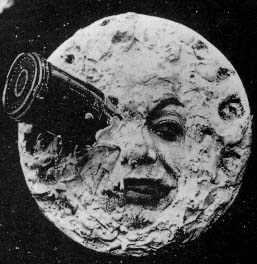
French illusionist-turned-filmmaker Georges Méliès released "Le Voyage dans la Lune," a 14-minute fantasy inspired by Jules Verne, employing trick photography, painted sets, and hand-tinted frames. It demonstrated that film could be an art of imagination rather than mere recording, and became the first motion picture with international commercial and cultural impact.
Location: Paris, France
The Birth of a Nation and Its Backlash

D.W. Griffith's Civil War epic premiered as the longest and most profitable film yet made, pioneering narrative techniques — cross-cutting, close-ups, epic battle staging — that defined the feature film. Its heroic portrayal of the Ku Klux Klan and demeaning depiction of Black Americans provoked a nationwide NAACP protest campaign and bans in several cities; the film is credited with contributing to the Klan's revival. The controversy established film censorship fights, and censorship boards, as a permanent feature of American cinema.
Location: Los Angeles, USA
Battleship Potemkin and the Art of Montage
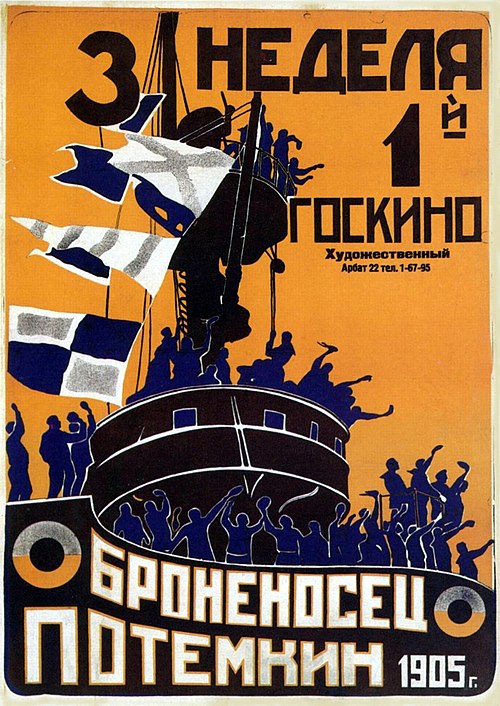
Sergei Eisenstein's "Battleship Potemkin," dramatizing a 1905 naval mutiny, premiered with its Odessa Steps sequence becoming cinema's most studied example of montage — meaning built through the collision of shots rather than theater-style continuity. Soviet filmmakers including Eisenstein, Dziga Vertov, and Vsevolod Pudovkin made the 1920s a high point of silent film as an art form, influencing filmmakers worldwide.
Location: Moscow, USSR
The Jazz Singer Brings Sound
Warner Bros. premiered "The Jazz Singer," starring Al Jolson, using the Vitaphone synchronized-disc system for its songs and brief spoken lines. Audiences responded overwhelmingly to hearing the actors speak, and within two years sound had transformed the industry: silent stars faded or adapted, theaters wired for sound at massive cost, and international stars who spoke accented English saw careers end. The silent era's visual grammar largely gave way to dialogue-driven filmmaking.
Location: New York City, USA
Citizen Kane
Orson Welles's "Citizen Kane," the story of a newspaper magnate modeled partly on William Randolph Hearst, opened to muted box office but deep-focus photography, overlapping dialogue, and nonlinear structure made it a landmark. Hearst newspapers attempted to suppress the film. The Hollywood studio system was at its peak, releasing hundreds of films a year under contract stars and directors, with "Casablanca," "Gone with the Wind," and the golden age of musicals, animation, and noir contemporaneous with it.
Location: New York City, USA
The Paramount Decision Breaks the Studio System
The U.S. Supreme Court ruled in United States v. Paramount Pictures that the major studios' ownership of theater chains violated antitrust law, forcing them to divest their cinemas. Combined with the rise of television, which cut weekly moviegoing by half within a decade, the ruling ended the classical studio system of contracted talent and guaranteed distribution, and reshaped the industry's economics.
Location: Washington, DC, USA
New Hollywood: The Godfather
Francis Ford Coppola's "The Godfather" premiered, a director-driven crime epic that became the highest-grossing film to that date and signaled the New Hollywood era, in which young directors such as Coppola, Scorsese, and Spielberg won creative control after decades of studio-dominated production. The era of ambitious, auteur-centered American cinema peaked over the following years, alongside a parallel golden age of world cinema from Italy, Japan, and New Wave movements worldwide.
Location: New York City, USA
Jaws Invents the Summer Blockbuster
Steven Spielberg's "Jaws" opened with an unprecedented national release on more than 400 screens backed by a saturation television advertising campaign, becoming the first film to gross over 100 million dollars. Its success created the summer blockbuster release model — wide openings, heavy marketing, and franchise merchandising — that has defined big-budget cinema economics ever since. The New Hollywood auteur era increasingly gave way to the high-concept tentpole.
Location: Los Angeles, USA
Toy Story and the Digital Revolution
Pixar's "Toy Story," directed by John Lasseter, opened as the first entirely computer-animated feature film. Its success helped drive the replacement of film cameras and editing with digital tools across the industry over the following decade, and animation became one of cinema's dominant commercial forces. The VHS home-video market, and later DVDs, had by then already made home viewing a major part of film economics.
Location: Los Angeles, USA
Parasite Makes Oscar History

Bong Joon-ho's "Parasite" became the first non-English-language film to win the Academy Award for Best Picture, capping a run that included the Palme d'Or at Cannes. The win was widely read as recognition of South Korean cinema and of international film in an industry long dominated by Hollywood, arriving as streaming services were transforming distribution and subtitle viewership had surged globally.
Location: Los Angeles, USA
The Pandemic and the Streaming Era

As COVID-19 closed cinemas worldwide, theaters went dark for months and studios released major films directly to streaming platforms, compressing or ending the traditional theatrical window. Streaming investment boomed, and James Cameron's "Avatar" sequel in 2022 showed the theatrical event film's enduring drawing power. The equilibrium between theatrical release and streaming remained the industry's central unresolved question, with cinema attendance stabilizing below pre-pandemic levels.
Location: Worldwide
Record Box Office Confirms Theatrical Recovery

August 2026 closed as the highest-grossing August in domestic box office history at roughly 1.27 billion dollars, about 86 percent above August 2025, lifting the year-to-date domestic total past 7 billion dollars, 21.5 percent ahead of 2025. Holdover tentpoles drove the surge: Spider-Man: Brand New Day ended August as the second-highest-grossing film ever in North America and third worldwide, while Christopher Nolan's The Odyssey became the highest-grossing IMAX release ever and crossed 1 billion dollars internationally in early September. With summer 2026 tracking toward roughly 4.6 billion dollars, its strongest total since 2013, the figures marked the theatrical market's fullest recovery since the 2020 pandemic closures and confirmed premium large-format event cinema as the industry's principal theatrical engine.