
The Heroic Age of Antarctic Exploration (1897–1922)
The quarter-century in which expeditions from ten nations, working with limited technology, mapped Antarctica, reached both South Poles, and produced enduring legends of endurance and sacrifice.
Events
The Belgica Overwinters in the Ice
The Belgian expedition ship Belgica under Adrien de Gerlache became trapped in pack ice in the Bellingshausen Sea and drifted for over a year, becoming the first expedition to endure an Antarctic winter. The crew, which included a young Roald Amundsen and the American physician Frederick Cook, suffered scurvy before Cook's fresh penguin and seal meat diet restored them.
Location: Bellingshausen Sea, Antarctica
First Deliberate Winter on the Continent
Carsten Borchgrevink's Southern Cross expedition landed at Cape Adare and became the first party to winter intentionally on the Antarctic continent. The expedition made magnetic and meteorological observations and completed the first sled journey on the Ross Ice Shelf.
Location: Cape Adare, Antarctica
The Discovery Expedition

Robert Falcon Scott's Discovery expedition, with Ernest Shackleton and Edward Wilson, set a farthest-south record at 82 degrees 17 minutes south. The expedition carried out extensive scientific work but its man-hauling sledging methods began a debate over polar travel technique that shaped later expeditions.
Location: Ross Island, Antarctica
Shackleton Turns Back 97 Miles from the Pole
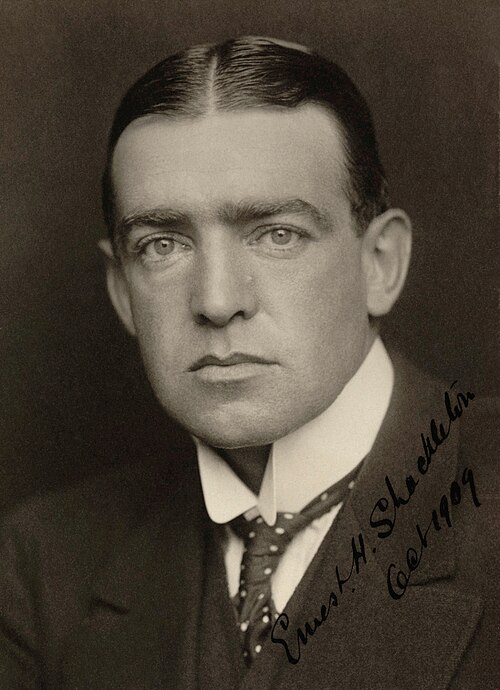
Ernest Shackleton's Nimrod expedition reached within 97 nautical miles (180 km) of the South Pole, a new farthest-south record, before turning back to preserve his party's lives. In the same season, Edgeworth David, Douglas Mawson, and Alistair Mackay reached the South Magnetic Pole on 16 January 1909.
Location: Ross Ice Shelf, Antarctica
Amundsen Reaches the South Pole

Roald Amundsen's party of five, using dog teams and carefully placed depots, reached the geographic South Pole, the first humans to stand there. His initially secret change of plan from the Arctic to the Antarctic, announced while at sea, had stunned the international exploration community.
Location: South Pole, Antarctica
Scott's Party Reaches the Pole and Perishes

Robert Falcon Scott's five-man party arrived at the South Pole 34 days after Amundsen to find the Norwegian flag and a tent. On the return march of over 800 miles (1,300 km), all five died of cold, exhaustion, and shortages, with Scott's final diary entries in late March 1912 becoming icons of the era; their bodies were found that November.
Location: South Pole, Antarctica
Mawson's Lone Survival Trek

Douglas Mawson's Australasian Antarctic Expedition ended in catastrophe when one companion and most of the supplies vanished in a crevasse and the second died of vitamin A poisoning from eating dog liver. Mawson survived a solo 100-mile (160 km) trek back to base, arriving to see his relief ship depart, and wintered with a small party before rescue.
Location: George V Land, Antarctica
The Endurance Saga

After the Endurance was crushed by Weddell Sea ice during Shackleton's Imperial Trans-Antarctic Expedition, he sailed the 22-foot (6.7 m) lifeboat James Caird 800 miles (1,300 km) through Southern Ocean storms to South Georgia and crossed its uncharted mountains to mount rescue. All 28 members of the Weddell Sea party survived, though three men of the supporting Ross Sea party died.
Location: Elephant Island, Antarctica
Shackleton's Death Closes the Age
Ernest Shackleton died of a heart attack at South Georgia at the outset of the Shackleton-Rowett Quest expedition, which historians treat as the closing chapter of the Heroic Age. Across the era, 22 expedition members had died, the continent's coastline had been mapped, and decades of scientific data had been collected that later underpinned Antarctic research.
Location: South Georgia
Legacy of the Heroic Age
The scientific stations, territorial claims, and data produced during the Heroic Age formed the groundwork for later permanent Antarctic research programs. The Antarctic Treaty, signed in 1959 and effective in 1961, reserved the continent for peace and science, building on the international scientific tradition the early expeditions established.
Location: Washington, DC, USA